



The internet contains many online threats. In fact, most of us have probably come across at least one scammer over the course of our digital lives. Maybe we took the bait, or perhaps we discovered the fraud before it was too late. Regardless, to help keep the internet a safer place for everyone, we must do our part and report scams when we come across them.
This guide will help steer you in the right direction so you know exactly where and how to report a scam, whether or not you are the victim.
How do I report a scammer?
Fraudsters are more intelligent than ever and are increasing in astounding numbers. They can now scale the task of phishing thousands of people with AI tools, make incredibly realistic phone calls, clone the voices of family members or company executives with the aid of AI voice cloning, and pretend to be the IRS using convincing written messages and counterfeit notices.
These advanced techniques result in greater success when perpetrating scams against more unsuspecting victims. Whether it’s phishing scams, identity theft, crypto scams, or online fraud overall, the numbers are quite clear. In 2025, the FTC testified that it received more than 3 million fraud reports in 2025 alone, as reported by consumers who said they had lost a whopping $15.9 billion in a single year, compared to $12 billion the previous year.
If you encounter a scam, report it as soon as possible and take immediate action. A delay may end up costing you the opportunity to reclaim money via your bank or payment company, and it also enables other people to become victims of the same scam. Although falling victim to a scam is embarrassing, it isn’t your fault; fraudsters employ sophisticated methods to attack victims of all ages, backgrounds, and levels of experience.
This guide provides the tools and steps you need to take if you or someone you know has been scammed.

The more eyes, the fewer scams
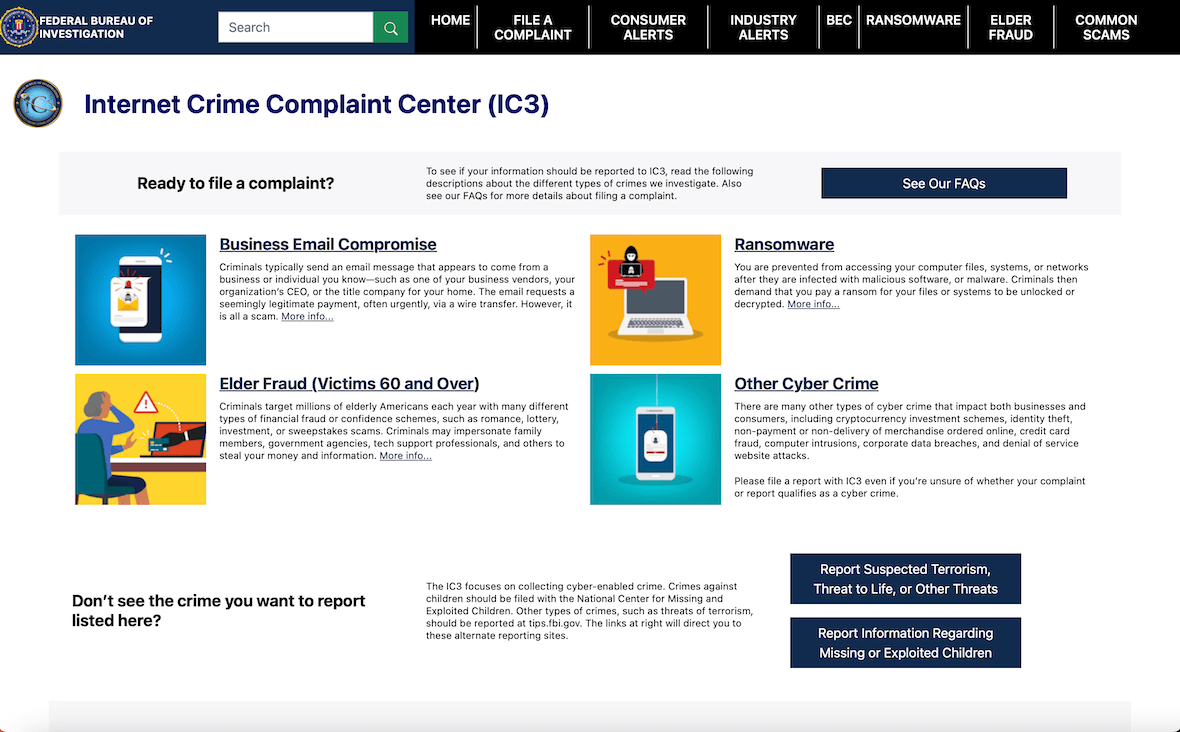
1. How to report a scam to the Internet Crime Complaint Center
The Federal Bureau of Investigation (FBI) has created a website to help people easily report online scams called the Internet Crime Complaint Center (IC3). It is split into four main sections to report business email compromise (BEC) crimes, elder fraud, ransomware, and other cybercrimes. You can also report terrorism, life-threatening issues, or information related to missing or exploited children.
To use the Internet Crime Complaint Center:
- Visit IC3.
- Scroll down to the bottom and click the File a Complaint button.
- Click the I Accept button to agree to the terms of use.
- Use the drop-down menu to select whether or not you were affected by this crime.
- Click Next.
- Fill out the online form, adding your name, address, phone number, and email.
- At the bottom, add details regarding whether the crime pertained to a business.
- On the next page, add information about whether the crime involved financial transactions. Fill in all the applicable fields.
- Click Next to proceed.
- Fill in the large box with a detailed description of the crime, how it happened, and a description of the perpetrator.
- Click Next.
- Complete the form for each person who was victimized.
- Fill in the three boxes with email addresses, witnesses, and anyone else you reported the crime to.
- On the final page, read the warning and agreement. Confirm that you are not a robot, then digitally sign the complaint by entering your name in the box.
- Click Submit Complaint.
2. How to file an online fraud complaint to the Federal Trade Commission
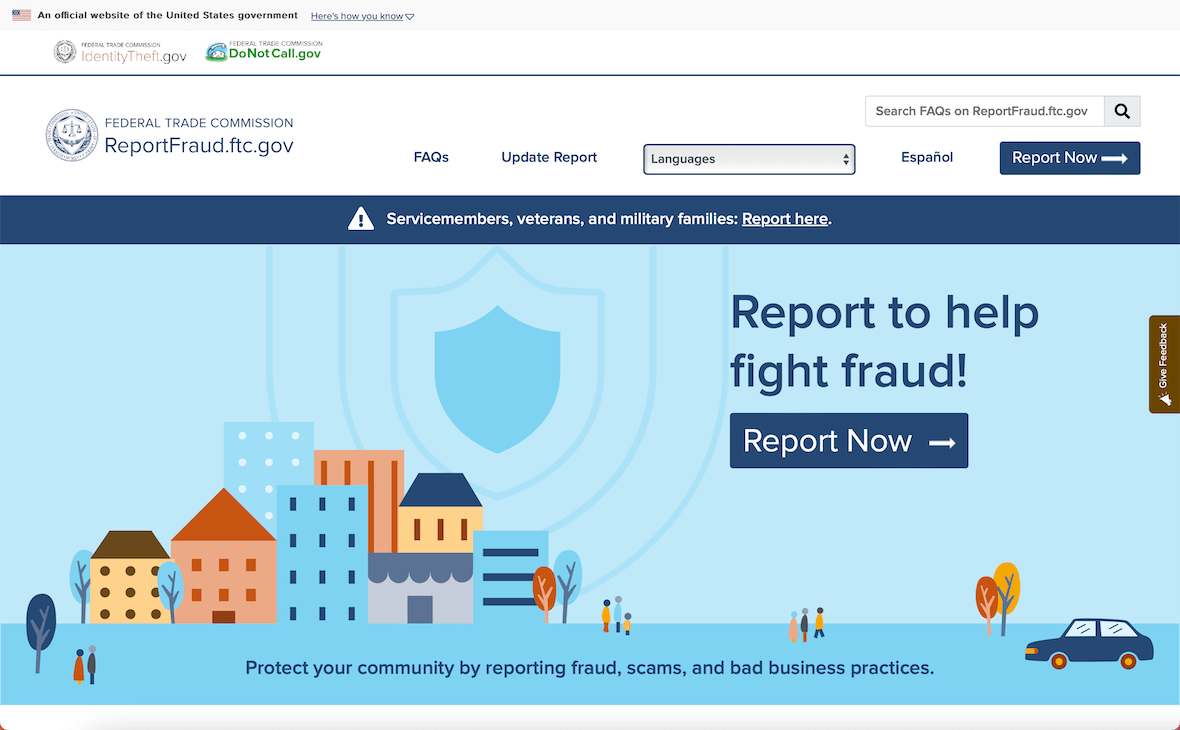
The United States Federal Trade Commission has a lot of helpful information on its website about steps to take if you are scammed. They also have a website dedicated to reporting frauds and scams.
To file an online fraud complaint to the FTC:
- Visit the FTC’s website.
- You can read the information contained on the page and click the big blue Report Now button to get started.
- Choose from the list of problems. For example, if an identity thief scammed you, you would select “An Impersonator.”
- When the choices expand, choose the most appropriate option. If you chose “Impersonator” above, who did the person pretend to be?
- Click Continue.
- Fill in the report details to the best of your ability, selecting the most accurate responses.
- Scroll down and fill in the details about the scammer.
- In the box at the bottom, type in any extra details you can remember that don’t fit the questions above.
- Click Continue.
- Fill in the information about you, including your name, address, phone, email, and the other questions on the page.
- Click the Submit button.
3. How to submit a scammer alert on social media
Threat actors use social media platforms to trap victims. They use fake ads, phishing scams, and social engineering to prey on suspecting people, often young adults and kids. Before you submit a scam alert on social media, gather all your evidence: screenshots, dates and times, emails from the scammer, text messages, payment details, etc.
Although each social media platform is different, most of them have a way to report an account as a scammer. For example, when you are on Instagram, if you come across someone who victimizes you or someone you believe is a scammer, you can follow the process below:
- Click the three-dot menu next to the person’s profile name (in a post).
- At the bottom, tap Report.
- Follow the instructions and share why you are reporting the account.
- Confirm the scammer alert.
4. How to report a scam or phishing email in Gmail
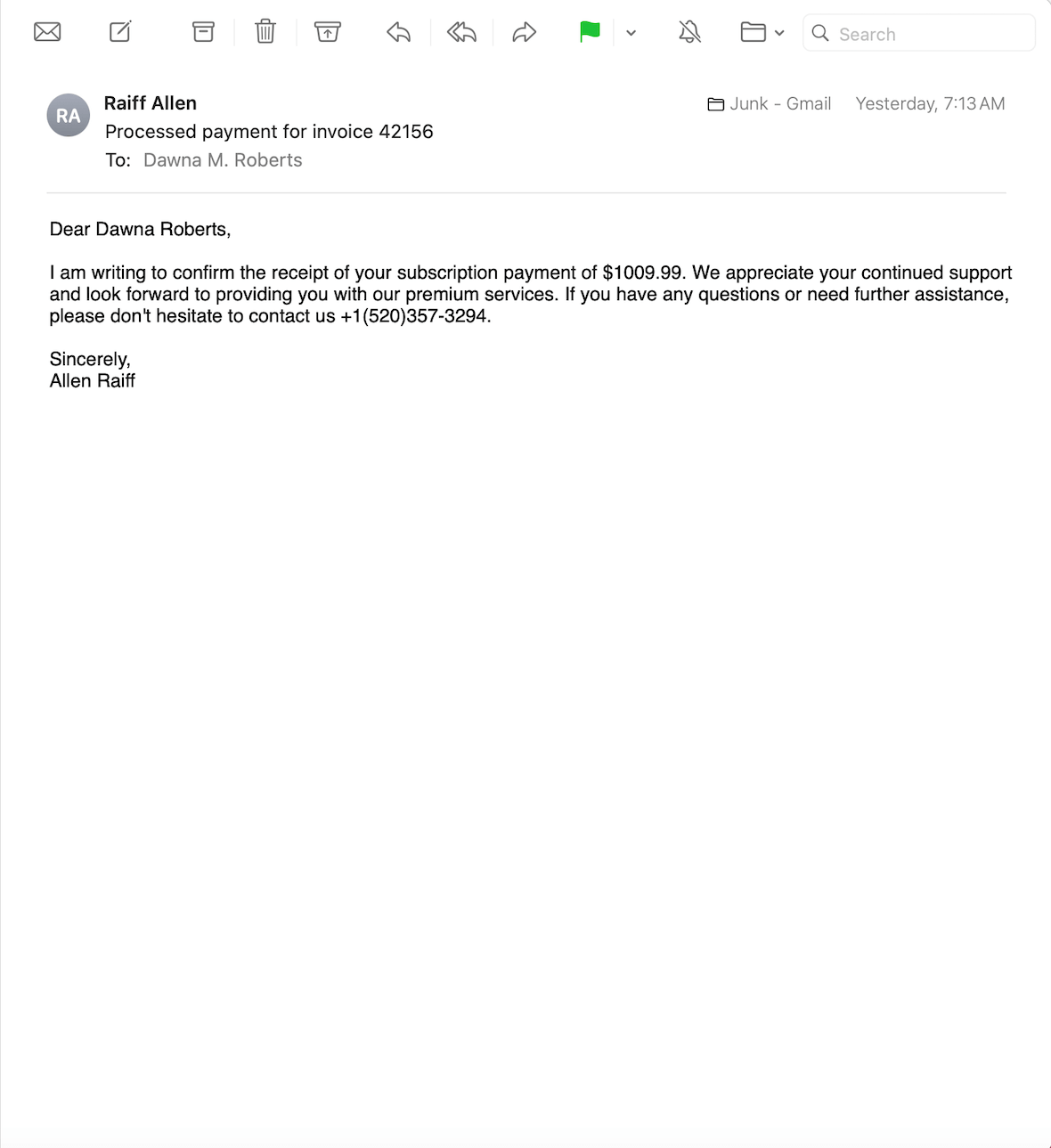
Scammers use email phishing to steal money or information by threatening or panicking the recipient. They use scare tactics, hoping the user will react quickly without thinking.
When you receive an obvious phishing email or scam email, you can easily report it to Google. Follow these steps:
- Log in to Gmail on the web.
- Open the suspicious message (do not click any links).
- Next to the Reply button, click More.
- Click Report Phishing.
5. How to report a scam website to Google
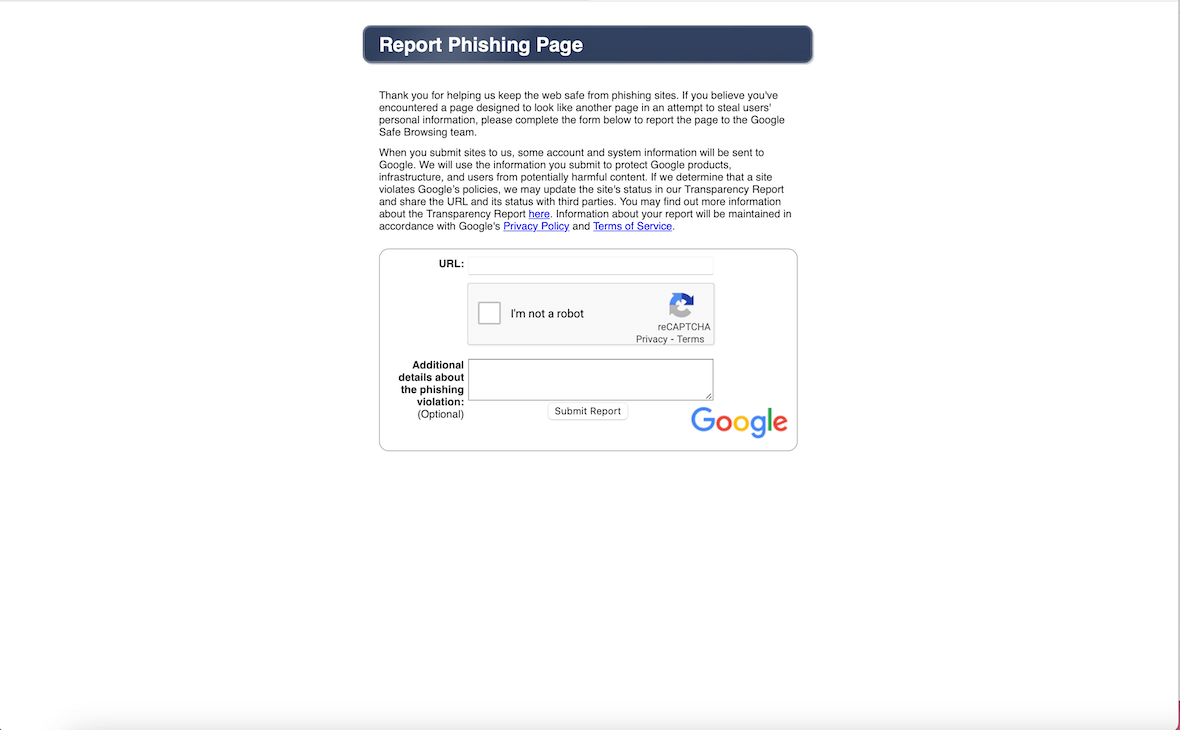
If you want to report a scam site to Google so that they will flag it to ensure that others don’t visit it by mistake, follow these steps:
- Visit the Safe Browsing Report Phishing Page.
- Type in the URL of the unsafe page.
- In the text box, add details about the website (if you have any).
- Click Submit Report.
6. How to report a scam on WhatsApp
If you’ve ever been caught up in a WhatsApp scam and wondered, “How can I report a scammer?” It’s actually quite easy. Just follow these steps:
- Open WhatsApp on your mobile device.
- Navigate to More Options > Settings.
- Tap Privacy.
- Select Blocked contacts.
- Tap Add +.
- Search for the contact you want to block.
- Open a conversation with someone you want to report.
- Tap More Options again.
- Tap More, then Report.
- Tap Report.
7. How to report a scam phone number
If you receive a suspicious call or message from someone trying to get personal details from you to steal your money or your identity, it is important that you report the scam phone number activity so it can be tracked.
Do the following:
- Report the call through the FTC fraud reporting system.
- Forward spam texts to 7726.
- Notify your mobile carrier.
- Block the number.
Submitting a scammer alert helps authorities identify tactics they use as they continue to evolve and prevents others from falling for similar scams.
8. How to report a scam website
In the event that you encounter a fake or malicious site, take these steps to report scam website activity:
- Go to Google Safe Browsing.
- Enter the website URL.
- Add any relevant details about the site.
- Submit the report.
You can also report online scam activity through official fraud reporting platforms. If you interacted with the site, monitor your accounts and run a scan to ensure that nothing was compromised.
What to do first when you suspect you’ve been scammed
If you think you have fallen prey to a scam and have sent money to someone who contacted you via phone, email, text message, or social media, take action and follow the steps below.
1. Get in touch with your bank ASAP
Report fraud to your bank, credit card company, or payment service. Inform them that you are suspicious of fraud and specify that you did not approve of the payment or transfer. Request that they withdraw or retract the payment. If you used Zelle, Venmo, Cash App, PayPal, or a crypto platform, report the transaction inside the app.
2. Freeze your accounts or lock your credit cards
In case your bank, credit card, or crypto account details were shared with a scammer or they were stolen, alert your provider as soon as possible and request that they freeze your accounts and/or lock your cards. You can also go to the Experian, TransUnion, and Equifax websites and freeze your credit. For suspected identity theft scams, report identity theft and get recovery steps at IdentityTheft.gov. For other types of fraud, report fraud through the Federal Trade Commission (FTC).
3. Be on the lookout for suspicious activity
Look out for any strange activities in your bank accounts or credit reports, as well as any scammer alert notifications. In the case of sensitive information provided to a scammer (full name, date of birth, social security number, etc.), search for your name on the internet and see if there are unauthorized records that point to identity theft. Notify local authorities and file a report if your identity has been stolen or fraud has occurred.
4. Scan your device
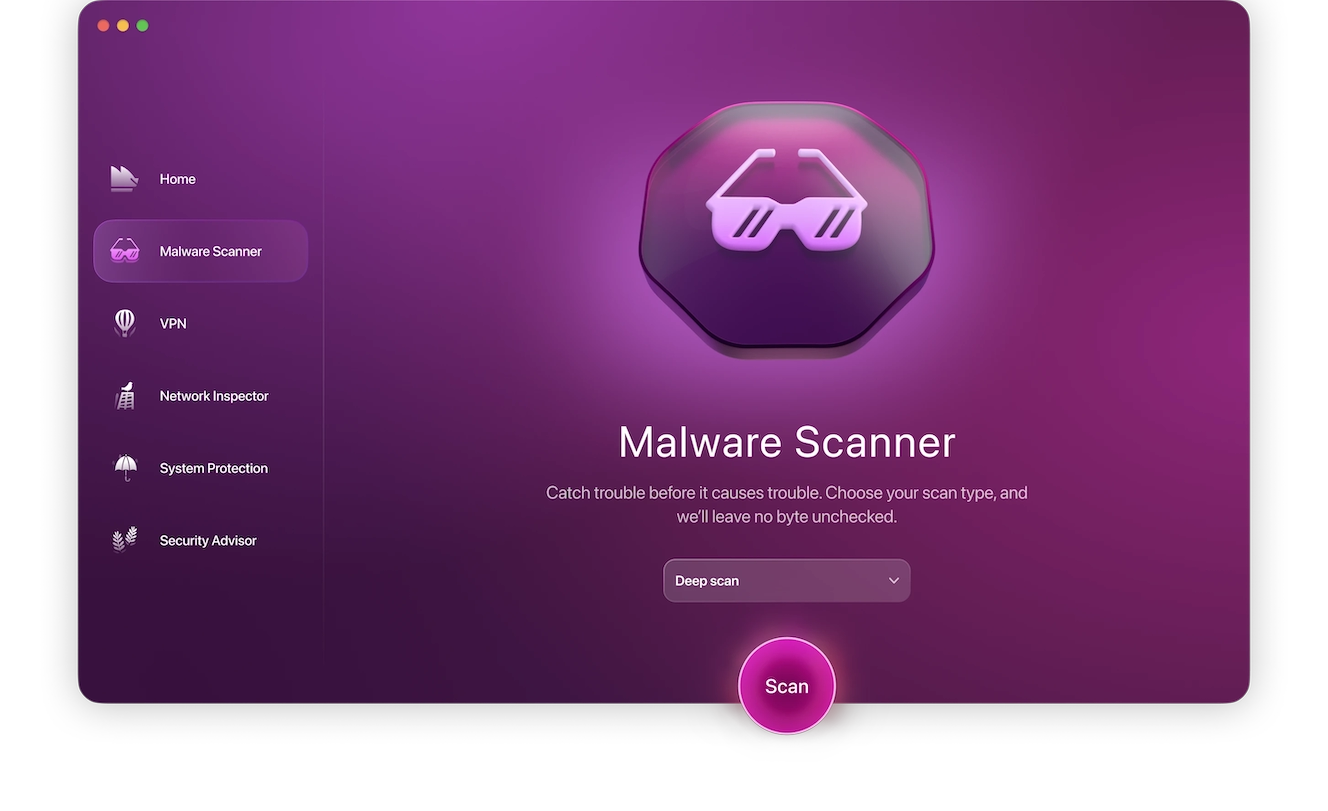
If you clicked a suspicious link or opened an attachment, review the steps after clicking a phishing link and take a moment to scan your Mac for malware. If malware or other threats have been detected, you can learn the proactive steps to take to remove malware from your Mac.
Try Moonlock free for 7 days to check your Mac for hidden malware and anything suspicious that may have slipped through.
5. Secure your accounts
Immediately change your passwords, particularly for email and financial accounts. Learn how a virus from an infected email can pose threats to your system. Turn on 2FA/MFA authentication and log out of any unauthorized sessions. Add an extra layer of security by using a secure password manager and an authenticator app.
6. Gather evidence
Save screenshots, transaction details, phone numbers, links, and any communication from the scammer. This information will be needed when you report fraud or submit an online fraud complaint. Have this information ready when you report scam website activity or file a complaint with the FBI.
7. Verify messages you receive
If you receive a message and are unsure if it’s legitimate, cross-check the sender and message details and report fraud if it’s a scam. Ensure that email addresses and links are accurate. And be sure to know how to tell if a website is legitimate to prevent falling for phishing web scams.
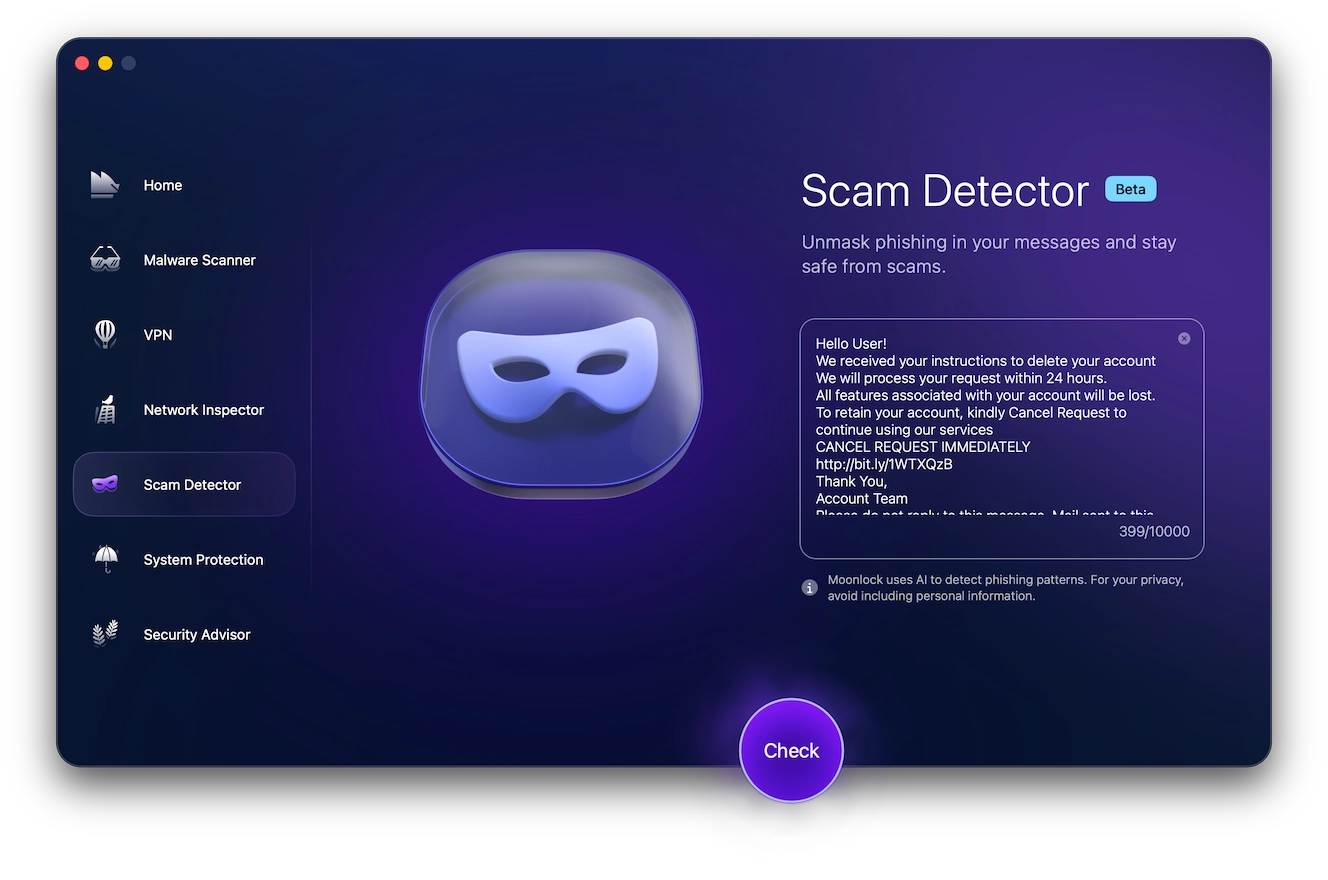
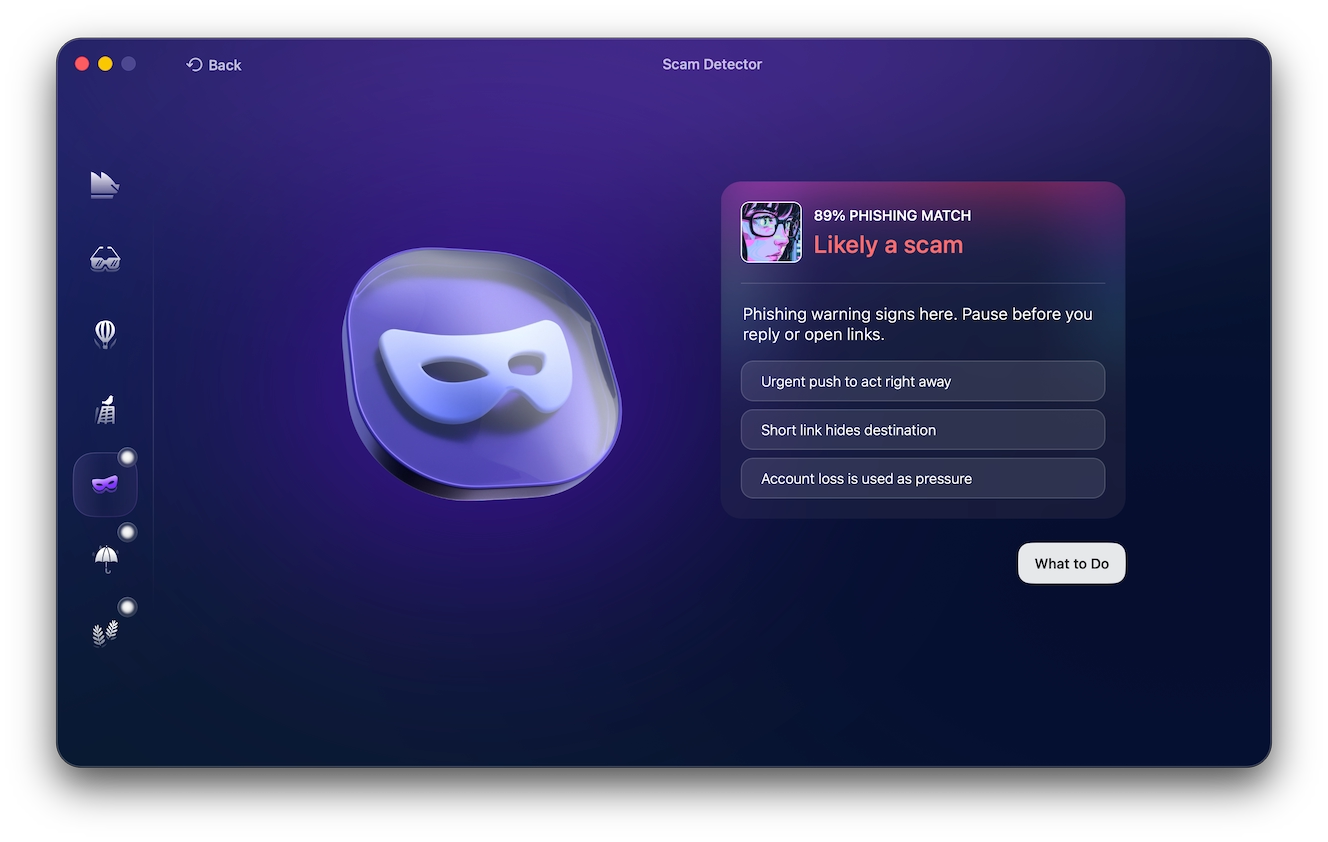
Use the Moonlock Scam Detector to analyze emails or texts for potential phishing, impersonation, or scam before you reply. This will help you report fraudulent email messages safely.
Common types of scams
Scams are prevalent and come in many categories, ranging from phishing scams to identity theft and crypto scams. They often share a common goal: taking your money. Scammers often use psychological tactics, such as urgency or fear, sometimes even blackmail, to pressure you into sending them money.
Look out for:
- Pushy text scams that urge you to act or click immediately
- Social media scams where a friend pretends to be in trouble
- Identity theft scams in which your personal information is used without your permission
- Sextortion scams where scammers threaten to share private images to pressure you into sending money
- Impersonation scams pretending to be the IRS or a legitimate company to steal your money or data
- Crypto scams that involve fake investments and high returns
- AI voice cloning scams that mimic real people
- Romance scams that are based on building trust over time to manipulate victims
Knowledge of such scams boosts awareness and helps prevent phishing incidents.
How to protect yourself from future scams
Being consistent could help you to minimize your risk, especially if you stick to a few habits:
- Carefully check messages prior to clicking on links or replying.
- Do not respond to urgency.
- Always have an updated system and apps.
- Periodically scan your device.
- Use tools that assist in identifying concealed risks.
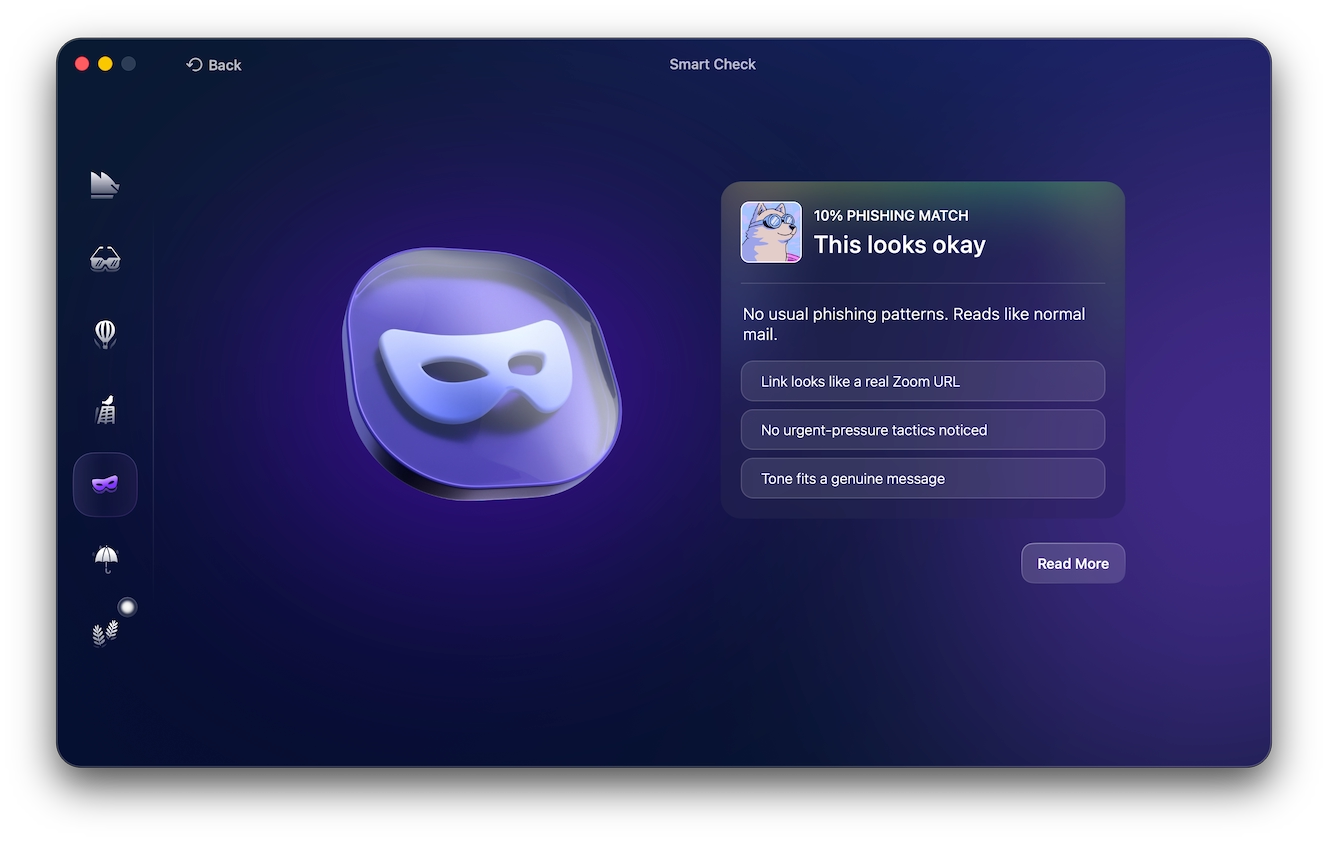
Security software may aid in detecting malware in scam links and flagging suspicious activity during the early stages of a scam, before it causes damage. With Moonlock’s free 7-day trial, you can get an extra layer of protection, as it identifies threats before they can develop with its unique Scam Detector feature, which allows you to check if a message is a scam before you reply, click a link, or send money.
Given the ever-increasing complexity of the cybersecurity landscape, you can’t be too careful when it comes to online scammers. Fortunately, these techniques will arm you with some methods to help you fight back. We must do everything we can to stay safe online and help each other avoid nasty scams.
This is an independent publication, and it has not been authorized, sponsored, or otherwise approved by Google LLC. Gmail and Google are trademarks of Google LLC.