

Everyone loves a bargain these days, which means that online shops are making a financial killing. It also means that their mobile apps are getting downloaded at a fast clip, and lots of money is changing hands every minute. One of those booming shopping sites is called Shein. But is Shein safe to buy from? And how can you stay safe while using it?
What is Shein?
Shein is a fast fashion retailer founded in 2008. While it was first headquartered in China, it has since moved its ownership to Singapore. It’s best known for its shockingly low prices and rapidly expanding catalog of trendy clothes.
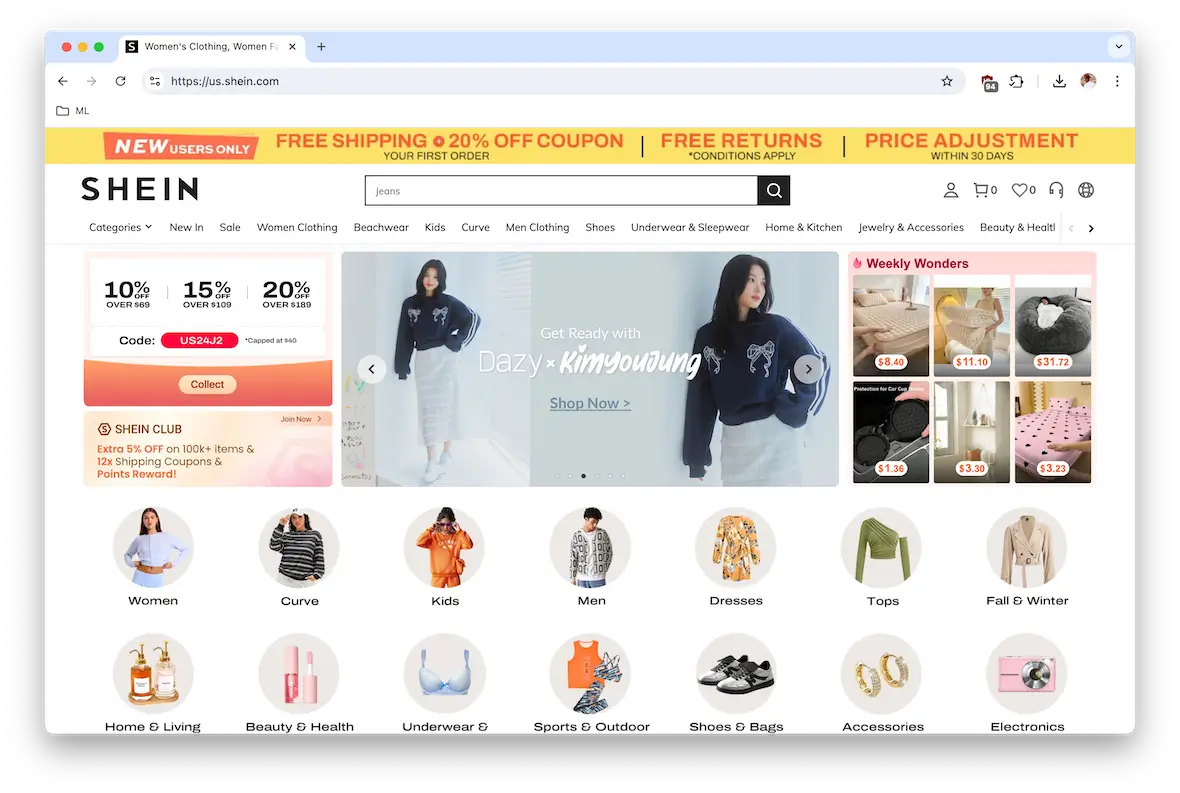
Despite its small start, Shein now makes up around 18% of the global fast fashion market and generated over $10 billion in sales in the first quarter of 2025 alone. In the US, the Shein app averages about 46.9 million monthly active users, with 30% of US and UK Gen Z teens having reported shopping on Shein in the past 12 months.
Unlike most businesses, 2020 was good for Shein, as consumers stayed at home and did vast amounts of shopping online. This was a major reason why Shein rocketed to the status it now has and why it is about to go public on the stock exchange.

Spot scams in emails and messages
Is Shein legit, or is it a scam?
Yes, Shein is a perfectly legitimate online retailer. You won’t be scammed out of your credit card information or have an order fail to arrive in the mail. However, Shein is notorious, even among other fast fashion retailers, for cutting corners when it comes to product quality, not unlike other low-price online retailers like Temu.
The Shein business model relies on 2 factors: low prices and new designs. Material quality and garment lifespan are not priorities in fast fashion manufacturing, and a $3 top is a $3 top.
The biggest concerns when it comes to Shein are ethical and environmental. In 2025, French regulators fined Shein €150 million over cookie-consent violations. And later in the same year, the Texas Attorney General opened an investigation into the company’s alleged forced labor and use of unsafe product material in the manufacturing of clothes.
So why do people think Shein is a scam?
While Shein is a real company, a lot of what surrounds it fits the colloquial definition of a “scam,” such as:
- Counterfeit or off-brand products: Items may look nothing like photos, or designs may be ripped from independent designers and other brands, sometimes smaller creators like Etsy sellers.
- Missing orders and refunds: Many customers complain of “delivered” packages that never actually arrived, with little to no feedback from Shein customer support.
- Fake Shein websites: Scammers run lookalike “website spoofing” domains to target customers and steal their credit card information.
- Poor reputation: Shein once got an F rating with the Better Business Bureau, which is enough to make many potential customers wary of the brand.
Shein isn’t a fake business, but there are many risks that you should be aware of if you choose to shop there for your next outfit.
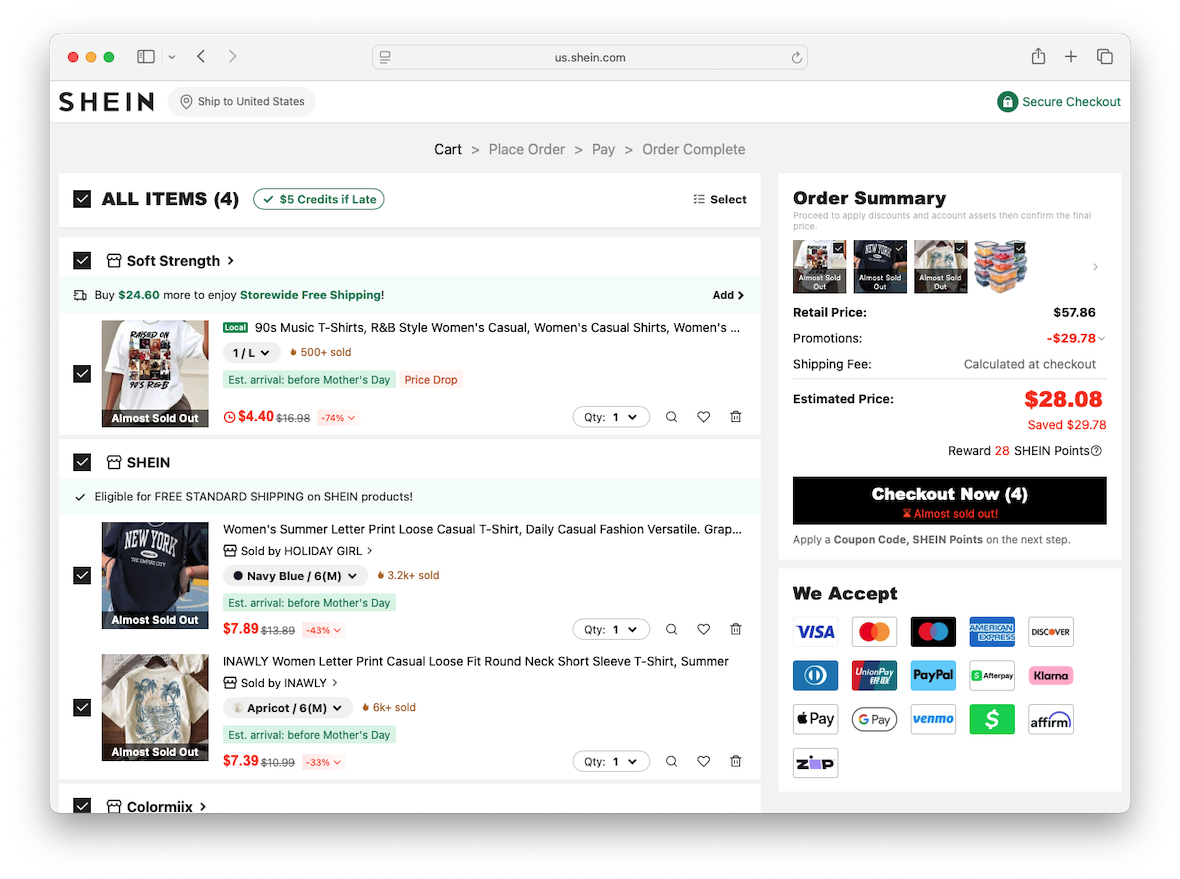
Why does Shein have a bad reputation?
While Shein has gone to great lengths to clean up their reputation in preparation for going public, it’s still important to take into consideration all the company has been accused of thus far before clicking the buy button:
- Child labor and sweatshop allegations: There were 2 confirmed cases of child labor in the Shein supply chain, although the company claims to have cut ties with the guilty suppliers.
- Environmental concerns: Shein is considered the biggest environmental polluter in the fast fashion industry.
- Coach trademark infringement: In March of 2025, Coach’s parent company, Tapestry, sued Shein for trademark infringement and counterfeiting. This is not an isolated incident, with similar complaints coming from Oakley, Ralph Lauren, and Levi Strauss.
- Suing competition: In 2024, Shein sued Temu for copyright infringement and trade-secret theft, both of which were accusations previously directed at Shein.
Is Shein safe to order from?
Shein is generally considered to be safe to order from, even though there have been some privacy and security incidents in the past (we will cover that later in the article).
Remember the following about Shein:
- Their business model is “fast” and “cheap.” Products you buy may not meet the highest quality standards and/or resemble what was shown on the website.
- The company is based in Asia. Therefore, returning items for a refund will most likely prove not to be worth it if you are in the United States or Europe.
- Your country of residence will most likely charge you taxes for the item to enter the country.
Is the Shein website secure?
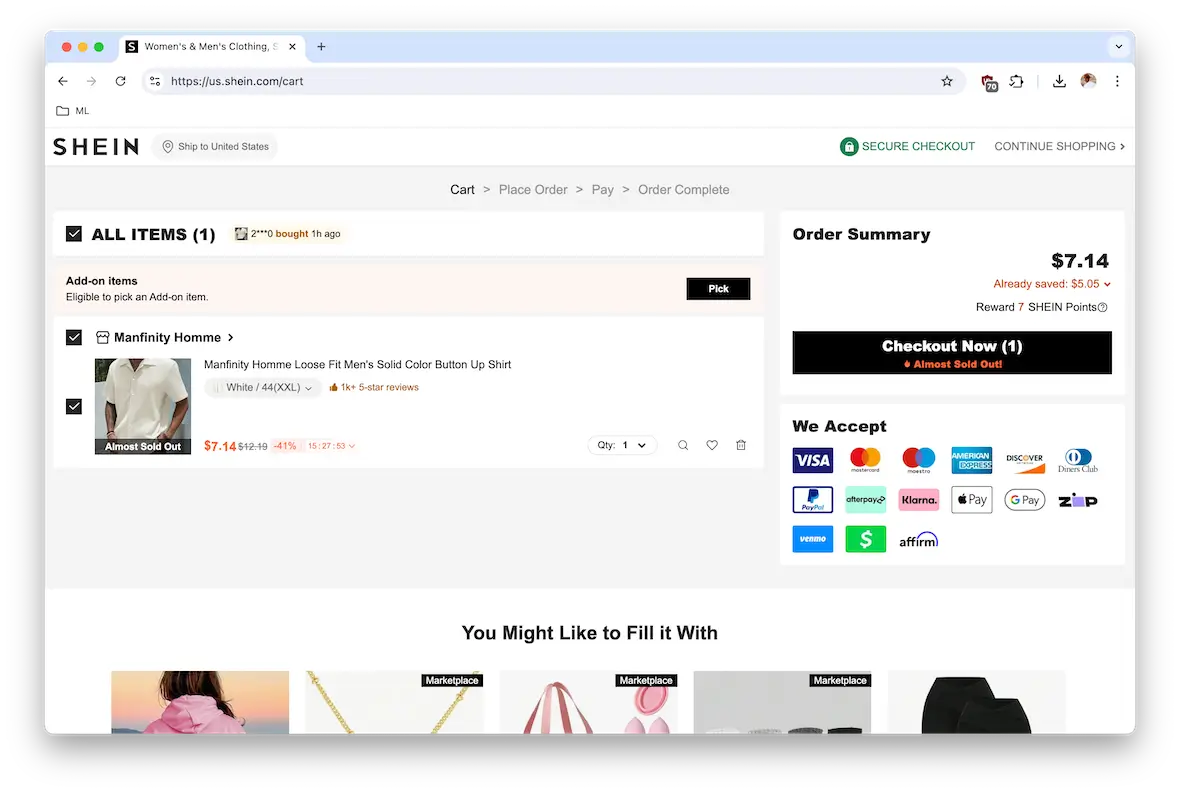
The Shein website uses SSL/TLS encryption to secure data during payment and in transit. This means you don’t have to worry about transactions being illegitimate or your credit card information getting stolen.
That said, here are a couple of things worth keeping in mind:
- Privacy and tracking: While the Shein website is as secure as any other e-commerce website, it’s far from private. The 2025 French lawsuit against Shein for collecting ad cookies before obtaining user consent, and having a “Reject All” button that didn’t do anything.
- Always verify the URL: Before entering your login credentials or payment details, double-check the URL for any typos. Fake websites will often look identical to the real ones, aside from the URL.
Is the Shein app safe?
The app uses the same SSL/TLS encryption for user data and financial transactions. However, it’s even worse when it comes to user privacy. As soon as you install the Shein app, it requests access to your device’s camera, storage, location, calendar, and microphone, none of which are necessary for online shopping.
Normally, any app downloaded through the iOS App Store or the Google Play Store has to pass strict standards to be considered safe. But a bug in the 7.9.2 version of the Shein Android app was found by Microsoft researchers to transmit clipboard contents to a remote server.
In short, it’s best to stick to the website version. And if you’re going to use the app, deny all unnecessary access permissions.
How safe is your data and payment info with Shein?
Although Shein uses SSL technology on their site and app, there have been some incidents in the past that raised red flags:
- There were some reported incidents where users accused Shein of sharing their personal information with third parties, leading to spam emails.
- In 2022, Shein was hit by an almost $2 million fine by the New York State Attorney General. The data breach exposed the personal details of millions of customers, but Shein was accused of not doing what was required to repair the breach and inform customers that their details were potentially out in the wild.
Shein scams you may come across
Ever since the Shein brand became huge internationally, scammers have begun making schemes targeting Shein customers with all sorts of tricks.
Fake “account alert” texts
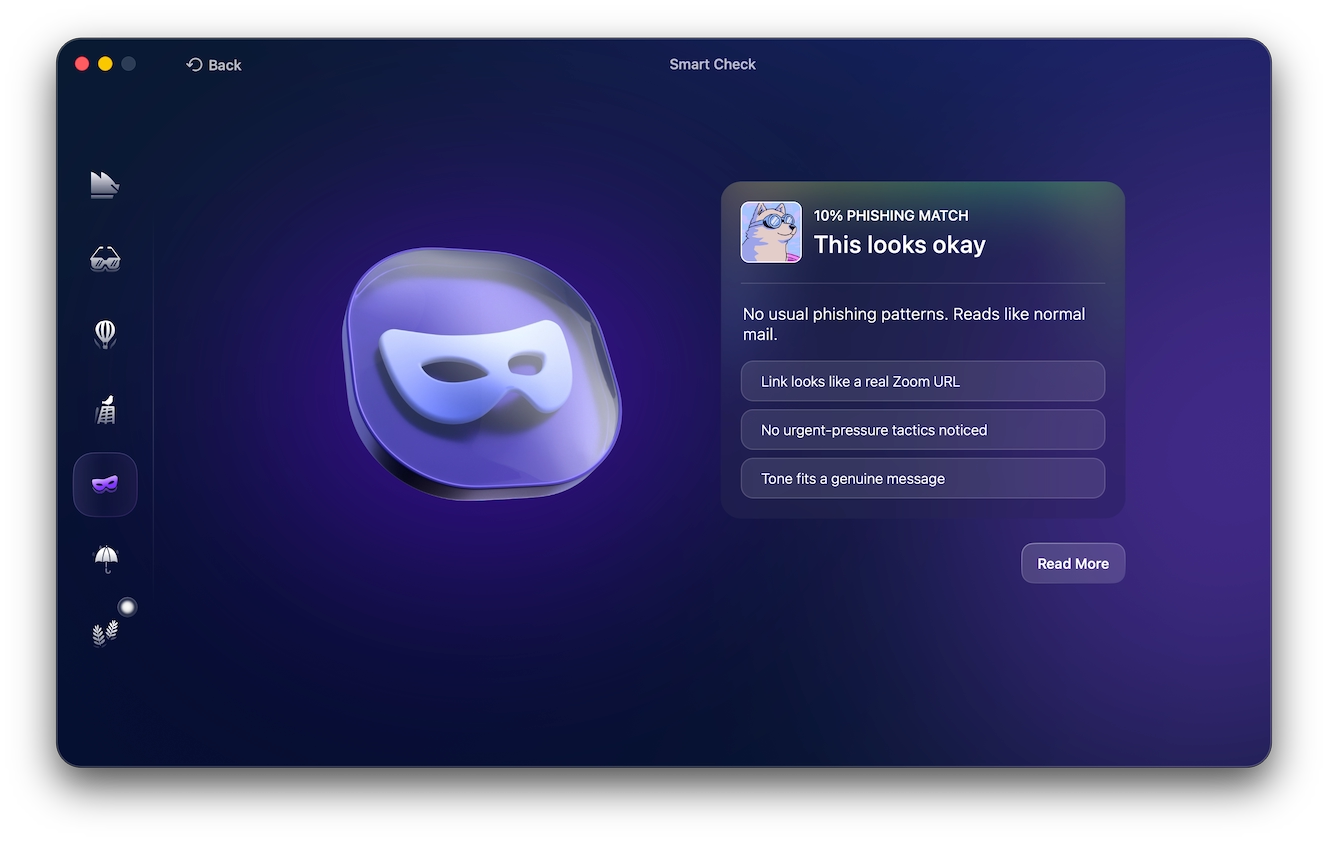
These smishing messages warn that your account was flagged for suspicious activity and will be permanently closed unless you verify your identity through a link, a message like “your Shein account has been suspended” is a classic example. The link leads to a fake Shein login page designed to steal your credentials. Let Moonlock’s Scam Detector scan it and flag fraud in seconds with a free 7-day trial.
Fake Shein websites
Scammers can register lookalike domains, like “sheiin” or “shein-sale,” and push them through Google ads or TikTok links. The checkout in these lookalikes can steal your credit card details if you’re not paying attention.
“Your Shein package couldn’t be delivered” texts
These smishing texts are baited with malicious links that lead to fake tracking pages that ask for your login details or credit card information to “reschedule the delivery.”
Fake giveaways and gift cards
Avoid any Instagram or TikTok posts offering “free Shein gift cards” in exchange for filling out a quick survey. Those are notorious data harvesters.
Phishing emails about “order issues”
Emails claiming there’s a problem with your order or a “pending refund” typically take you to a fake Shein login page, where attackers can steal your login credentials. Always check the URL and sender email before clicking.
Use antimalware software
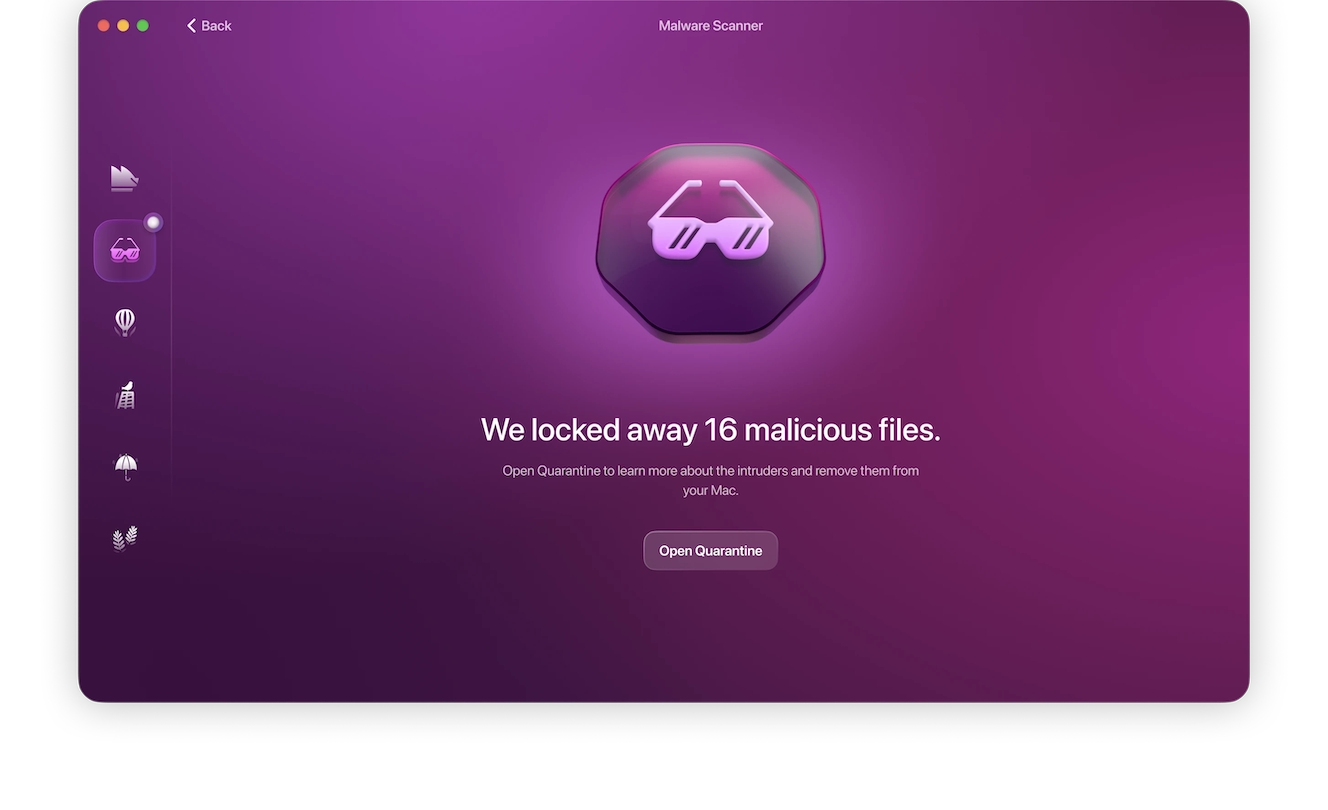
To make sure a fake Shein site doesn’t install malware like a keylogger on your Mac and compromise your logins and passwords, use Moonlock’s Malware Scanner to keep your Mac clean. It runs in the background with its real-time protection so you can shop without constantly looking over your shoulder.
The potential risks of shopping on Shein
Shein may be ready to give you the fashion deal of the century, but before you whip out that credit card and buy 10 of everything, take a moment to consider the risks of shopping there. We don’t mean risks regarding your user details. We mean other risks.
Lack of transparency
As we have stated a couple of times, Shein’s motto seems to be, “Faster… And then, even faster.” Their business model relies on finding new products, mass-producing them extremely quickly, selling them as fast as possible, and then moving on to the next thing.
This has led to critics, some of them senior US politicians, accusing Shein of shady business practices and lack of transparency regarding their manufacturing processes and working conditions.
Environmental concerns
As earlier stated, Shein’s product quality is, at times, questionable. Along with “fast and faster” comes “cheap and cheaper.” Materials are of low quality and disposable by nature. In fact, Shein’s habit of fast production and fast sales has led to accusations of contributing to the world’s environmental problems.
Shein has tried to throw the critics a bone by using recycled materials and cutting down on packaging. But these actions are merely band-aids to cover the wound.
And if all that wasn’t bad enough, some of Shein’s products have been found to have harmful chemicals in them, leading to customers becoming sick.
How to shop safely on Shein
By this point in the article, you may be backing away slowly from Shein and looking for the nearest exit. However, you may still want that $1 nose-warmer enough not to take our warnings seriously.
If you’re determined to get a deal and live life on the edge, at least follow these tips.
Read the reviews
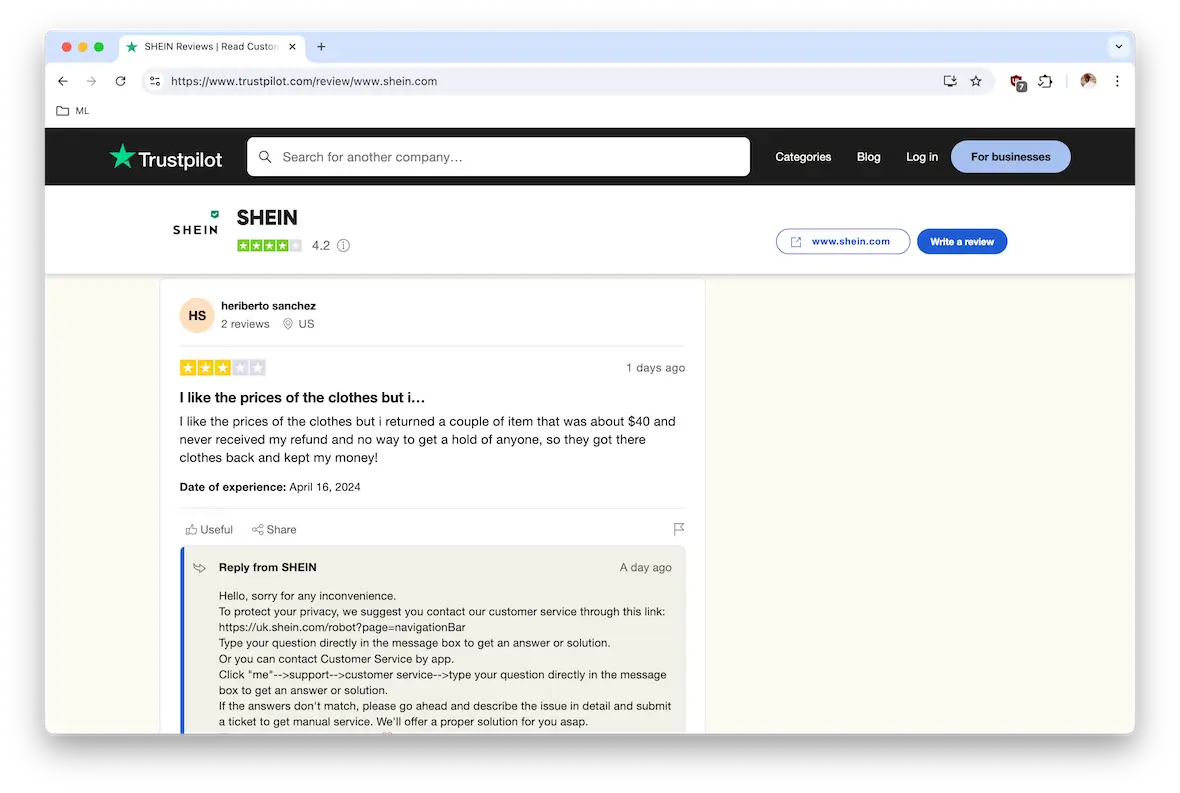
Of course, you should read the product reviews on the Shein website. However, you don’t know if that 5-star review was written by a genuine customer or by Shein themselves.
Instead, focus more on third-party sites such as Yelp, Trustpilot, and even Reddit. You will likely get some very different opinions on these platforms than you would on the Shein website. The thing to really look out for is how Shein responds to these comments.
Use a secure payment method
One of the upsides of Shein is that they offer secure payment methods, such as PayPal. This means that your payment information is not put on their server and, therefore, isn’t where it can be hacked and stolen.
The other good thing about PayPal is that they have buyer protection insurance. If you feel you have been scammed or misled by Shein, you can apply to get your money back. Just be sure to keep all supporting evidence, such as receipts and emails.
Consider using a disposable credit card
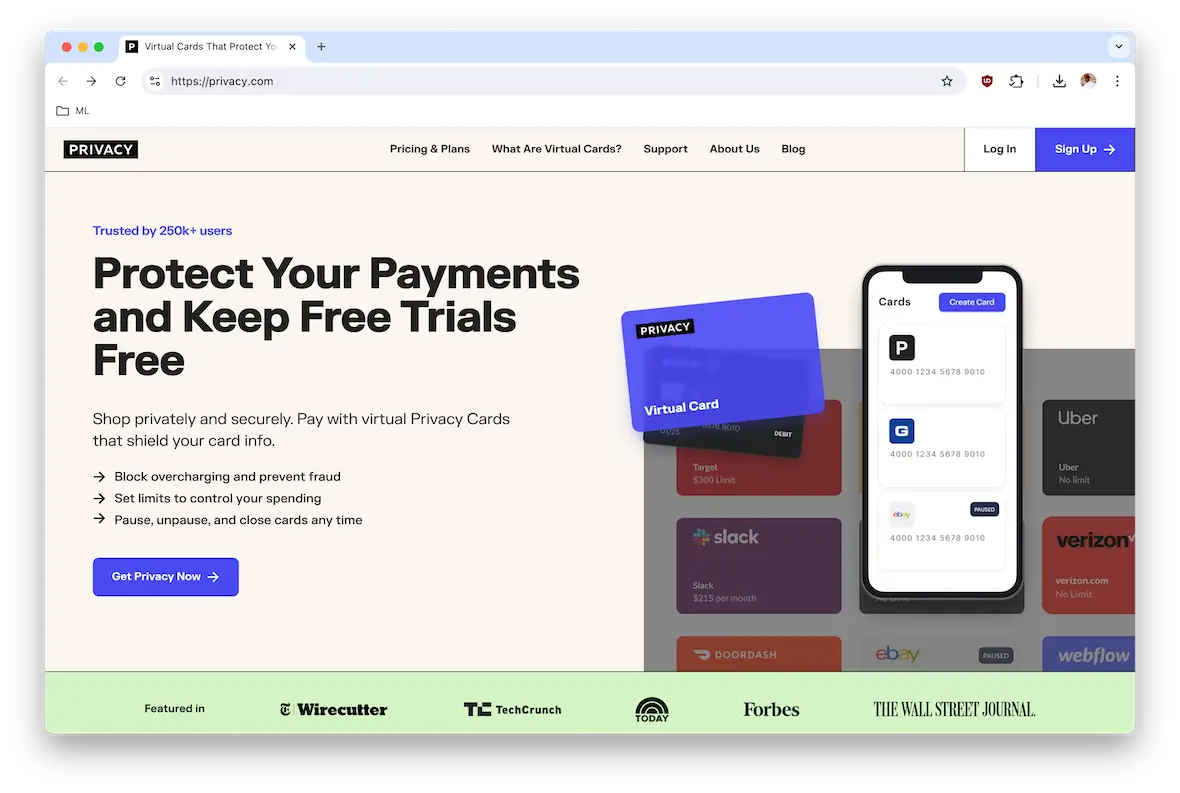
If PayPal isn’t your thing, some banks offer disposable credit cards. These are virtual credit card numbers designed to be used once or twice and then deactivated. Consequently, if the credit card number appears in a data breach, that number is useless.
One bank that offers virtual cards is Wise. Check with your bank to see if they offer them, or check out Privacy.
Set up a throwaway email address or email alias
When buying from a service with a checkered past, it is better to set up a throwaway email address specifically for that transaction. That way, if the email is exposed in a data breach, then no biggie.
Once you have received your thermal pinkie finger sock, you can pitch the email account.
Don’t give any unnecessary user information
When you are setting up a new customer account, some of the information they ask for can be quite intrusive. Let’s face it, all they need is your name, address, and email. Anything other than that is just plain unnecessary.
Why do they need to know your mobile number? Why do they need your date of birth? Don’t give them anything they don’t need.
The internet has been good for breaking down international barriers and making it easier to shop in other countries. But some companies are content to cut corners, bend the rules, and even cheat if it means they’ll get ahead. And if a company is located in another country, there is likely little you can do about it.
That’s why you must always think before buying something online. There’s a reason why that handbag is only $10. What do they want in return? How much will that cheap handbag really cost you? Always keep your wits about you when shopping online, and follow best practices when it comes to privacy and security.