Fiverr is an online platform designed to connect freelancers with clients seeking professional services. Offering more than 700 types of services, Fiverr gives buyers access to a large freelance marketplace. Unfortunately, this also creates plenty of opportunities for dishonest users to blend in with legitimate clients and sellers. So, while Fiverr is legit, scammers use the marketplace to target freelancers and clients alike.
A new freelancer might receive a message from someone claiming that a project is ready, only to be told that payment cannot go through until they provide an email address or complete a separate “verification.” The message may carry Fiverr branding and even show a convincing payment screenshot. So, how can you stay safe while using Fiverr? Let’s take a look.
What makes Fiverr legit?
Fiverr is a real freelance marketplace with systems designed to keep transactions inside the platform. Clients pay through Fiverr rather than directly paying freelancers, and completed orders provide a record that can be used when a payment or delivery is disputed. Fiverr also gives users access to its Resolution Center when an order problem needs to be addressed.
Fiverr uses identity and phone verification in parts of its account process. For clients who want another level of screening, Fiverr Pro is a curated tier where freelancers are handpicked and vetted for the quality of their work and professionalism.
Is Fiverr safe to use?
Fiverr is generally safe for credit cards when payment is made through Fiverr itself. The company handles card payments under PCI-DSS Level 1 requirements, the highest level of the payment-card security standard for organizations processing large volumes of card transactions.
Fiverr is also reasonably safe for buyers and sellers when an order stays within its systems. Once an order is complete, the freelancer’s earnings become available to withdraw. From there, transfer time depends on the payout method (for example, PayPal can take about 24 hours and a Payoneer account up to 2 business days).
Bank transfers generally take 1 to 3 business days in local currency or 5 to 7 business days for a USD wire. Because payment information is already tracked inside Fiverr, users should rely on the status shown in their account rather than an email or message claiming that money is waiting somewhere else.
Are there scams on Fiverr?
Yes. Scams on Fiverr can begin through legitimate messaging features, even though Fiverr itself is trustworthy. A scammer may pose as a client looking for help, a freelancer offering a service, or even someone claiming to work for Fiverr.
The common thread is usually an attempt to get around the protections attached to a real Fiverr order. That may involve moving payment somewhere else, stealing account credentials, collecting personal information, or getting completed work without paying for it.
Common Fiverr scams
Fiverr scams can come from either side of a transaction, so buyers and freelancers need to recognize various warning signs. Some schemes end with stolen money, while others are designed to take over accounts or obtain work for free.
Off-platform payment scams
A client or freelancer may suggest bypassing Fiverr and paying through another service. The pitch often frames this as an easier or cheaper option by saying something like, “Fiverr is giving me problems with this order. Send me your PayPal, and I can pay you directly today.”
The problem is that Fiverr cannot protect a transaction it does not process. Its off-platform policy states that moving payments elsewhere can result in lost platform protections and account action. A disagreement over an outside transfer also cannot be handled like a normal Fiverr order.
Phishing messages and fake “verify your account” requests
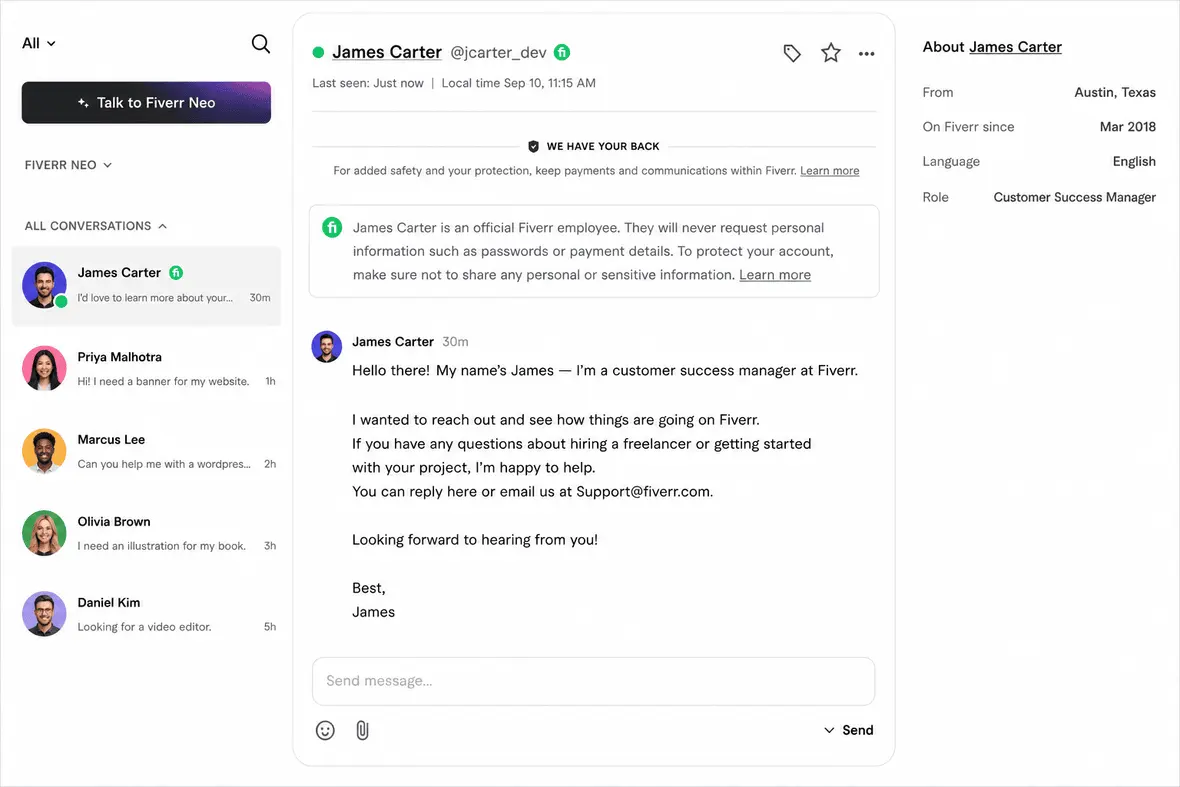
Fiverr email scams and inbox phishing commonly invent a problem with an order. A message may claim that funds are frozen or that a seller has to verify an account by entering card details on another page. QR codes can serve the same purpose by sending the victim to a fraudulent login or payment site.
Actual Fiverr representatives can be identified on the platform by the Fiverr logo and an “official Fiverr employee” label. Fiverr says its staff will not ask users through messages to scan a QR code, verify an account with a credit card, or provide personal information. Requests for an email address, login credentials, or payment details to “process” a payment should also be treated as suspicious.
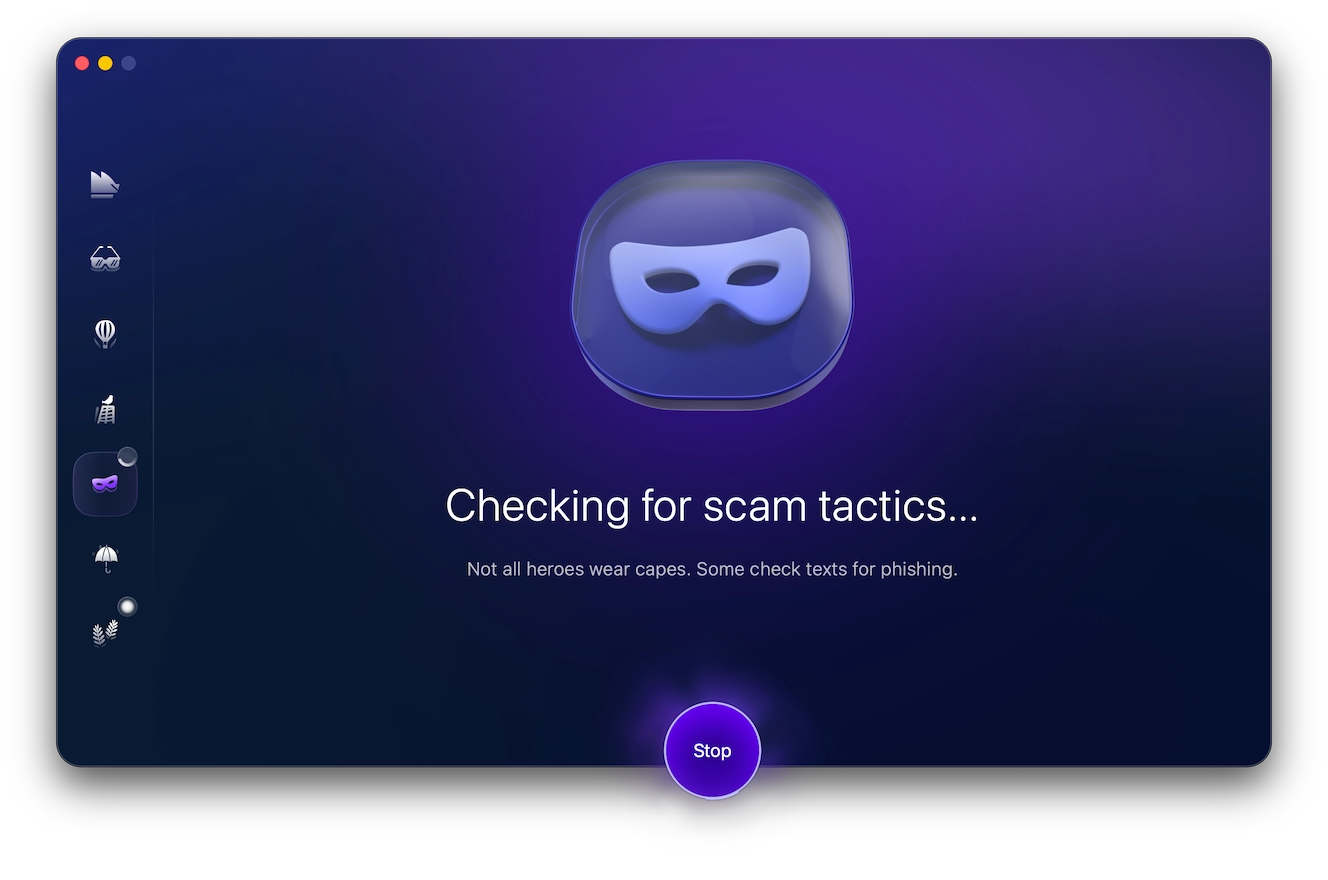
Moonlock’s Scam Detector can provide another point of reference when a Fiverr message looks convincing but feels off. The Scam Detector can analyze suspicious text or screenshots for language associated with scams, such as invented urgency or unusual requests for information.
This tool can be particularly useful with fake payment notices because the message may imitate Fiverr almost exactly. While the Scam Detector doesn’t decide who should be trusted, it can show you warning patterns that you may have missed.
“Move to Telegram or WhatsApp” scams
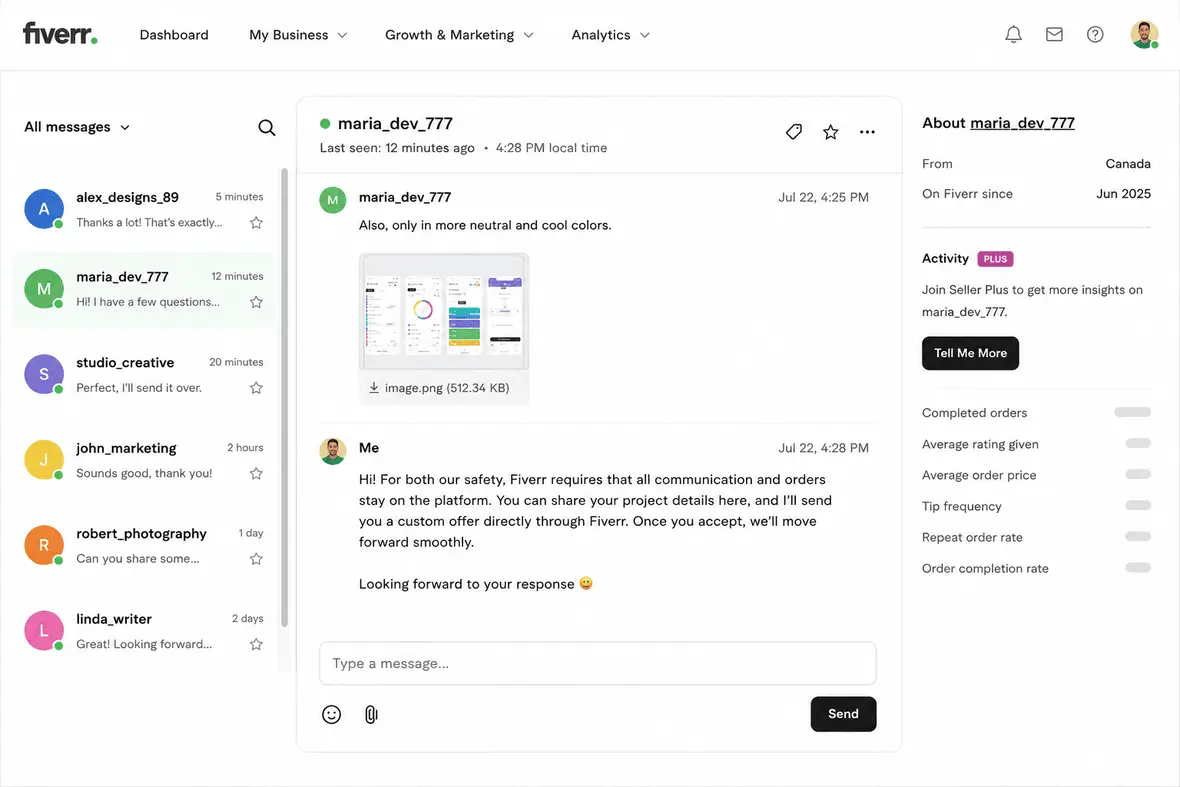
A supposed buyer may make initial contact on Fiverr and quickly ask to continue through Telegram or WhatsApp. Once the conversation moves to a separate platform, the scammer can introduce an outside payment request or send a link without Fiverr having any record of what happened.
Using another communication service does not automatically indicate a scam. Fiverr currently allows third-party communication after an order has been placed, although important project details should still be documented on Fiverr. Requests to move away before an order occurs deserve much more scrutiny.
Requests for personal information
Some scammers pose as buyers and claim that they need your email address before payment can go through. They may back up the claim with a fake screenshot of an order before asking for an ID scan or other personal details.
While a legitimate Fiverr workflow can require personal information for matters such as identity or tax verification, those requests only take place through official Fiverr systems and from Fiverr staff.
Fake or plagiarized work and undisclosed AI content
There are few safeguards in place to stop a scam seller from using stolen portfolio images, plagiarized material, or AI-generated work that doesn’t match what the buyer expected. If you’re wary, a reverse image search can help check portfolio samples, and a plagiarism checker can flag copied text.
Fiverr allows AI use, and sellers do not necessarily disclose every tool they use. Consequently. buyers who want non-AI work should say so before the order begins. A skilled review of the final work matters most, with AI detection used only as a spot-check rather than proof.
Chargeback fraud and cancellation abuse after delivery
In some cases, a dishonest buyer may receive completed work and then dispute the charge with their card issuer. If a buyer does initiate a chargeback, Fiverr must provide the bank with transaction records or proof of delivery. However, they cannot guarantee that a chargeback will be resolved in the seller’s favor.
Cancellation abuse can create a similar problem when someone repeatedly tries to cancel a job after receiving what was ordered. Keeping delivery records and the project discussion inside Fiverr gives the freelancer something concrete to point to if the transaction is challenged.
Fake or “test job” requests for free work
A client may promise a larger project in exchange for a free sample before any order is placed. They might say, “Can you send over a short sample first so I can see if your style is a fit?”
The promised job may not exist. Some scammers ask several freelancers for different test pieces and disappear after collecting enough free material. Existing portfolio samples or a small paid Fiverr order let a buyer evaluate the work without asking the freelancer to work for nothing.
Account-buying and account-takeover scams
Buying or transferring a Fiverr account to another user violates the platform’s rules. Established profiles are sought after and appeal to scammers because their history makes any new messages look more convincing.
In an account takeover, the owner does not hand over the profile voluntarily. The scammer steals access to the account (often through phishing) and may then use the account to message other users or change payout details. 2-factor authentication can make that harder if a password is compromised.
How to spot Fiverr scams before you get scammed
A message deserves a closer look when it claims there is a problem that can supposedly be solved only by leaving Fiverr, revealing information, or completing an unfamiliar verification step. Instead of judging the sender solely by how professional the message looks, compare the request with what Fiverr actually requires inside your account.
Moonlock’s Scam Detector can help with that review. You can use it on a suspicious Fiverr text or a screenshot when you are unsure whether a message matches known scam patterns. The result gives you another signal to consider before responding.
The Scam Detector is most useful as part of a verification process and should not be a replacement for your own judgment. If a message claims that something happened to an order, check the order directly through Fiverr instead of using the sender’s link.
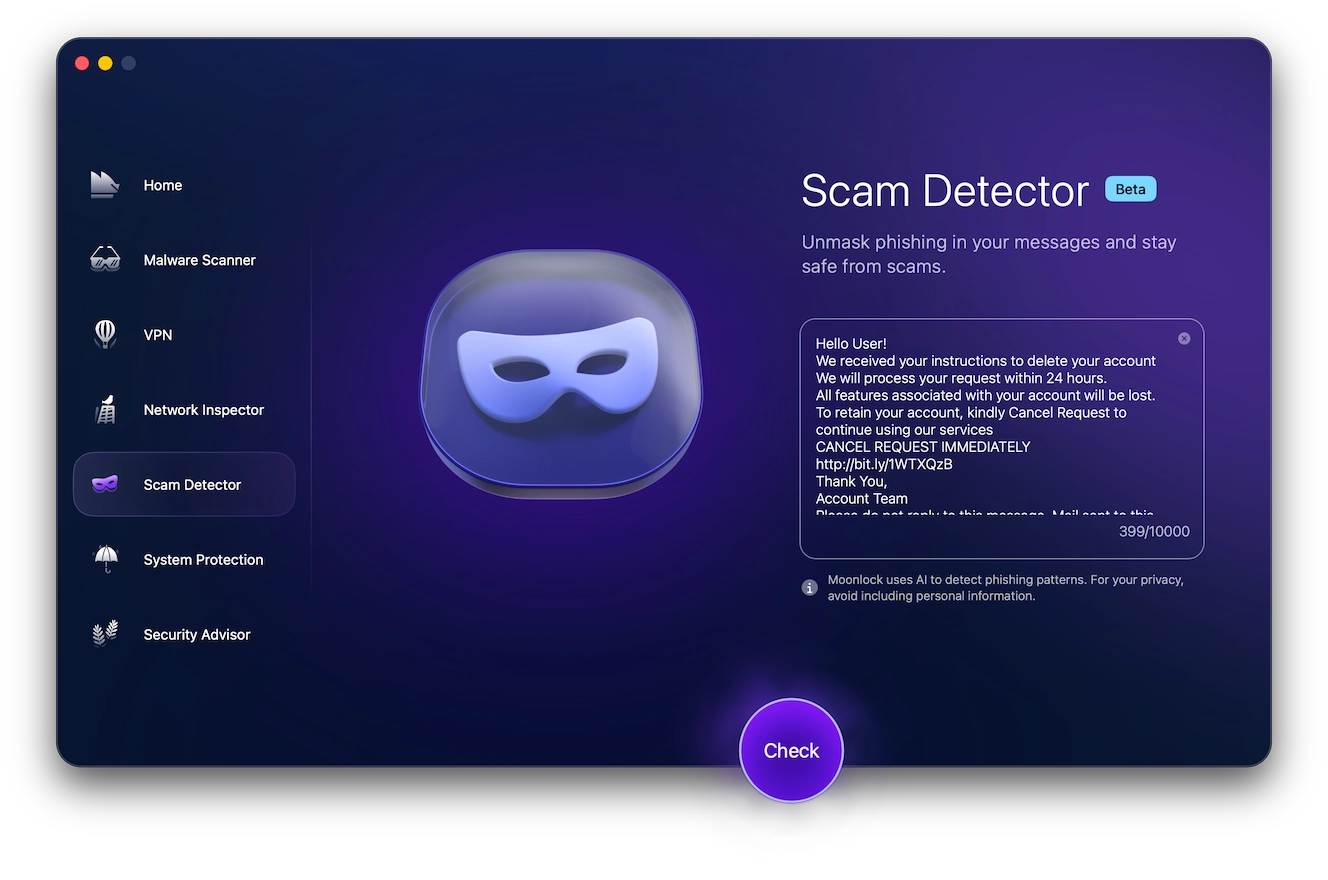
How to use Scam Detector to detect a Fiverr scam:
- Open the Scam Detector in Moonlock.
- Paste the suspicious Fiverr message into the program (you can also upload a screenshot).
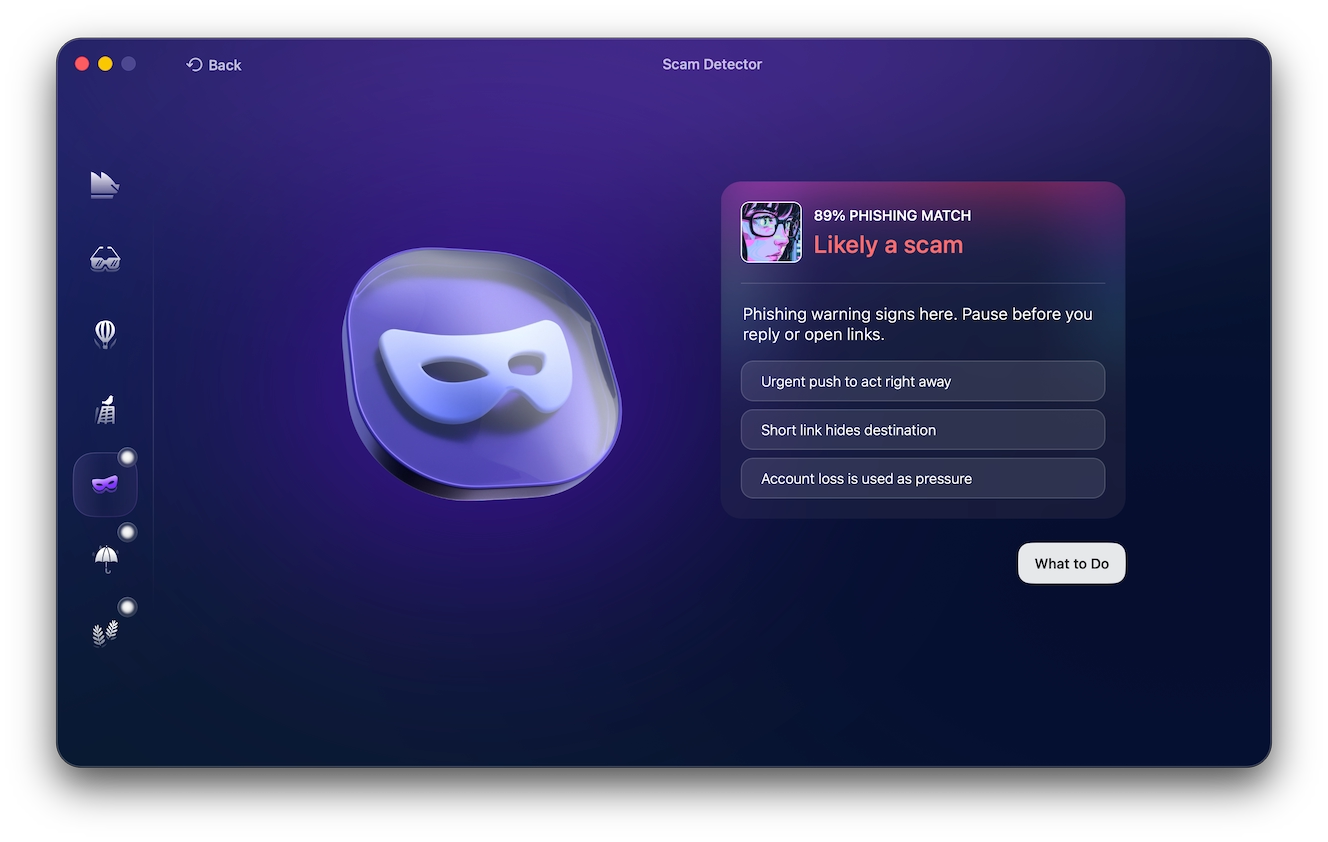
- Review the analysis before clicking a link or replying.
- Open Fiverr separately and check the claimed order or account issue there.
A suspicious message can be checked with a 7-day free Moonlock trial before it has a chance to turn into a payment or account problem.
Warning signs of a sketchy Fiverr seller
A weak seller profile doesn’t automatically mean someone is running a Fiverr scam, but buyers can look for evidence that the portfolio and promises match the person behind them.
- Portfolio images appear elsewhere: Run a reverse image search on a few examples to see whether they were copied from another creator or stock library.
- The price is far below the normal range: Compare several sellers offering similar work before assuming that an unusually cheap quote is realistic.
- The profile photo looks generic: Reverse-search the image and check whether the same face appears under other or unrelated names.
- The seller avoids specific questions: Ask 1 or 2 detailed questions about how the person would approach your project and look for answers that clearly address what you asked.
- Reviews do not match the service being sold: Read the written comments rather than relying only on the star rating.
- Portfolio quality varies dramatically: Compare multiple samples for consistency in technique or subject knowledge.
Warning signs of a sketchy Fiverr buyer
Freelancers face a different set of warning signs. Pay attention to what the buyer wants you to do before a legitimate order is underway:
- They use reviews as leverage: “Add another revision, or I’ll leave a bad rating.”
- They want outside payment: “Send your PayPal and I’ll pay you directly.”
- They immediately move to another app: “Message our manager on Telegram so we can discuss the project.”
- No real order appears: “Start now and I’ll place the Fiverr order once I see progress.”
- They want a free test project: “Do this first sample and we’ll have a lot more work for you.”
- They introduce a verification fee: “You need to pay a small processing fee before I can unlock the job.”
- They pressure you with an extreme deadline: “It’s a small job and should only take an hour, so I need it today.”
Fiverr safety, refunds, and account security FAQs
Fiverr provides several built-in systems for payments and order disputes, but what happens next depends on the problem.
Yes, paying by credit card through Fiverr is generally safe because Fiverr is a Level 1 PCI-DSS service provider and handles the transaction through its own checkout system.
Fiverr may issue refunds when an order is canceled or a dispute is resolved in the client’s favor, depending on the circumstances of the order.
A buyer can use Fiverr’s order-resolution process or contact support when the seller fails to deliver the agreed-upon work.
Neither platform is better for everyone: Fiverr is built heavily around defined services and orders, while Upwork is often used for longer client engagements and contract-based work.
Yes, an attacker can take over a Fiverr account if they obtain the login credentials through phishing or another form of credential theft.
How to deal with a scam on Fiverr
What you should do after being scammed on Fiverr depends on what the scammer obtained. The first goal is to stop further access or payments while preserving enough information to document what happened:
- Stop communicating with the account. Do not send more information or money.
- Save the evidence. Keep copies of relevant messages, payment records, links, or screenshots.
- Report suspicious Fiverr activity. Use Fiverr’s reporting tools for scams or policy violations and its Resolution Center for qualifying order disputes.
- Secure your account. Change your Fiverr password if credentials may have been exposed and turn on 2-factor authentication.
- Contact your payment provider. If money was sent outside of Fiverr, ask the bank or payment company what recovery options are available.
- Check the device involved. If you opened an unexpected attachment or installed something sent by the scammer, scan the computer before continuing to use sensitive accounts.
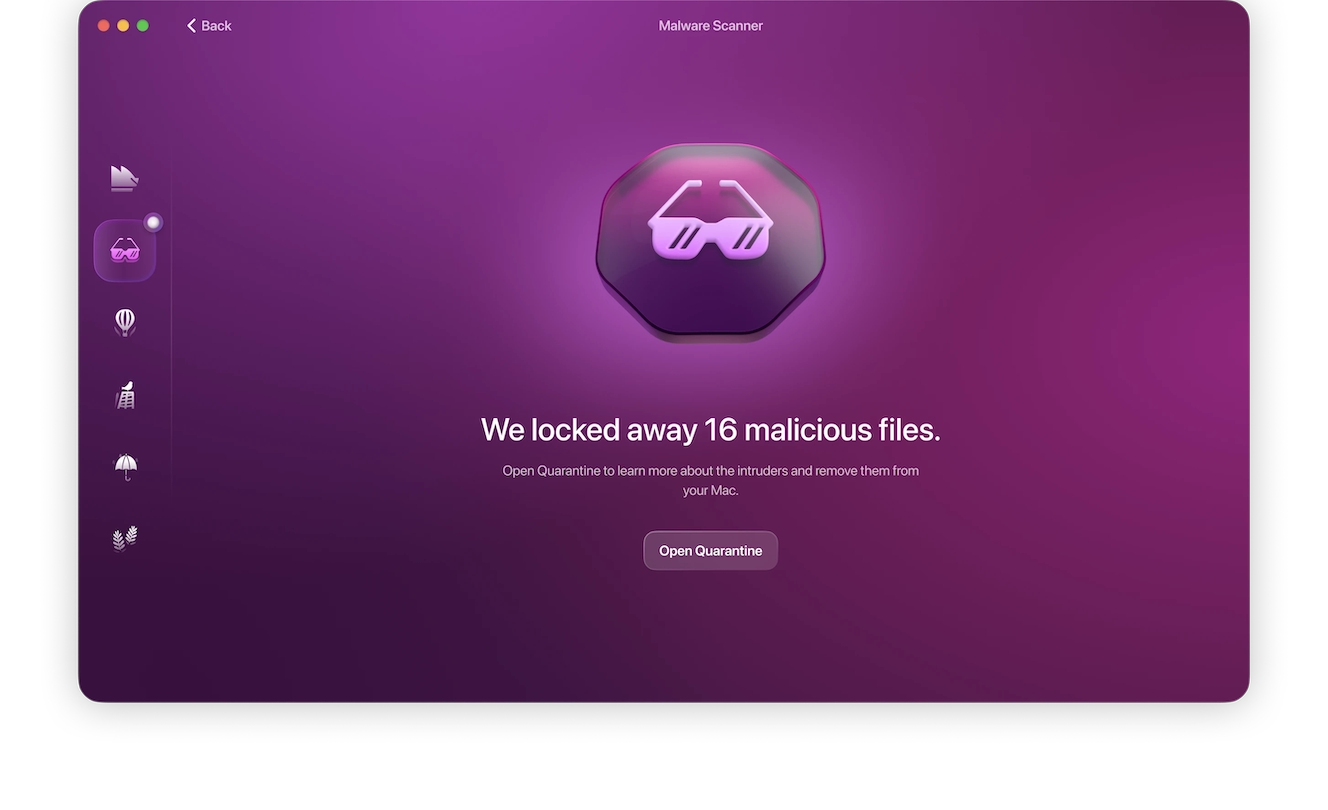
Moonlock’s Malware Scanner can check a Mac for malware after a suspicious Fiverr attachment, download, or link raises concerns. Its real-time protection can also watch for malicious activity while you use the device.
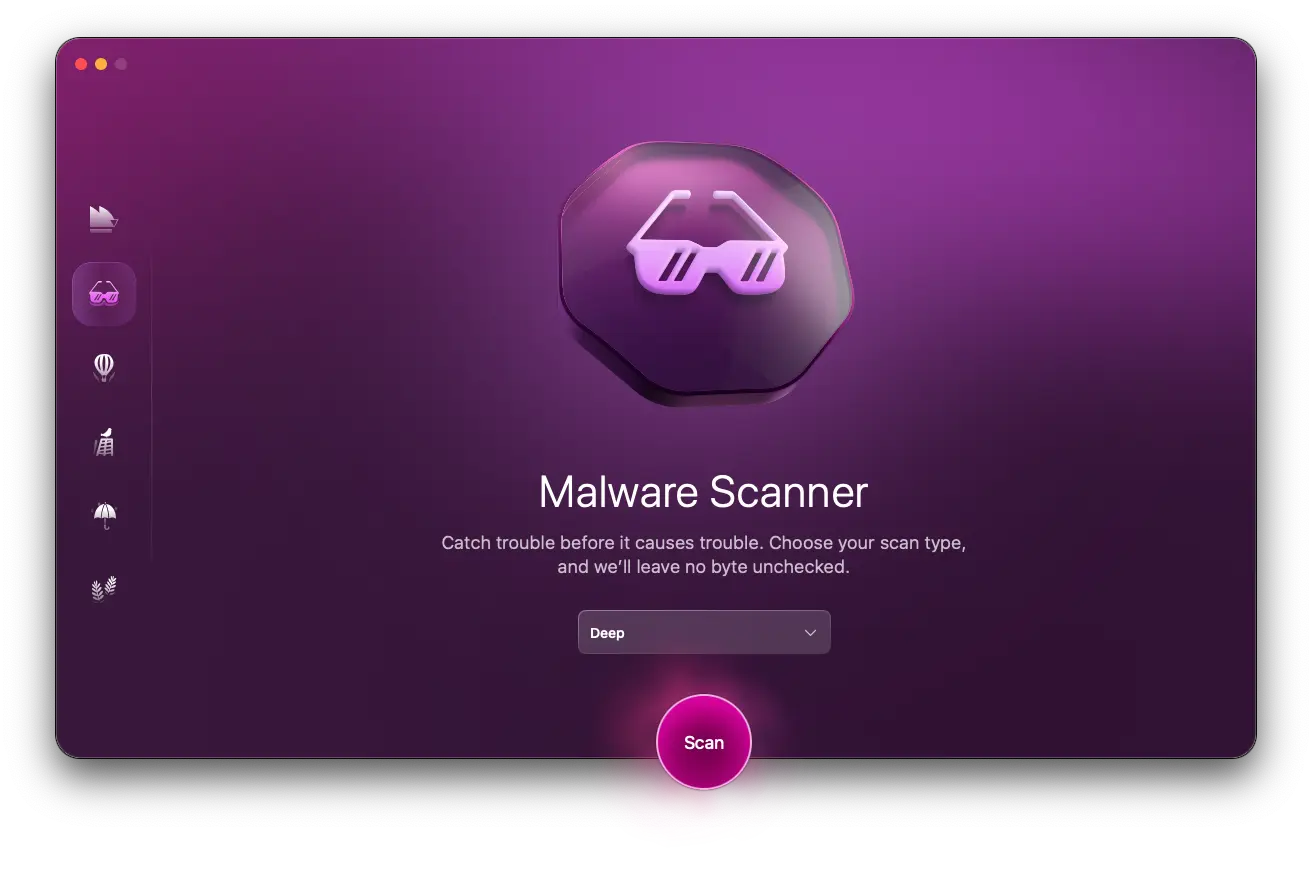
Here’s how to use the Moonlock antivirus:
- Open Moonlock and select Malware Scanner.
- Start a scan of the Mac.
- Review anything Moonlock detects.
- Remove identified threats through the available controls.
Running a scan after suspicious activity can help determine whether the scam went beyond the Fiverr conversation and reached the device itself.
How to protect yourself from Fiverr scams
Most Fiverr fraud becomes easier to recognize once you know which parts of the transaction should remain inside the platform. Buyers and freelancers can use the same basic checks before committing money or work:
- Check order updates directly through the Fiverr app/site instead of following a strange link.
- Be wary if someone asks for your card details or other details off or on the platform.
- Before hiring someone, be sure to look closely at the seller’s portfolio and past work.
- If a buyer wants a sample, suggest a small paid order instead of working for free.
- Keep important project discussions on Fiverr so there is a record if a dispute comes up.
- Two-factor authentication can make a stolen password less useful to an attacker.
- Report accounts that impersonate Fiverr staff or pressure you to bypass the platform’s payment system.
Fiverr is safe. Millions of users use it for tens of millions of legitimate transactions. However, that does not eliminate the need to evaluate the person on the other side of an order. The strongest protection starts with a solid understanding of how a normal Fiverr transaction should work, and the hallmarks of a scam.
This is an independent publication, and it has not been authorized, sponsored, or otherwise approved by Fiverr International Ltd. Fiverr is a trademark of Fiverr International Ltd.