

Suddenly locked out of your TikTok account? Was your password suddenly changed, or are you finding strange videos being posted without your permission? These are classic signs of a hacked TikTok account that you shouldn’t ignore.
In this guide, we’ll walk you through how TikTok hacks happen through a variety of attack vectors, what to do if your account gets hacked, and how to secure your TikTok moving forward.
Can a TikTok account be hacked?
Like any other form of social media, a TikTok account can be hacked, especially if you’re not careful with it. With nearly 1.9 billion monthly active users, TikTok is becoming a prime target for cybercriminals who are coming up with schemes that specifically target TikTok’s weaknesses.
For example, in June 2025, a threat actor calling itself Often9 claimed to be selling a dataset of 428 million TikTok user records, including emails, phone numbers, and profile data, obtained through an internal API flaw. However, TikTok has not confirmed the breach, and researchers have flagged inconsistencies in the sample data, so the claim should be treated as unverified rather than as a confirmed compromise of logins.

Scam Detector has your back
How can someone hack your TikTok account?
TikTok’s popularity has taken over giants like Twitter, Facebook, and Instagram. And with so many users and so much activity going on, cybercriminals and hackers just can’t resist. Here are the five most popular ways TikTok accounts are breached.
1. Guessing the password
Despite global cybersecurity awareness efforts, many users still choose very weak passwords. And believe it or not, old-fashion password guessing is still a leading cause of unauthorized access to accounts.
Choosing basic passwords, matching your username with your password, or using something like your pet’s name, birthday, or phone number is always a bad idea. Any hacker or person trying to access your TikTok account can search for this information online and use it to gain access. You should always choose a strong password and back it up with multi-factor authentication (MFA).
Attackers sometimes utilize a strategy known as credential stuffing, where they grab the username-password combos leaked in unrelated data breaches, then use bots to test them on TikTok. This works because many people reuse the same passwords across different sites, leading a single leak to compromise multiple accounts, including TikTok.
2. Brute force attacks
Brute force attacks are executed by using a special kind of software that attempts to break into an account by trying out many different password combinations.
You don’t need to be a sophisticated coder or a dark web specialist to run brute force attacks. Popular brute force software can be easily downloaded online. They are particularly effective when passwords are weak. Activate your 2-factor authentication (2FA) or multi-factor authentication (MFA) to have the best chance of stopping these types of attacks.
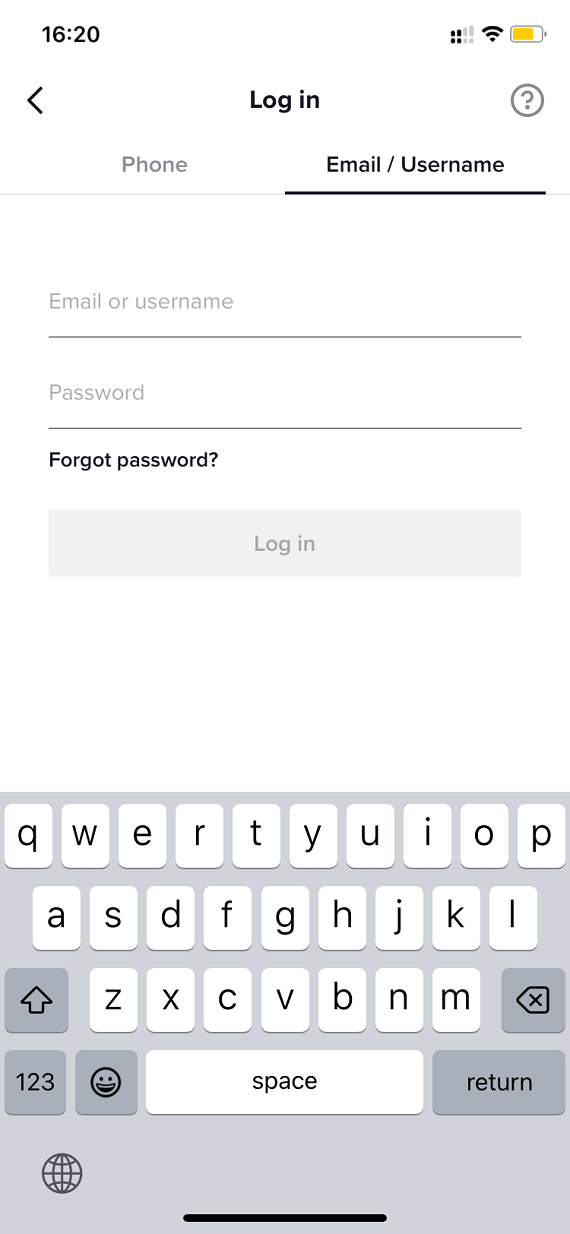
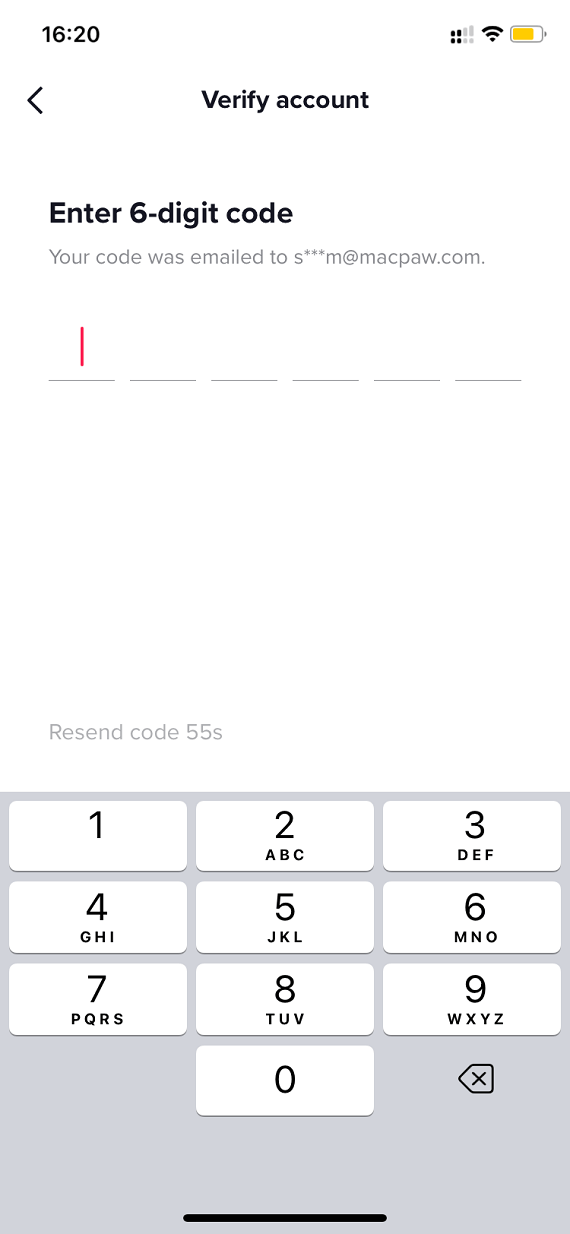
3. Spyware and infostealers
As mentioned above, spyware, parental software, and monitoring apps are very popular despite the gray lines in which they work. Apps like eyeZy, FamiSafe, Qustodio, and Bark, to name just a few, have millions of downloads. They are used daily to keep track of users on social media, and their capabilities are impressive.
While the companies developing these apps explain that the user needs to give their consent before spyware is installed on their device, the reality is that a lot of people have them installed without their knowledge. And not all of those who install these apps are concerned parents.
However, unlike parental control apps, infostealers are far more dangerous. The malware sits quietly on your device and grabs your saved passwords and live session cookies, allowing the attackers to log in to your TikTok account without even needing your password or 2FA.
Your iPhone or Mac can get infected with an infostealer by downloading cracked software, adding malicious browser extensions, or clicking on malicious links. There’s no way to tell if your Mac has been infected with an infostealer, as they’re designed to be covert.
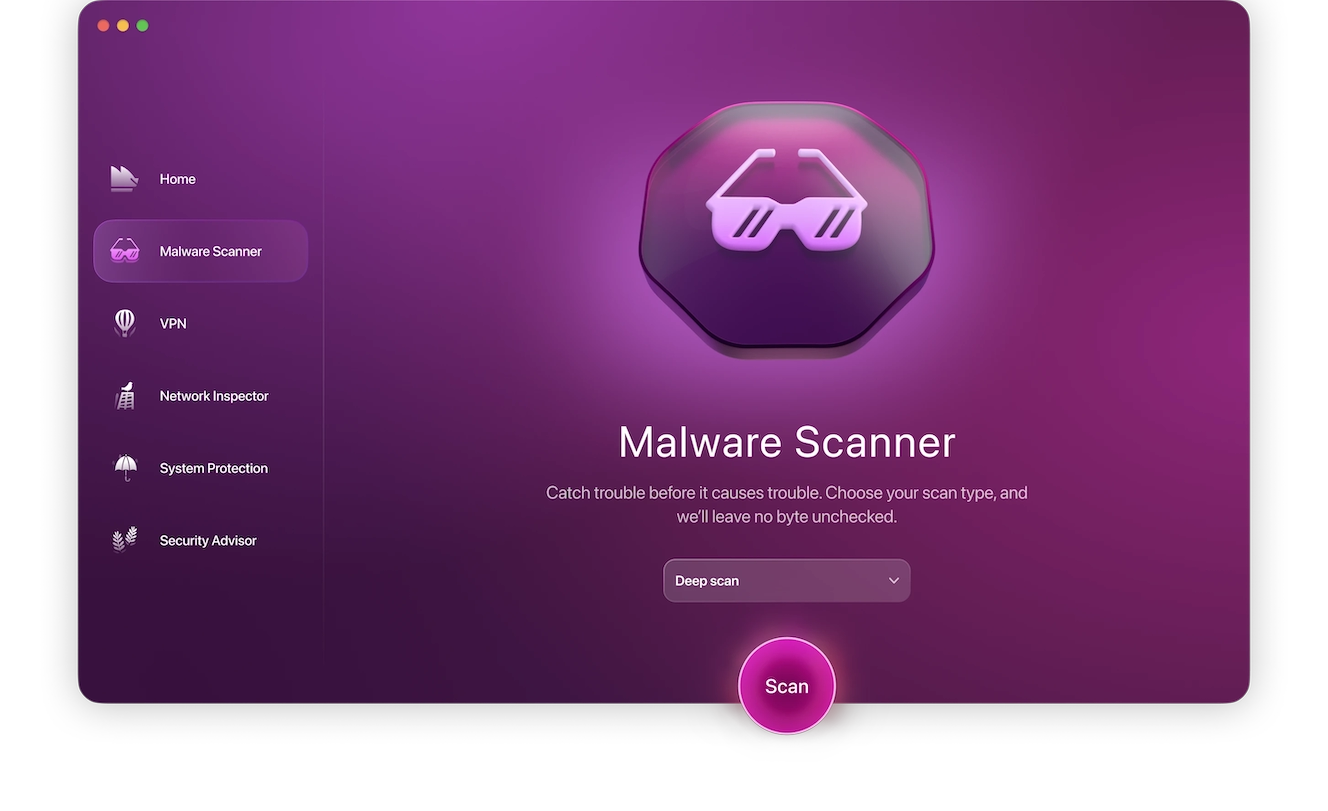
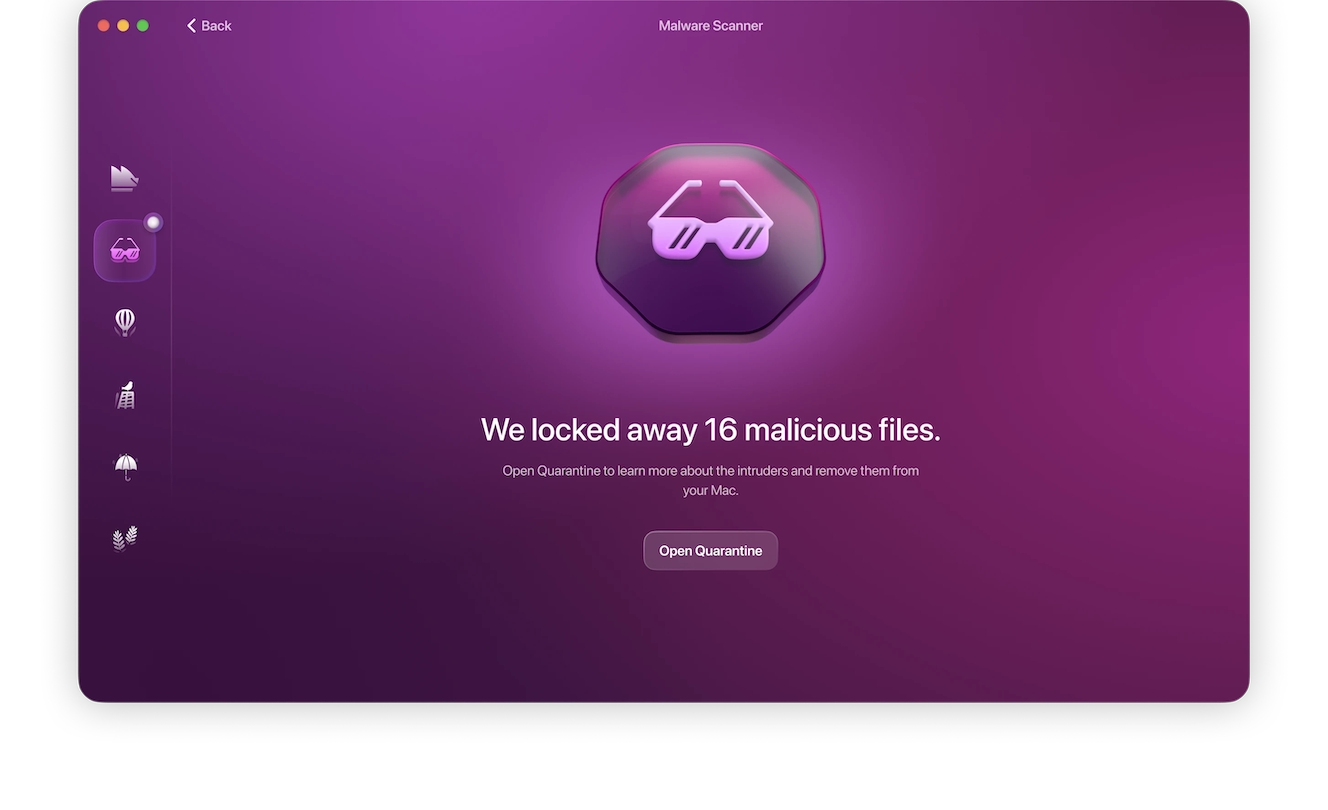
You’ll need specialized antimalware software, like Moonlock, to catch and remove infostealers for you.
- Start a 7-day free trial of Moonlock
- Download the app and open up the Malware Scanner from the right-hand menu
- Run your first scan.
- All located threats will be flagged and moved to Quarantine, where you can review them and remove them on your watch.
4. Social engineering
Social engineering is the art of mastering human nature and human behavior, and cybercriminals are experts in these techniques. It is their top entry point into any system. In social engineering, criminals will impersonate official authorities, trustworthy organizations, and known companies. They may contact you through email or through TikTok itself, direct you unknowingly to a malicious site or link, or even call you on the phone.
Social engineering is one of black hat hackers’ favorite moves. They will develop complex cons to trick you into giving out your credentials, filling out forms that give them access, clicking or downloading malware, and forwarding your phone activity. What can you do to avoid this? Stay away from suspicious messages, and report, block, and delete them.
5. SIM Swap Attacks
In SIM swap attacks, a hacker attempts to reach you by tricking your mobile carrier. They reach out to your cell service provider pretending to be you, often using personal information posted online or included in a data leak to “verify” their identity. Then, they convince the agent to port your number to a different SIM card that they control, usually claiming that they lost the phone with the original SIM card.
Once your number is registered to their SIM card, they’ll begin to receive the 2FA codes sent via SMS, allowing them full access to your TikTok account and all other accounts connected to this phone number.
Can you get hacked by following a TikTok link?
Yes, you absolutely can get hacked by clicking on a malicious link on TikTok. This is, as mentioned, a very popular way for a hacker on TikTok to access your account. Cybercriminals create links that look very official and direct you to sites that can also look legitimate. Once on these sites, you may be prompted to take some seemingly harmless action, like activating fake JavaScript or updating known software. Consequently, malware will run automatically, grabbing your credentials or installing an unwanted program.
Hackers will also impersonate TikTok teams and send you links that direct you to sites that look like TikTok. They might ask you to log in to your account, presenting an excuse like a security breach. The best way to prevent falling for this scam is to NEVER click on suspicious links. Also, check URLs and website addresses very carefully. They might look like the real thing with just one or two characters off.
How to tell if your TikTok has been hacked
When using TikTok, there are a few clear signs of hacking that you should watch out for. If you experience any of the following, the chances that your TikTok account has been hacked are very high.
You got a phishing email or a scam text
Those “TikTok security alerts” or “Your TikTok account has been suspended” emails and text messages are rarely legitimate. You shouldn’t click on any of the links in them. But if you’re worried they might be true and don’t want to lose your account, a scam detector tool can scan the message for common red flags of scams, including social engineering tactics and mismatched details.
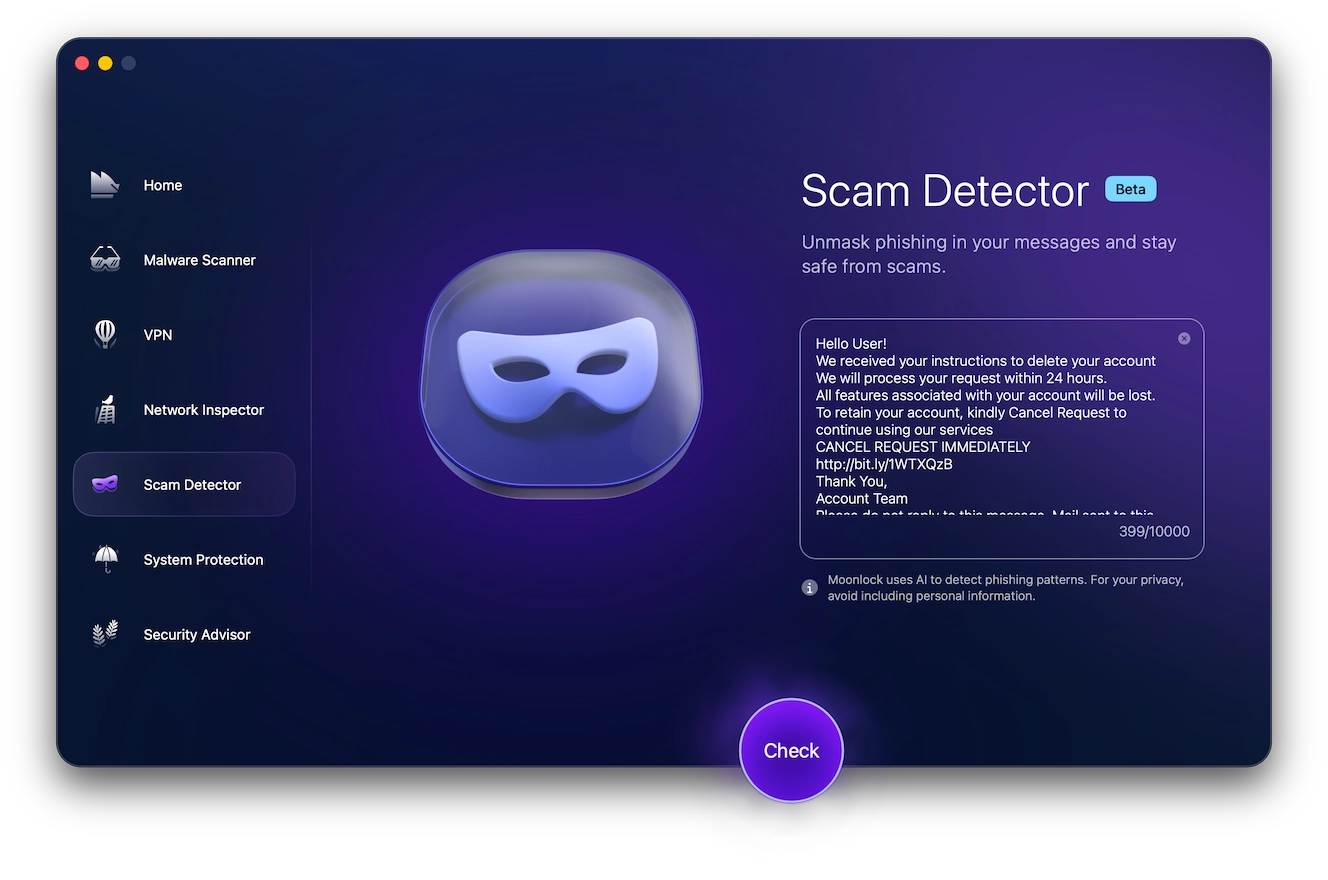
Paste the text into Moonlock for an instant analysis on whether the message or email is a phishing attempt. Here’s how to use it:
- Start your 7-day free trial of Moonlock
- Navigate to the Scam Detector.
- Copy the suspicious message in full (subject line, body, and all)
- Paste it into the Scam Detector and hit “Check.”
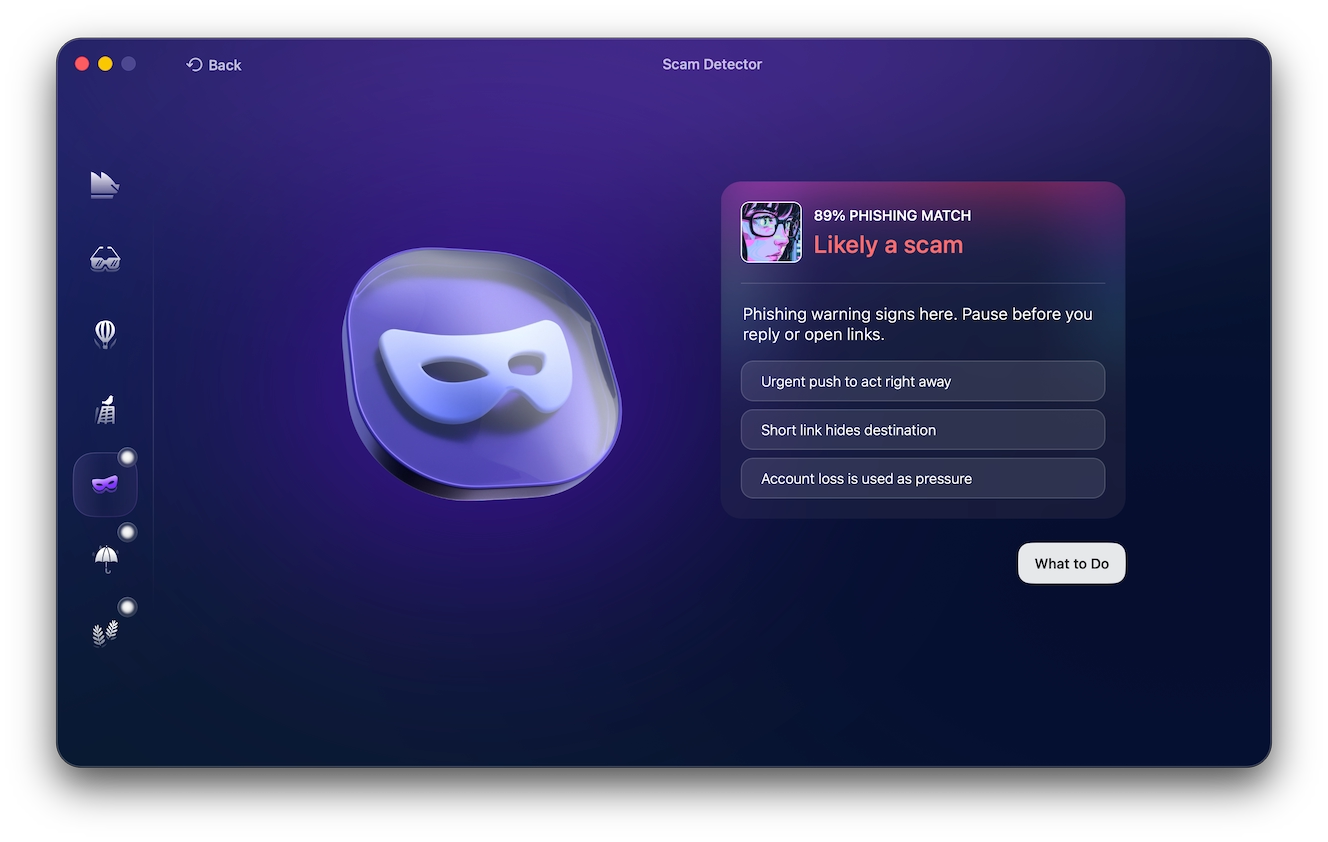
Moonlock will break down the red flags it finds and tell you exactly how to respond.
Your password or phone number has been changed
Nothing says “breached account” like a password that no longer works or a phone number that’s been mysteriously changed. In both cases, you should take immediate action.
The first thing a TikTok hacker will do when they illegally gain access to your account is to go after your password and change basic security settings like your phone number. TikTok verifies its accounts through email or phone number, which is why these settings are the first things they change.
Videos have been deleted or posted without your permission
If you are wondering why someone would delete your videos and post new ones, the answer is simple. One of the reasons why criminals take control of TikTok accounts is to use them to spread spam or run malware campaigns.
Hackers will break into several accounts and send millions of messages and post thousands of videos. And, while they’re at it, they might delete some of your content. If this has happened to you, read the section below to learn what you should do next.
Your account has been locked
When a user enters an incorrect password too many times, engages in behavior that TikTok considers a breach of its guidelines, or uses an account to share spam, the company will lock the account.
In other words, if you wake up one morning to find that your email inbox is filled with messages from TikTok warning you about login attempts and you later try to access your account only to find that it’s locked, it probably means your TikTok was hacked in your sleep.
Your account is following or unfollowing people automatically
If you notice your following list changing, particularly if it starts including accounts you don’t recognize or remember following, it’s a huge red flag. Hackers often use already-compromised accounts to mass-follow scam profiles or boost fake engagement, so your account might already be involved in such schemes.
Your followers are receiving DMs or spam from your account
Your friends and followers might start complaining of weird DMs from you, containing strange links or crypto giveaways. This is a clear sign that your account has been compromised. Hackers can impersonate you online to spread phishing links and scams, taking advantage of the fact that your friends and followers trust you.
You were automatically logged out of your account
When another user tries to remove an active device from the app settings in your account, you will be automatically logged out. Removing devices from an account is a security feature that you can use to help you stay safe, but TikTok hackers also use the feature to lock you out if they gain control of your account. If this happens to you, do not wait. Take immediate action.
What to do if you think your TikTok account is compromised
Here’s what you should do if you want to get your hacked TikTok account back. Take action immediately by doing the following in order. First, reset your password. Second, link your phone number to your account. Third, remove any unauthorized devices and turn on 2FA.
How to reset your password on TikTok
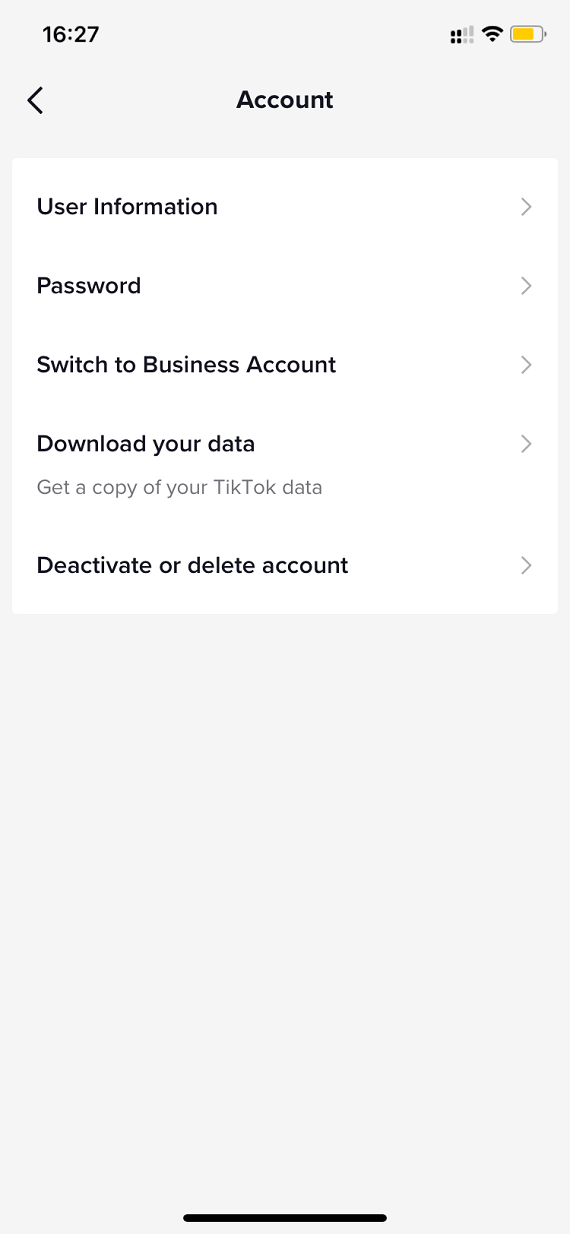
To reset your password on TikTok:
- Tap Profile in the bottom right.
- Select the 3-line icon in the top right.
- Go to Settings and Privacy.
- Tap Manage account.
- Select Password.
- Change your password.
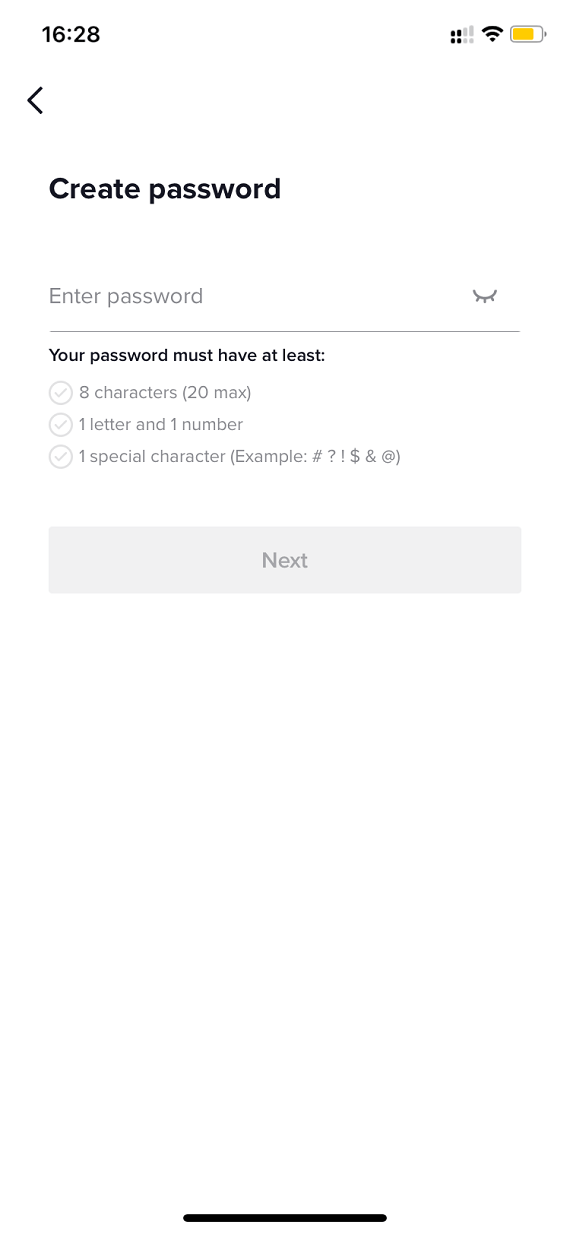
Remember, when creating a new password, make sure it is strong and original. The ideal password should be at least 12 characters long. Mix things up using uppercase and lowercase letters, symbols, and numbers. And don’t forget to change your password often.
How to link your phone on TikTok
To link your phone number to your TikTok account:
- Go to your Profile in the bottom right.
- Tap the 3-line icon in the top right.
- Select Settings and Privacy.
- Tap Manage account.
- Select Phone number.
- Link your phone number.
How to remove unauthorized devices from TikTok
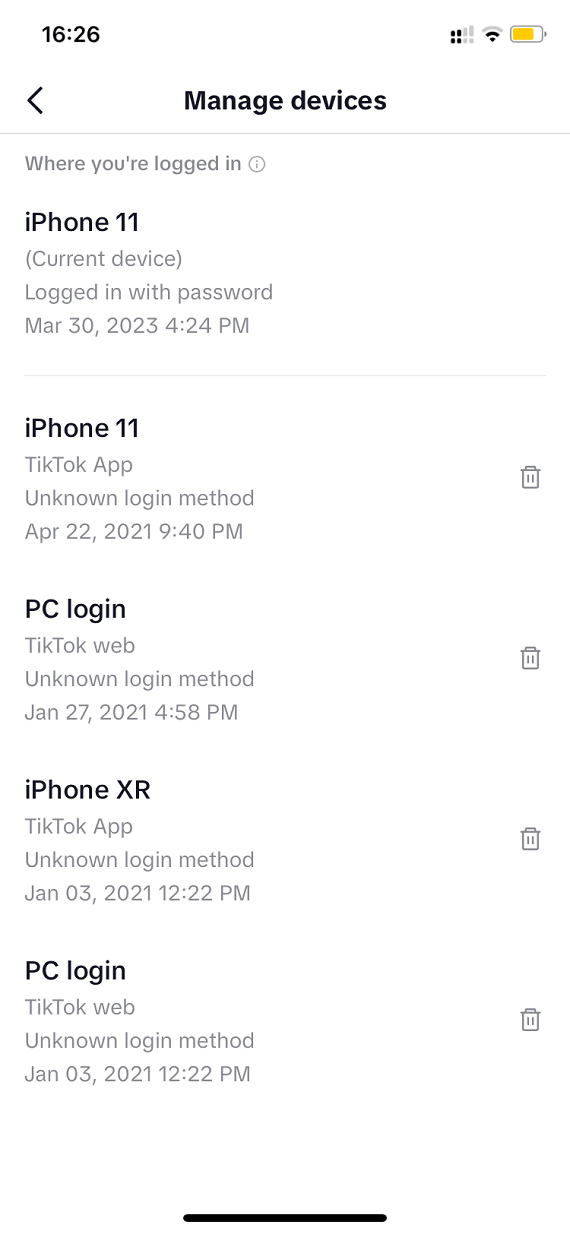
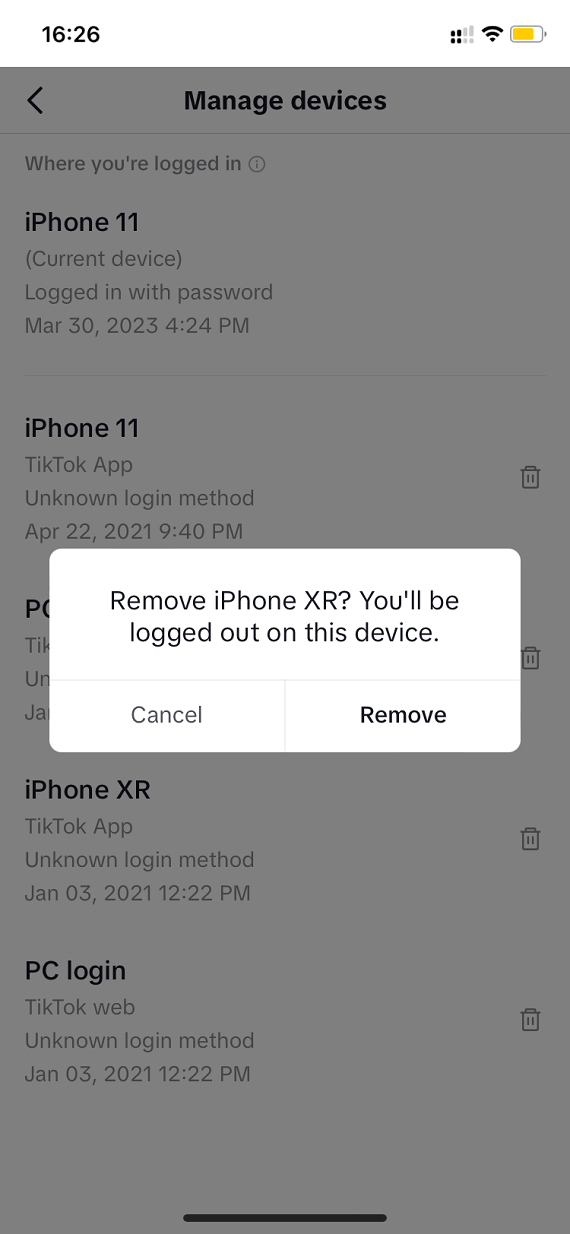
When someone hacks into your account, TikTok will identify and register the device or devices that were used to breach it. You’ll need to remove it from the authorized device lists in your TikTok account.
To remove suspicious devices from your account:
- Tap Profile in the bottom right.
- Select the 3-line icon in the top right.
- Go to Settings and Privacy.
- Find Security.
- Select Your devices.
- Remove unwanted or suspicious devices using the Trash icon.
How to turn on 2-factor authentication on TikTok
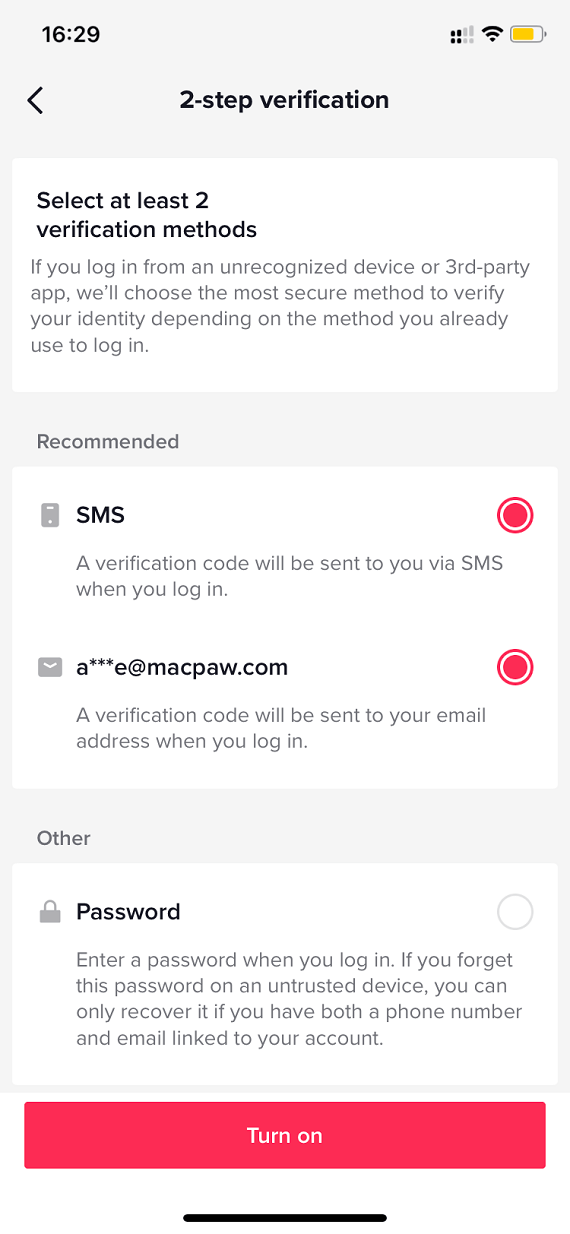
Many people only use one security layer to access their social media. This means they only use their password. You can add an extra security layer. You need to activate 2-factor authentication, which TikTok calls 2-step verification (2SV). Once it is active, even if someone gets your password right, they still need access to your email or phone to verify that it is you.
To turn on 2-step verification in TikTok:
- Check that you have downloaded the latest version of TikTok.
- Tap Profile in the bottom right.
- Select the 3-line icon in the top right.
- Go to Settings and Privacy.
- Select Security.
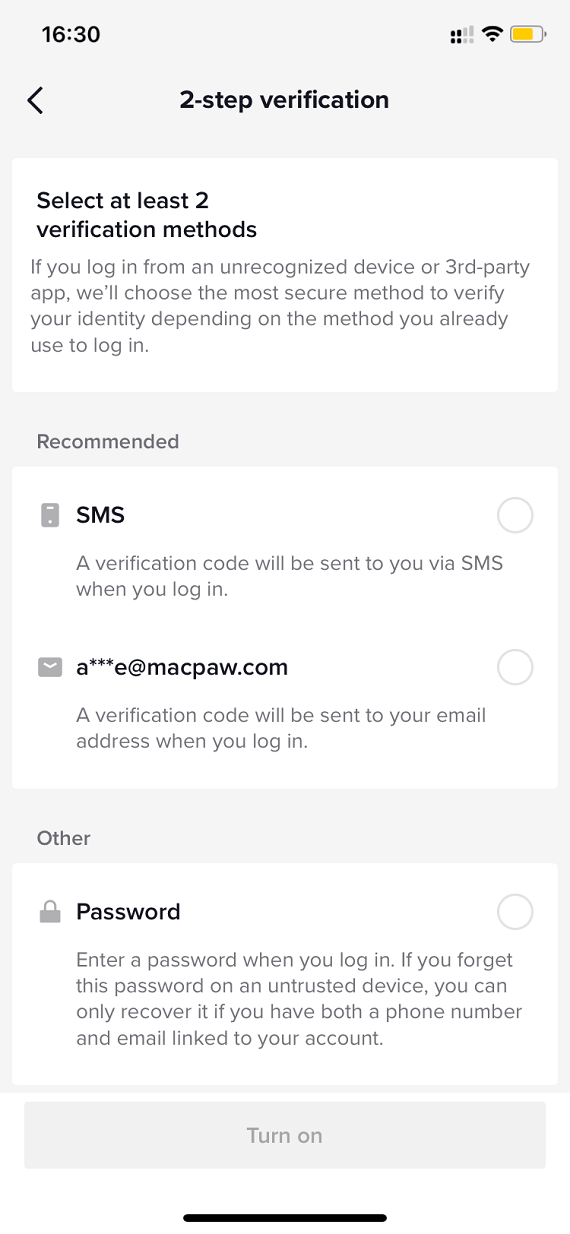
- Tap 2-step verification and choose at least two verification methods. TikTok recommends SMS and email.
- Select Turn on to confirm.
- If you have not previously entered your contact information, you’ll be prompted to enter an email address and phone number.
- Tap Send code and on the next screen, enter the verification code sent to you via SMS and email.
It’s also important that you report any suspicious activity. On TikTok’s Official Support page, you can report different kinds of problems.
Secure your email account
Like your phone number, your email address is the master key to all the accounts connected to it. If a hacker gets into your email, they can access all your other accounts and lock you out. So, to keep your TikTok safe, you first need to secure your email account.
Log in to your email client and change the password to something strong and unique, preferably a randomly generated string of letters, numbers, and symbols. Then, enable 2-factor authentication, either with your phone number or a third-party app like Authy. Also, regularly check your recent login activity and sign out of any sessions you don’t recognize.
How to recover a hacked TikTok that has been banned or locked
If your hacked TikTok account was banned or locked and you cannot recover it through normal methods, you can appeal to TikTok. You can only do this if you’ve received a notification from them when your account was banned. To appeal, open the notification, click on Appeal, and follow the instructions.
If all of the above fails, you still have one more card up your sleeve. It’s a long shot, but it just might work if you have the patience. You can contact TikTok through their Feedback form, explaining your ordeal in detail, and wait to hear back from them.
TikTok is expected to continue expanding as one of the most popular social media platforms in the world. Although it is loved by the younger generations, the app still has its share of security weaknesses, like any app. However, if you take appropriate steps to keep your account safe, the risk of being hacked drops dramatically.
How can you protect your TikTok account from being hacked?
While TikTok implements security measures, your account isn’t invincible. Here are 5 key steps to fortify your defense and keep hackers at bay.
1. Use strong passwords and MFA
This one’s a classic. Use a unique, strong password for TikTok and enable Multi-Factor Authentication (MFA) for an extra layer of security. Don’t reuse passwords across different platforms!
2. Stay clear of suspicious links
Don’t click on suspicious links or download attachments from unknown senders, even if they claim to be from TikTok. Phishing emails are a common way for hackers to steal TikTok login credentials.
3. Mind your app permissions
Be mindful of the permissions you grant to third-party apps that connect with TikTok. Only grant access to what’s absolutely necessary. A sketchy app could be a security risk.
4. Keep your apps updated
Outdated TikTok app versions might have unpatched vulnerabilities. Make sure you update the app whenever a new version is available. This goes for your device’s operating system as well.
5. Report suspicious activity
If you notice anything strange happening with your account, like unauthorized logins or changes to your profile, report it immediately.
6. Recheck your third-party app permissions regularly
TikTok lets you connect your account to various third-party apps, but it’s important not to let things get out of hand due to connected apps that you no longer need. If any of them is breached, your TikTok account is at risk.
To check your connected apps, in the TikTok app, go to “Settings and privacy”, then “Security & permission”, and tap on “Apps and services permissions.” Here, you’ll have a list of all third-party apps connected to your account. Review the list and revoke access to anything you no longer use or trust.
7. Check TikTok’s security checkup
TikTok has plenty of built-in security features, like its Security Checkup, a one-stop dashboard for all security settings. It can help you with linking a backup email and phone number, enabling 2FA, or reviewing logged-in devices.
To access it, open TikTok, tap Profile, then open the 3 horizontal lines menu. Under “Settings and privacy,” select Security & Permissions, then Security Checkup.
8. If standard recovery fails: Escalation options
Sometimes, you’re just too late. A hacker has fully locked you out of your account, and you can’t reset your password or contact email. Your last chance is to report the incident through TikTok’s Feedback form.
On a desktop computer, visit Tiktok.com/feedback, select “Report a problem,” then “Account and profile,” and click “Logging in.” You’ll have to provide proof of ownership of the account, like the original email address, phone number, ID, or old videos. This process takes some time and isn’t always guaranteed to work, so it’s better to take the necessary precautions to keep your account safe from hacking in the first place.
By following these tips, you can significantly reduce the risk of your TikTok being hacked. Remember, even with robust security measures, vigilance is key. Stay informed about the latest TikTok hacking tactics and be cautious online.