

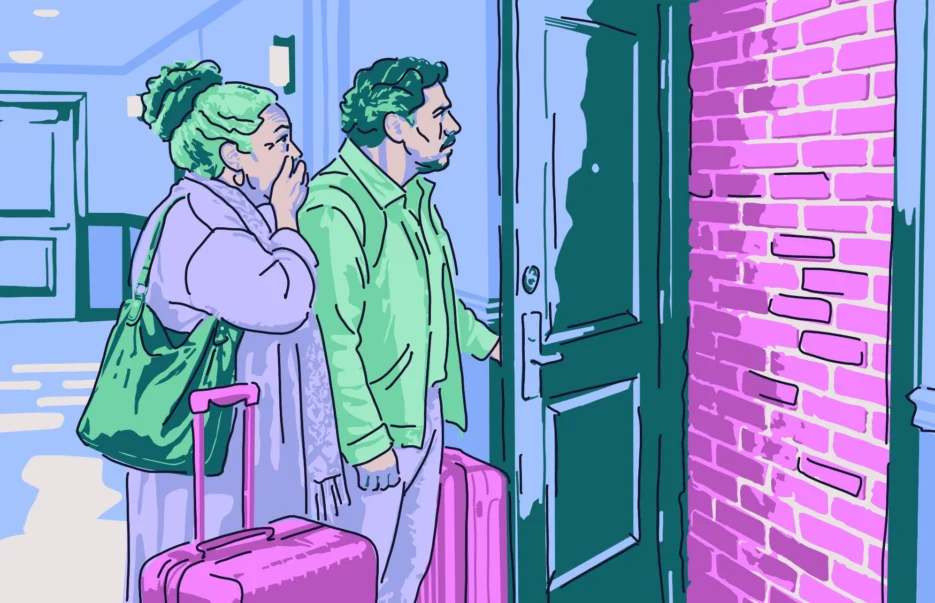
With over 5 million hosts and 2.5 billion guest arrivals in 2025, Airbnb is one of the most widely used online marketplaces for hosting and short-term rentals. However, this large-scale operation creates countless opportunities for scammers, from fake listings and phishing attempts to chargeback scams.
While Airbnb as a platform continues to do its best to guarantee a safe and pleasant experience for guests and hosts alike, both sides still need to recognize how these schemes work in order to avoid them.
Is Airbnb safe from scams?
Airbnb has many safeguards against scams in place, but that doesn’t mean it is scam-proof. The platform requires everyone, from hosts and co-hosts to booking guests, to verify their identity for all stays and services. While the process is far from perfect, it helps to mitigate fraudulent behavior.
The platform also takes proactive anti-fraud measures, like monitoring for suspicious activity, providing secure in-app messaging, and prohibiting misleading listings and illegitimate chargebacks.
In 2025, Airbnb’s anti-fraud tech prevented around 265,000 suspicious listings from appearing on the platform. But, as always, scammers are one step ahead, luring users with off-platform discounts, phishing emails, and lookalike websites.
How often do Airbnb scams happen?
Between 2015 and 2020, over 28,000 complaints related to Airbnb scams were posted online. And between 2020 and 2025, the number of rental scams reported to the FTC more than doubled to 65,000.
As more people turn to online bookings and Airbnb to find holiday rentals, scammers are shifting their tactics to target them.
Common Airbnb scams targeting guests
If you are paying hundreds, if not thousands, of dollars for your stay as a guest, it’s worth being careful of Airbnb scams by hosts, especially ones where they get you off the platform.
Email/text phishing mimicking Airbnb
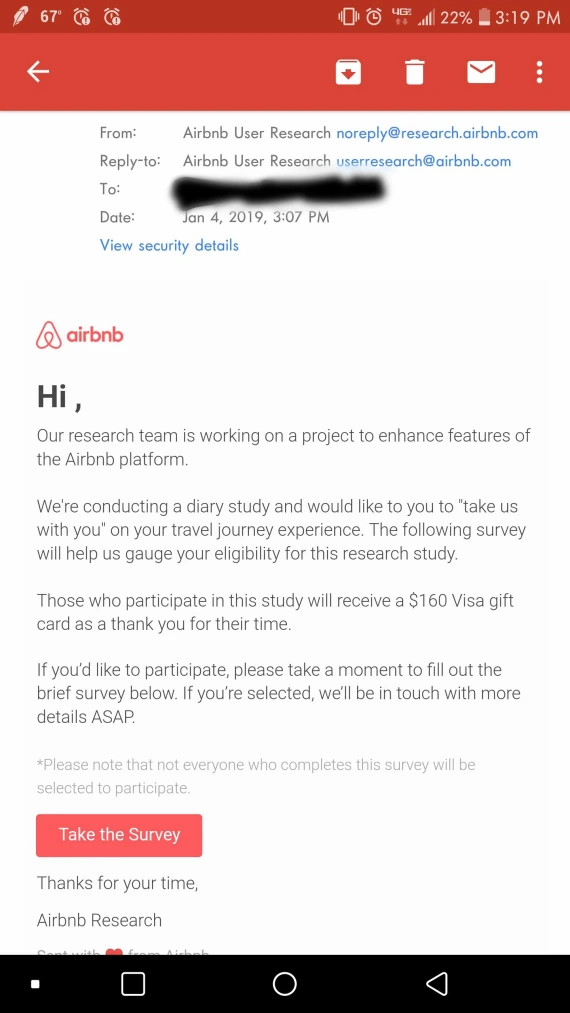
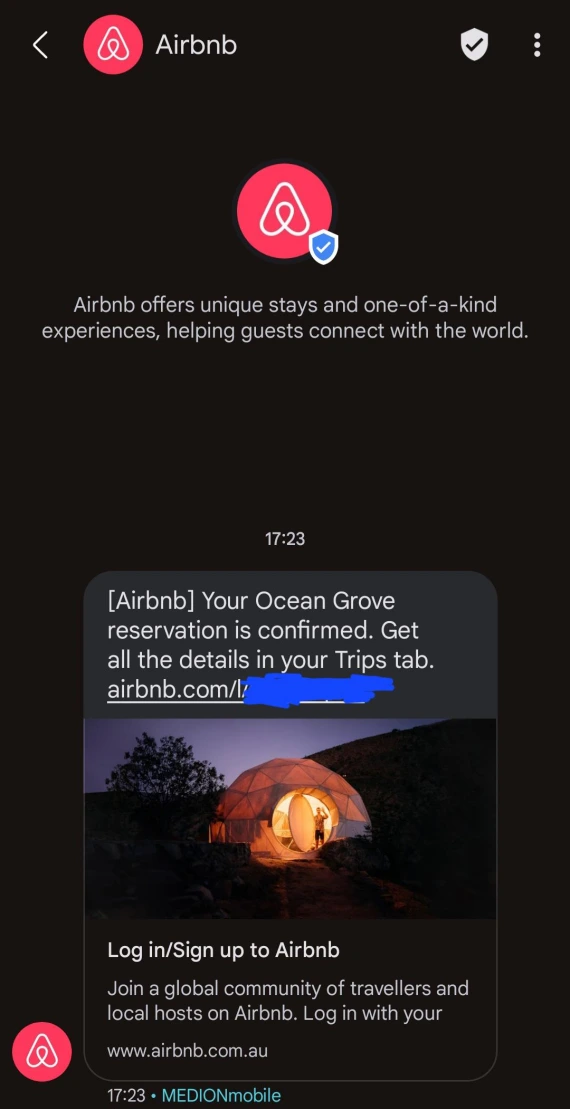
Scammers can fake the layout of an Airbnb email to impersonate the platform, sending fake emails about recent bookings or payouts, often leading users to fake login or payment pages. Warning signs of Airbnb email scams include generic greetings, such as “Dear Customer” instead of your name. They also tend to feature unprofessional urgency and a sender domain that doesn’t match the official @airbnb.com address.
The same applies to Airbnb text scams: Check the sender’s phone number and use online tools to preview any URL in the message before clicking it. When in doubt about a message or email, check the official Airbnb website or app directly instead of clicking on any links.
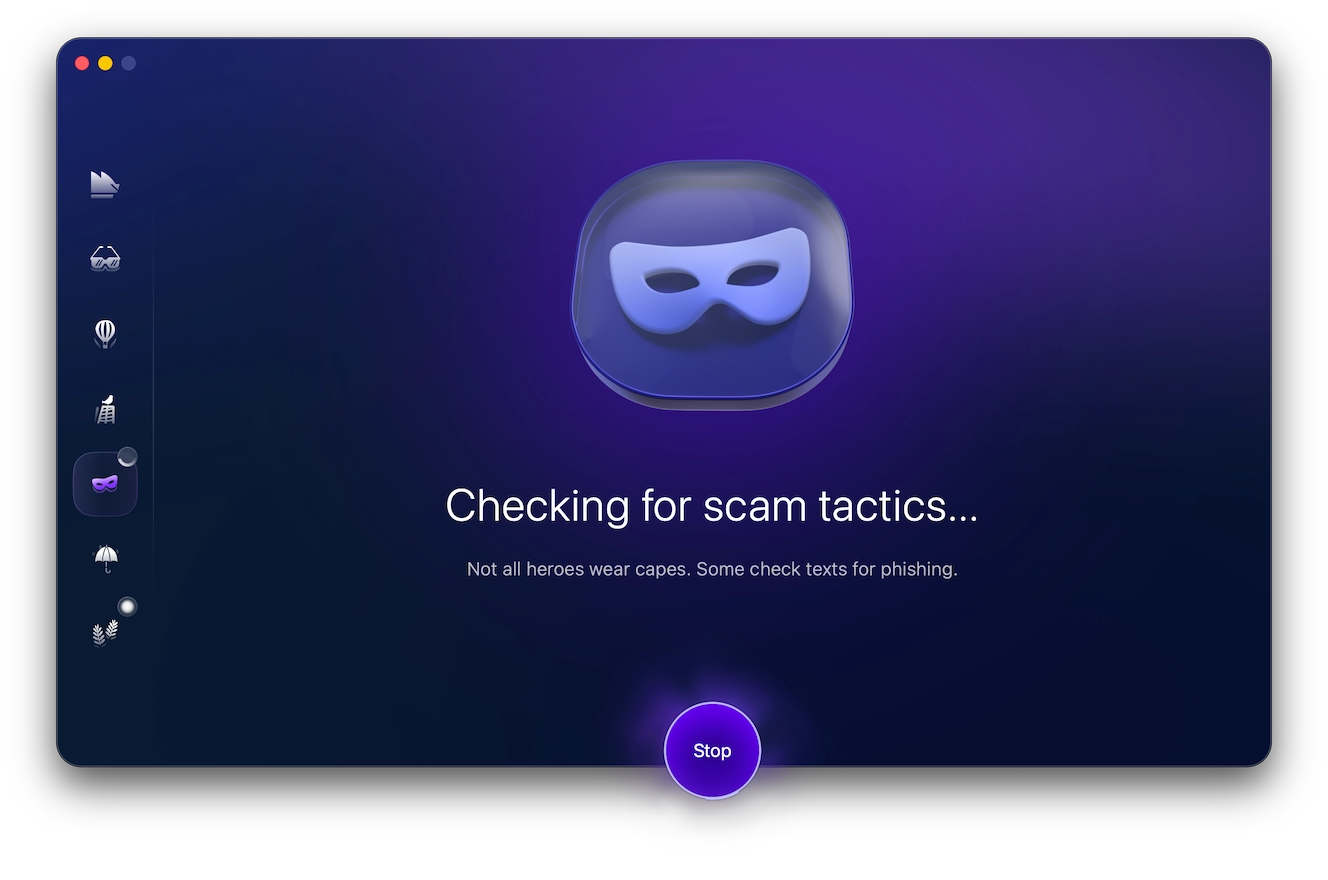
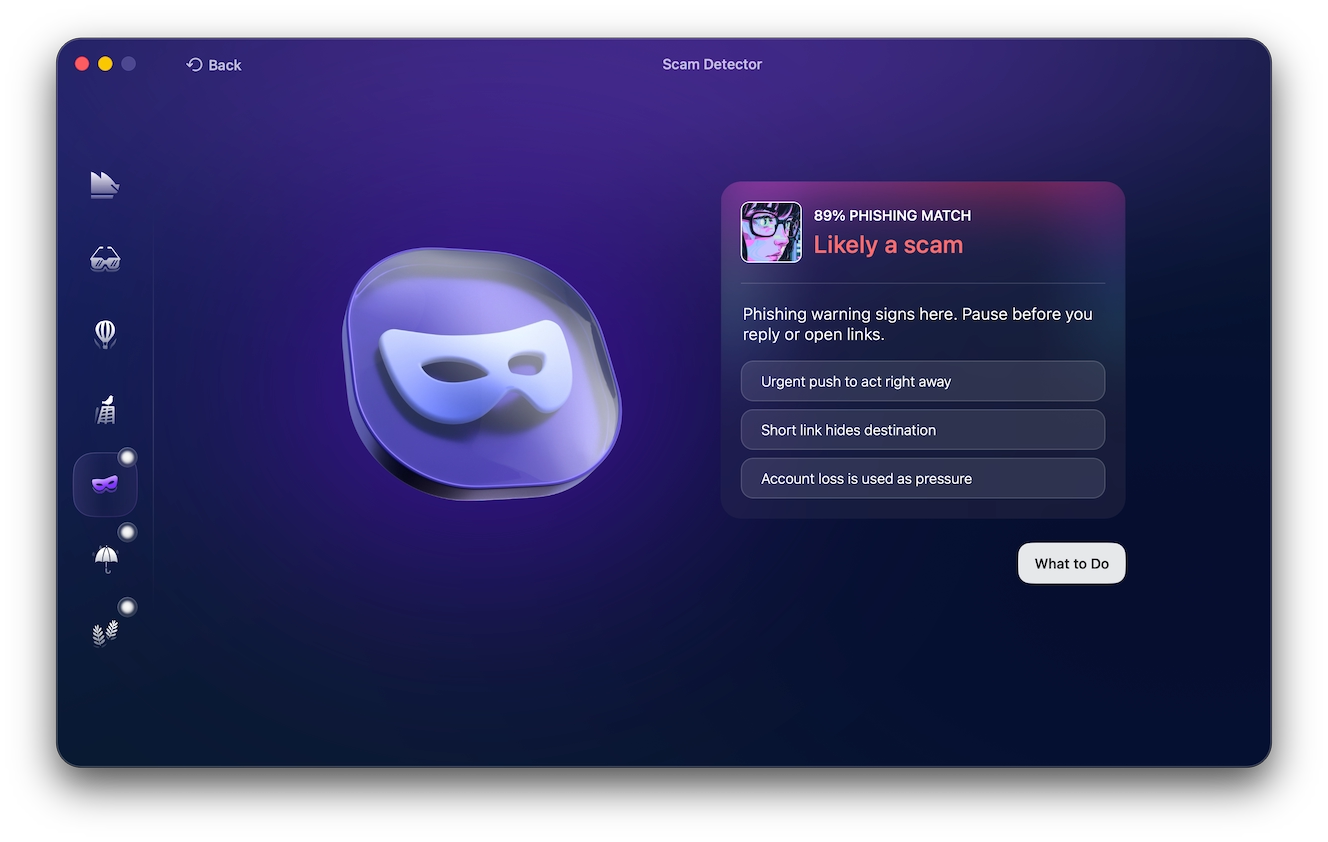
You can also copy and paste the suspicious message into Moonlock’s Scam Detector to check it for the likelihood of phishing, available with a 7-day free trial of Moonlock.
Airbnb urges users to report any suspicious or phishing emails to [email protected] to help the platform combat future attempts.
Fake or nonexistent listings
While not always straightforward, there are ways you can tell an Airbnb listing is a scam. Look out for stock or AI-generated images in the listing. Always check the provided address on Google Maps Street View to rule out fake addresses. Reverse-search the images and cross-check them against listings on other websites.
Red flags of an Airbnb scam include no or very few reviews, unusually low prices for the destination and time, and vague descriptions of the accommodations. It’s also suspicious if the owner refuses to provide additional photographs or videos of the property after you contact them.
Bait-and-switch scams
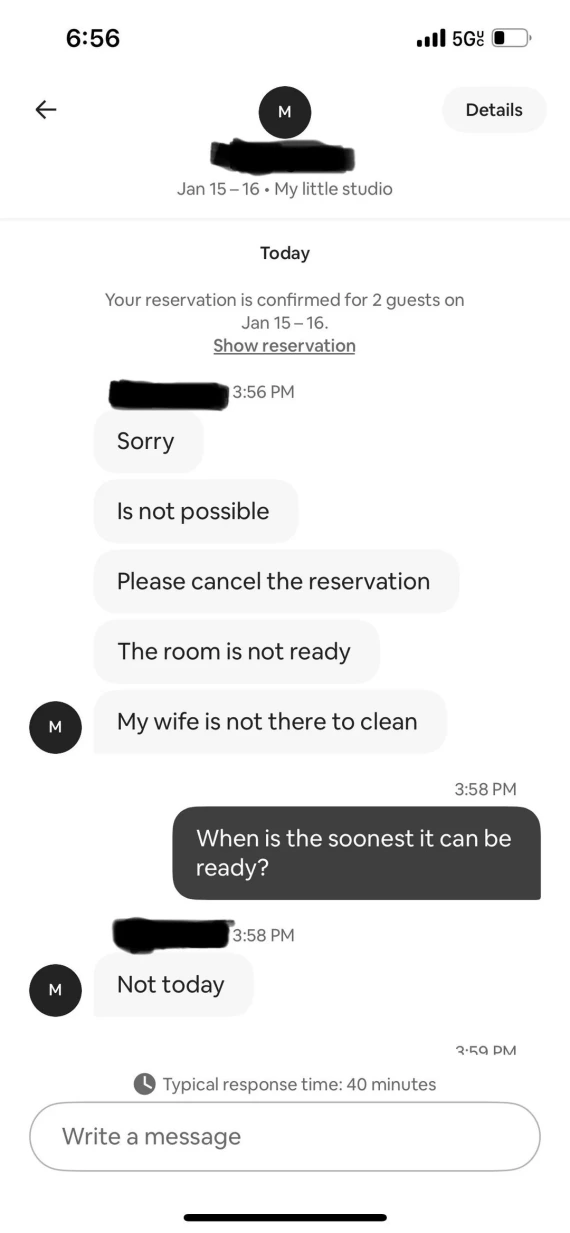
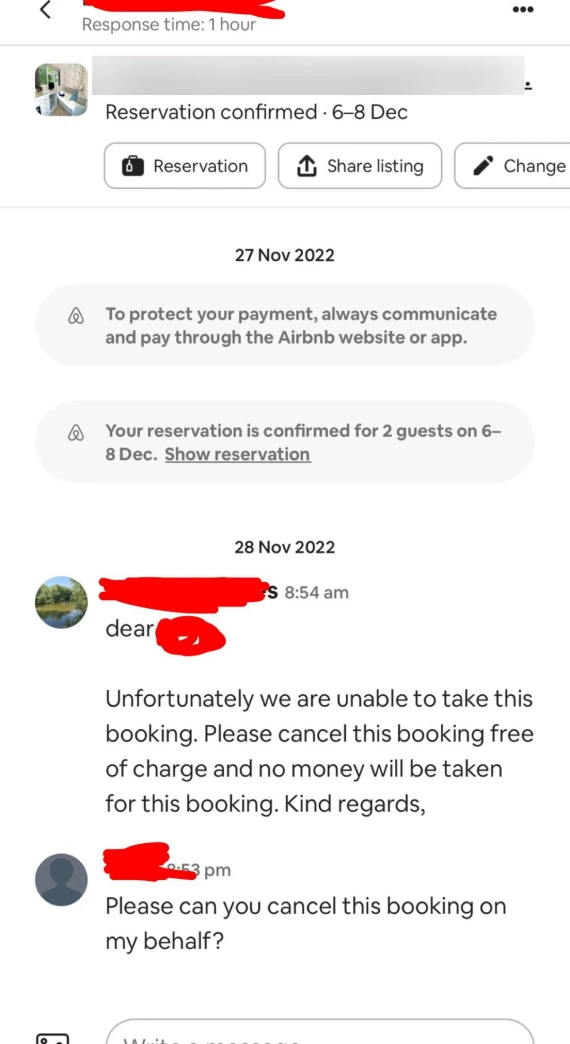
The pattern in this type of Airbnb scam is simple; it starts with an attractive listing, only for the host to suddenly claim that the accommodations are unavailable. They will then offer you an inferior or more expensive replacement after you’ve already booked.
If this happens to you, don’t cancel the booking yourself. Insist on the host doing it through Airbnb to avoid paying any fees yourself. When searching for accommodations, stick to Superhosts or Guest Favorite badges on listings to reduce the risk of bait-and-switch Airbnb scams.
Off-platform payment requests
Never pay outside of Airbnb, as that voids the platform’s AirCover protections, which include rebooking/refunds and access to the Resolution Center support. You might have to pay a little extra off the platform for some destinations, like local taxes or fees, but this should never include the actual booking.
The same advice applies to hosts. If a host accepts a payment off-platform, they lose AirCover protection. You may also face account restrictions or removal for violating Airbnb’s payment rules.
Off-platform communication requests
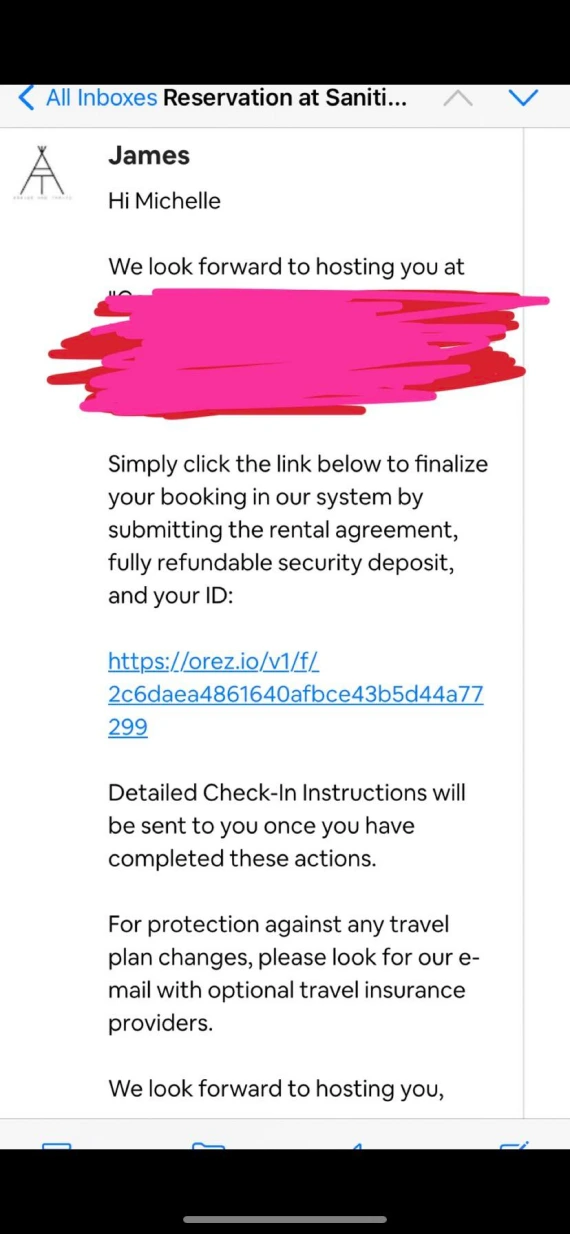
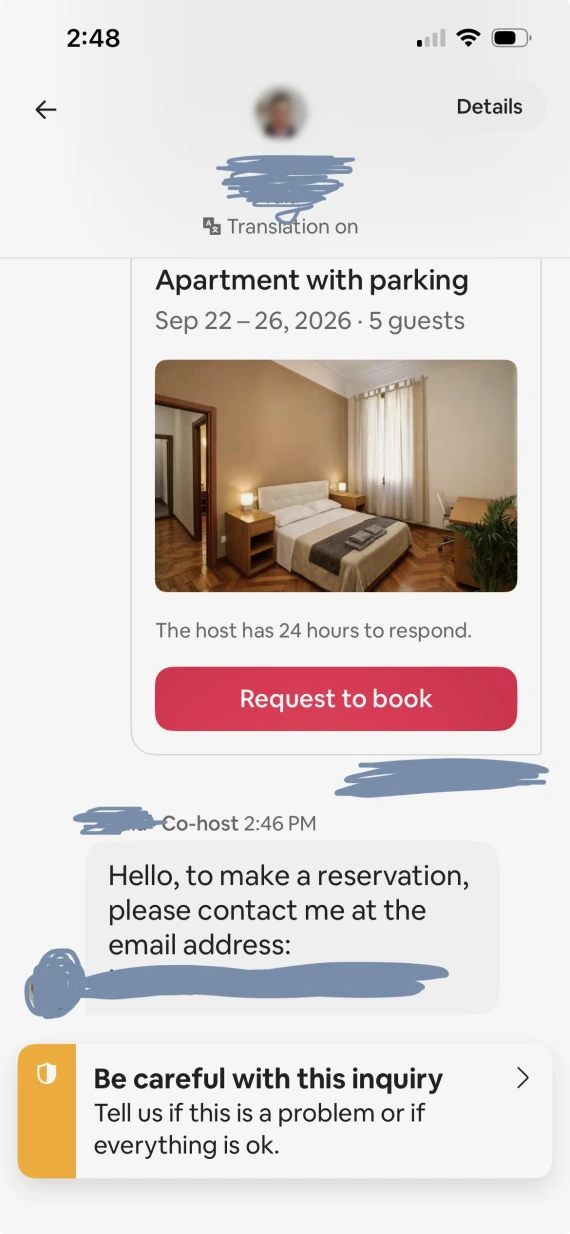
It’s no secret that Airbnb reviews private messages on its platform. This is done to protect users against fraud and to better handle support requests. Scammers will try to move conversations to WhatsApp, Telegram, Email, or SMS to avoid Airbnb’s records and safeguards.
Countries with local guest-registration laws, like Italy, Hungary, and France, may require that the guest send in their ID after booking an accommodation. And since Airbnb is strict about not sharing your government ID with the host, this step would need to be done off-platform.
Verification code (OTP) phishing scams
Your account’s verification code (OTP) is designed to secure it from unauthorized access if your password ever were to be exposed, but it can be used in Airbnb phishing scams.
Airbnb will never ask you to share a verification code with anyone, and “hosts” or “guests” who ask you for the code to “verify” their booking are using a classic tactic of an Airbnb verification code scam. Cut off all communication and report them to Airbnb immediately.
Never share or forward OTPs to anyone. When possible, switch from an SMS code to app-based 2-factor authentication to minimize the risk of a SIM swap attack.
Hidden cameras
Airbnb completely banned indoor cameras in 2024. It allows outdoor cameras, but only if they’re disclosed to the guests. To make sure the host complies with this rule, inspect the property as soon as you check in.
Use your phone’s flashlight to look for lens reflections. There are ways to use your phone’s camera to check for IR signals, which can indicate the presence of hidden cameras. Try it first with the TV remote, pointing it at your phone’s camera, then clicking any button. It’ll flash red.
This inspection isn’t just for fun. According to CNN, an Airbnb representative stated that the platform has generated over 35,000 support tickets about surveillance devices in rentals over the past decade.
Fake or manipulated damage claims
After your visit, a host may falsely claim damages to the property or furniture. False claims may include edited or AI-manipulated photos as “proof.” In one extreme case, a guest was accused of causing over $16,000 worth of property damage. However, the photo evidence turned out to be fabricated with AI, and the guest received a formal apology from Airbnb following the incident.
The claims aren’t always this outrageous. Many scammers settle for as little as fifty or a couple hundred dollars. To avoid falling victim to these scams, take timestamped pictures and videos of the property at check-in and at check-out, and report any pre-existing damage via Airbnb messages.
Duplicate or multiple listings
Scammers may list the same property, sometimes with the same or different pictures, at different prices, then cancel the cheaper bookings for higher-paying guests.
When searching for a place to stay, disable price filters and compare individual listings for similar or duplicate photos. These are usually part of an Airbnb cancellation scam, where the fees are set as “non-refundable” if the guest cancels.
If a host claims the property is unavailable, ask the host to cancel the booking.
Airbnb “hosting assistant” and remote job scams
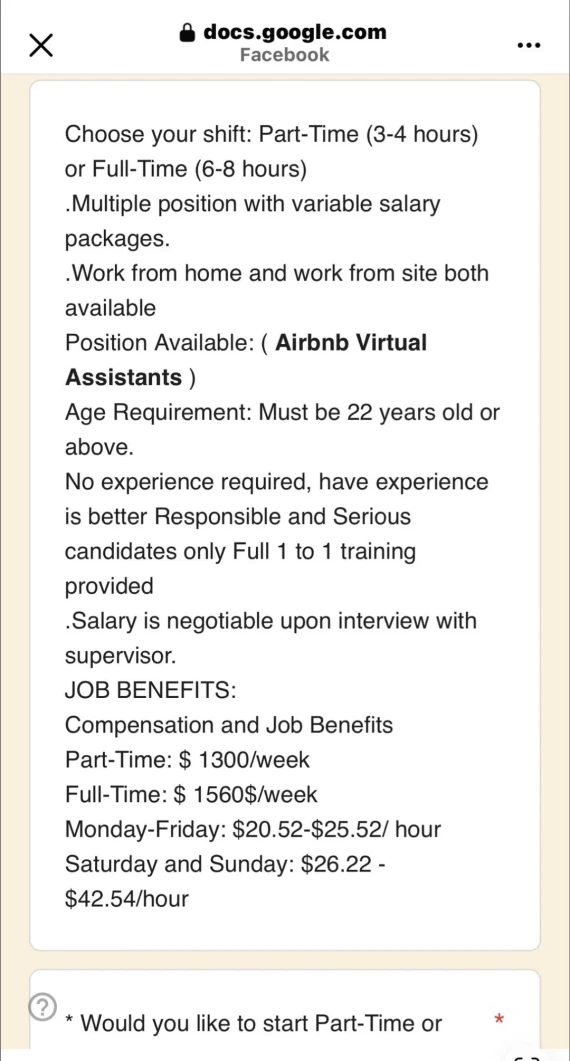
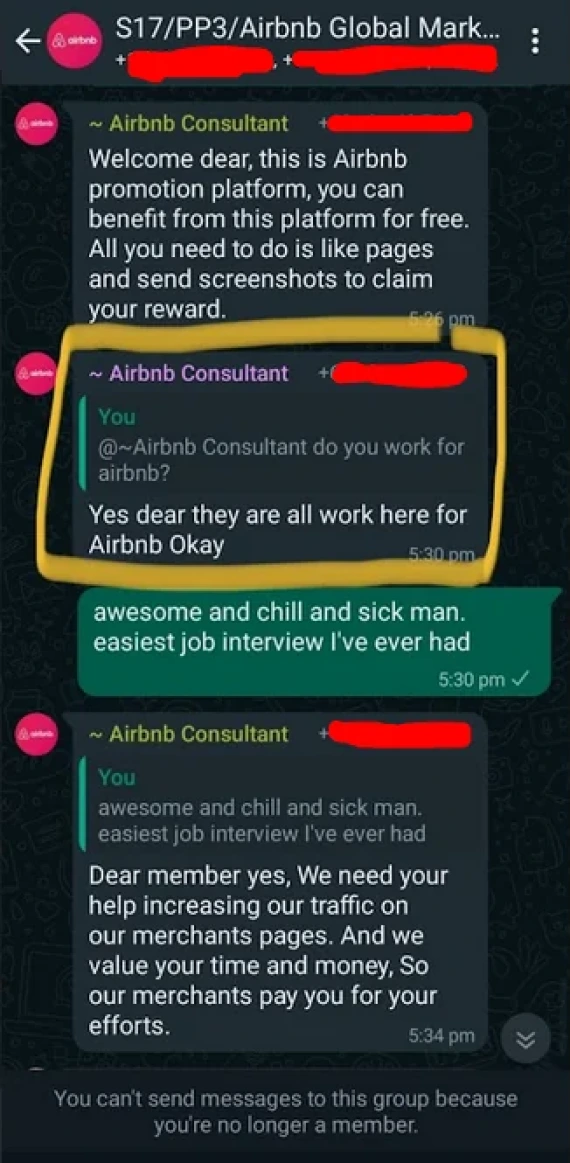
Fake remote job scams also impersonate Airbnb, often looking for “hosting assistants” to work from home and usually promising generous compensation of around $400/day. Watch out for how the “recruiter” communicates with you, whether they use official Airbnb emails or operate strictly through WhatsApp and Telegram.
Other variants target verification codes for account takeover, as covered in the OTP section above. Legitimate Airbnb jobs and offers are advertised only on the official page at careers.airbnb.com, not through Facebook groups or unsolicited WhatsApp and text messages.
Common Airbnb scams targeting hosts
Guests aren’t the only ones at risk of being scammed on Airbnb. As a host, you also need to be careful on the platform. Here are some of the most common Airbnb scams by guests.
Chargeback (friendly fraud) after a completed stay
Chargeback fraud, or “friendly fraud,” is when a guest disputes their Airbnb booking payment after they’ve checked out of the accommodation. As long as they paid on the platform and you kept all messages, booking confirmations, and logs as evidence, you can contact Airbnb to report this behavior.
Fake or unverified guest profiles
Check the guest’s profile before accepting their booking. Make sure they have a profile photo, a short bio, Airbnb’s “Identity verified” badge, and preferably, some reviews from previous stays on the platform.
Be wary of new or blank profiles, especially if the guest gives evasive answers to standard questions regarding their identity or how many guests will be staying at the property. As the host, you have the right to know the estimated check-in time, guest count, and the purpose of the trip before accepting the booking.
Unauthorized guests and undisclosed parties
Guests sometimes lie about the purpose of their stay or the number of people in their group in order to pay less for their stay. For example, you may approve a booking for 2 guests, only for a larger group to arrive upon check-in.
Warning signs include requests for parking for several cars, short one-night stays, event bookings, or insisting on a no-contact check-in. Also, be strict and upfront about your rental’s occupancy limits, no-party policy, and the use of a complaint noise monitor. You can also set a 2-night booking minimum.
Review extortion
Review extortion is when a guest threatens you with a negative review on your listing. It’s usually combined with an Airbnb refund scam, aiming to reverse the original payment so it’s less suspicious to investigations.
Don’t comply. Preserve all Airbnb messages and report the threat. Airbnb restricts the use of reviews as coercion and will help you keep it off your profile.
Third-party or proxy bookings
Third-party or proxy bookings occur when someone reserves a property on Airbnb for another guest. These aren’t always scams and may not have malicious intent behind them, but they can complicate the check-in process, identity verification, liability, and Airbnb protections.
As the host, you should require that the person making the booking be one of the parties staying at the rental.
Long-term and month-plus rental scams
Depending on your rental’s location, month-plus and long-term rentals can create tenant-rights or eviction issues and unauthorized subletting for guests.
If you are a guest booking a long-term stay, ask whether the host is the legal owner of the property or authorized to manage and rent it. Also, make sure you ask for the proper documentation and contract for month-plus stays.
How can you tell if an Airbnb email or text is a scam?

Before interacting with any Airbnb emails you receive, check the sender, wording, and links. Messages pushing you to click a link, share a verification code, or download an attachment deserve extra scrutiny.
With a 7-day free trial on Moonlock, the Scam Detector tool can help with these suspicious requests. Here’s how to use it:
- Open Moonlock, then click on Scam Detector from the left-hand sidebar.
- Copy and paste the contents of the suspicious email or message into the detector.
- Click Check.
Moonlock will scan the message for the telltale signs of a scam, then provide a report on the likelihood that it is associated with a phishing scam. If the Scam Detector determines that the message may be dangerous, it will give you step-by-step instructions on what to do to stay safe.
How do you know if an Airbnb host is legit?
Airbnb host scams are a common concern among guests using the platform. A legitimate host on Airbnb usually has:
- Verified identity: Airbnb will show you their identity verification badge.
- Consistent positive reviews: Feedback spans multiple stays and mentions specific details about the property.
- Clear communication: Their answers to your questions will match the listings. They will be willing to provide additional photos or videos, and no requests will leave the platform.
Some red flags to look out for include:
- Pressure to move the conversation off-platform
- Vague or conflicting answers
- Few or generic reviews
- Pressure to pay off-platform
- Refusal to provide additional details on the property
How to respond to an Airbnb scam and recover your money
Overall, the key is to keep all evidence and act quickly. Be sure to:
- Stop all contact with the host or guest. Don’t send them any money or codes.
- Keep messages, receipts, screenshots, and listing details.
- Contact Airbnb’s support directly using the Resolution Center.
- Contact your bank or payment service to report any fraudulent payments.
You can also report the Airbnb scam directly through:
- Airbnb support
- Your bank or card issuer
- Local police
- The FTC
Before you book or host: Airbnb scam FAQs
Before booking or accepting a guest’s request, here are a few common questions and answers about Airbnb scams.
Refund eligibility depends on the issue, evidence provided, and timing. You can’t get a refund if you paid off-platform.
AirCover is Airbnb’s protection program for guests and hosts, but the coverage varies by situation and doesn’t guarantee a refund.
Yes, an Airbnb host can cancel your booking through the platform. Last-minute cancellations may entitle the guests to a rebook or a refund, while the host may be penalized.
Airbnb sometimes reimburses eligible host damage claims and can investigate disputed guest claims.
How to avoid Airbnb scams: quick reference
Taking an extra minute to check listings and emails before clicking can greatly reduce your exposure to Airbnb scams. Also, Moonlock’s real-time protection can help block malicious links and drive-by downloads or stolen booking data.
Before you book: simple ways to stay safe
Airbnb scams by hosts tend to involve creative ways to work around platform guidelines. Here’s how to tell if an Airbnb listing is a scam before booking or paying:
- Reverse-search images and check for AI-generated images.
- Read recent reviews and inspect the host’s profile.
- Keep all messages and payments on Airbnb.
- Verify unusual email or text notifications directly through the app or website.
Before you host: protect your property and payments
For hosts, to avoid Airbnb scams run by guests, follow a quick checklist before accepting travelers into your rental:
- Review profiles and booking details.
- Require ID verification through Airbnb.
- Keep all communication on-platform.
- Document property conditions before each stay.
- Set clear rules for payment and occupancy.
Taking the time to verify guests on Airbnb before accepting a booking can save you a lot of later work and effort in disputed claims and property damage. It can also keep you safe from scammers and fraudsters posing as legitimate guests.
This is an independent publication, and it has not been authorized, sponsored, or otherwise approved by Airbnb, Inc. Airbnb is a trademark of Airbnb, Inc.