



There were 23,159 recorded romance fraud complaints reported in the FBI’s 2025 IC3 Annual Report, totaling over $929 million in losses to victims. These numbers may seem shocking, but scammers frequently use dedicated dating apps like Tinder to build trust with their victims through romance scams before distributing malware or luring them into sending money.
In this article, we’ll be examining 12 of the most common Tinder scams, how to recognize them, and what to do if you think you’ve fallen for one.
What are Tinder scams?
Tinder scams are a type of romance scam in which criminals use fake or stolen profiles on dating apps to exploit matches. Unlike phishing or smishing, romance scams unfold over several months as the scammer takes time to build trust and a romantic relationship before requesting money ot promoting fraudulent investments.
A Tinder-backed UK study targeting university-aged students found that 49% had encountered a scam on the dating app. In comparison, 44% were convinced to share personal information with someone online before ever meeting them in person.
How to recognize a Tinder scam
Tinder scams rely primarily on the use of convincing profiles and messages. But because a single scammer is usually running multiple accounts and scamming multiple people, you might start to notice some inconsistencies or generic-sounding messages and profile bios.
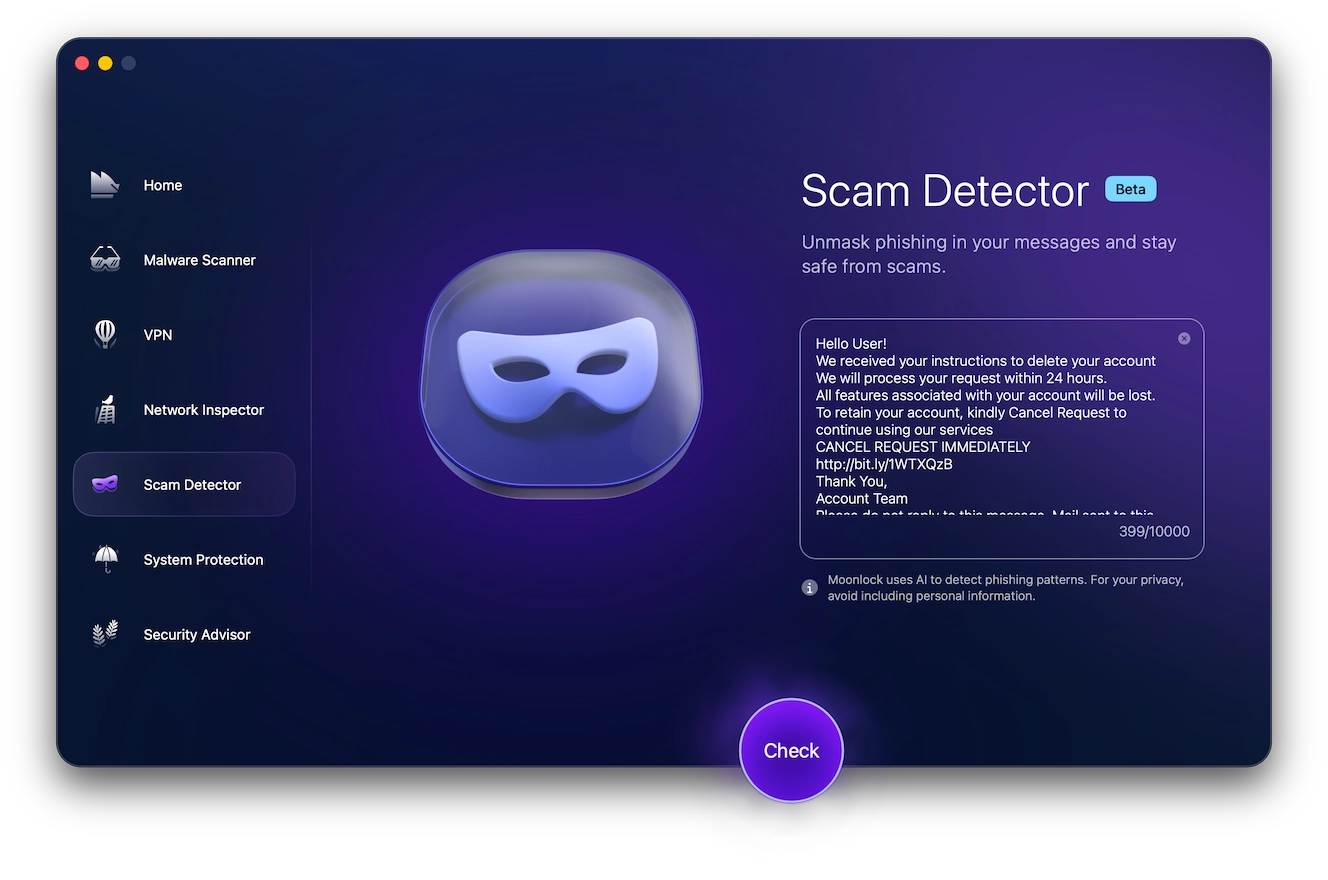
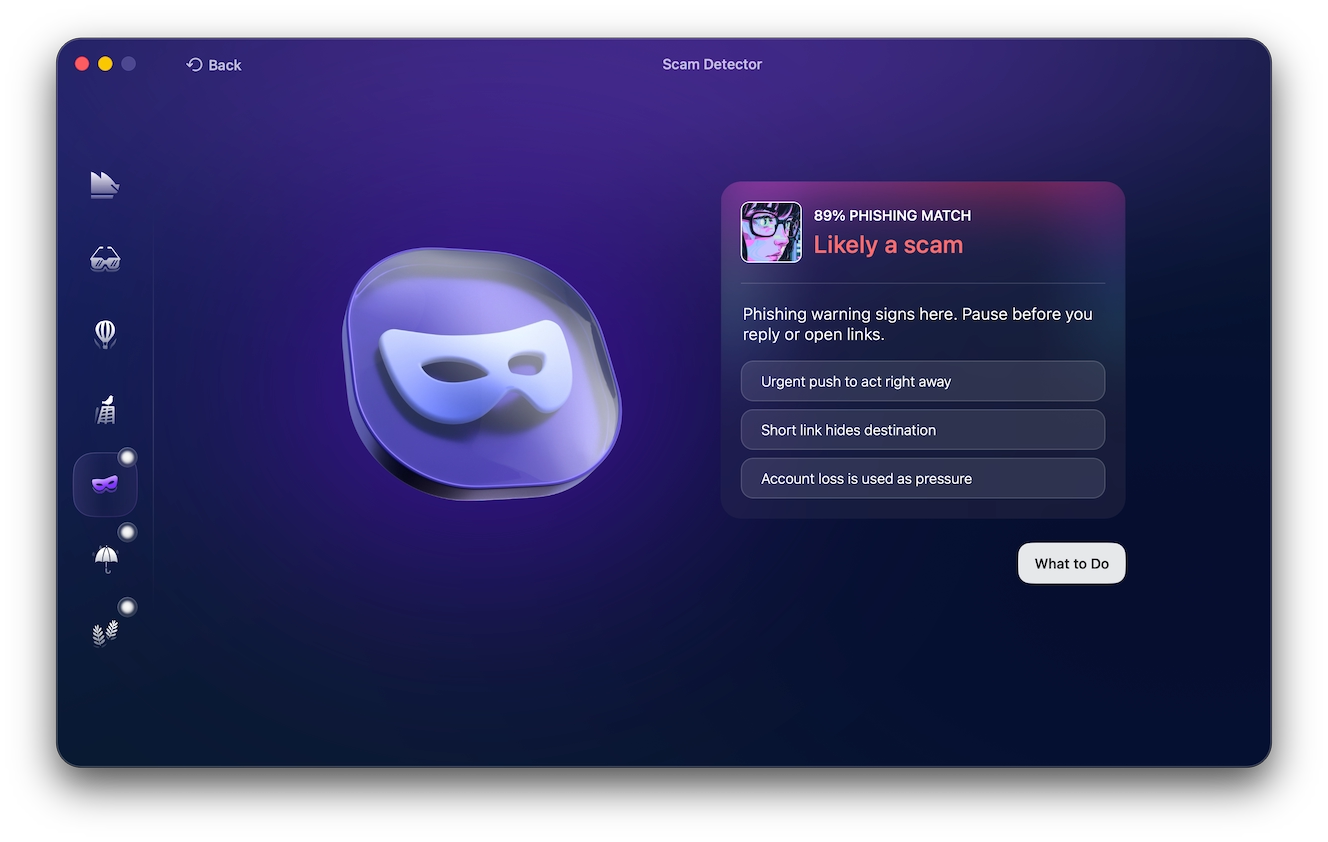
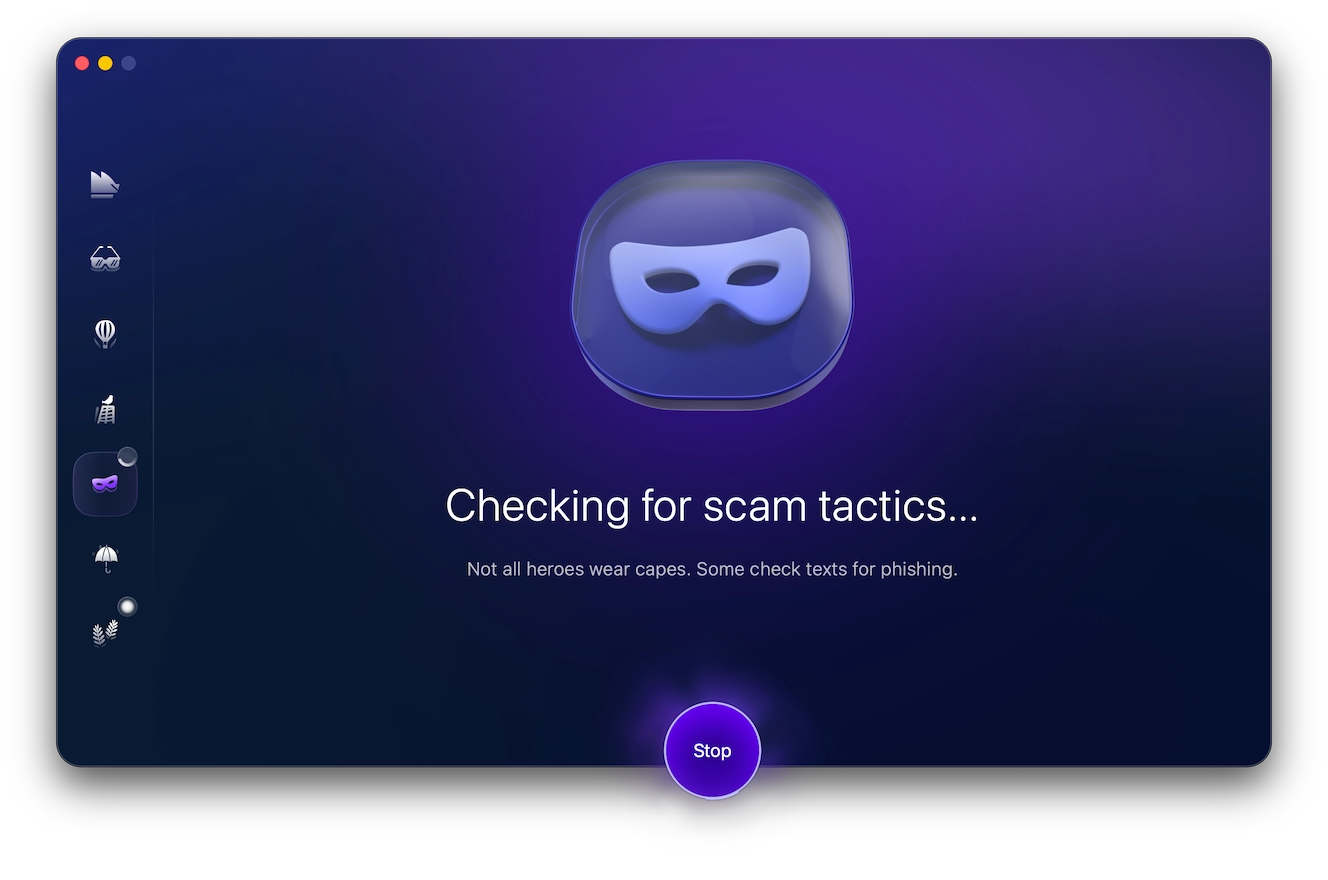
You can use Moonlock’s Scam Detector to check questionable messages, especially ones containing links or attachments. It analyzes the message, looking for phishing-typical language or manufactured urgency that scammers are most known for. Here’s how to use it:
- Start a 7-day free trial of Moonlock.
- Click on Scam Detector in the left-hand sidebar.
- Copy and paste the suspicious message into the Scam Detector tab.
- Click Check.
Moonlock will analyze the text for red flags and phishing language, like manufactured urgency, in order to determine if the message is likely to be associated with a scam on Tinder. If it is, Moonlock will present you with a list of actionable advice and recommendations to stay safe.
Direct messages and bios aren’t the only places you can check for signs of a scam. Here is how to tell that an entire Tinder profile is fake before engaging with it, including:
- AI-generated profile pictures
- Vague bio with generic or conflicting details
- Claiming they’re constantly traveling or that they live abroad
- Refusing to video chat
- Seeking a committed relationship quickly
Even if all the outward signs seem legit, depending on how the conversation evolves, it might still be a scam. Here’s what to look out for:
- Responding instantly to all messages
- Asking to move to WhatsApp or Telegram
- Sending a lot of links
- Requesting money through crypto or gift cards
- Avoiding direct questions about themselves
Is the Tinder verification badge reliable?
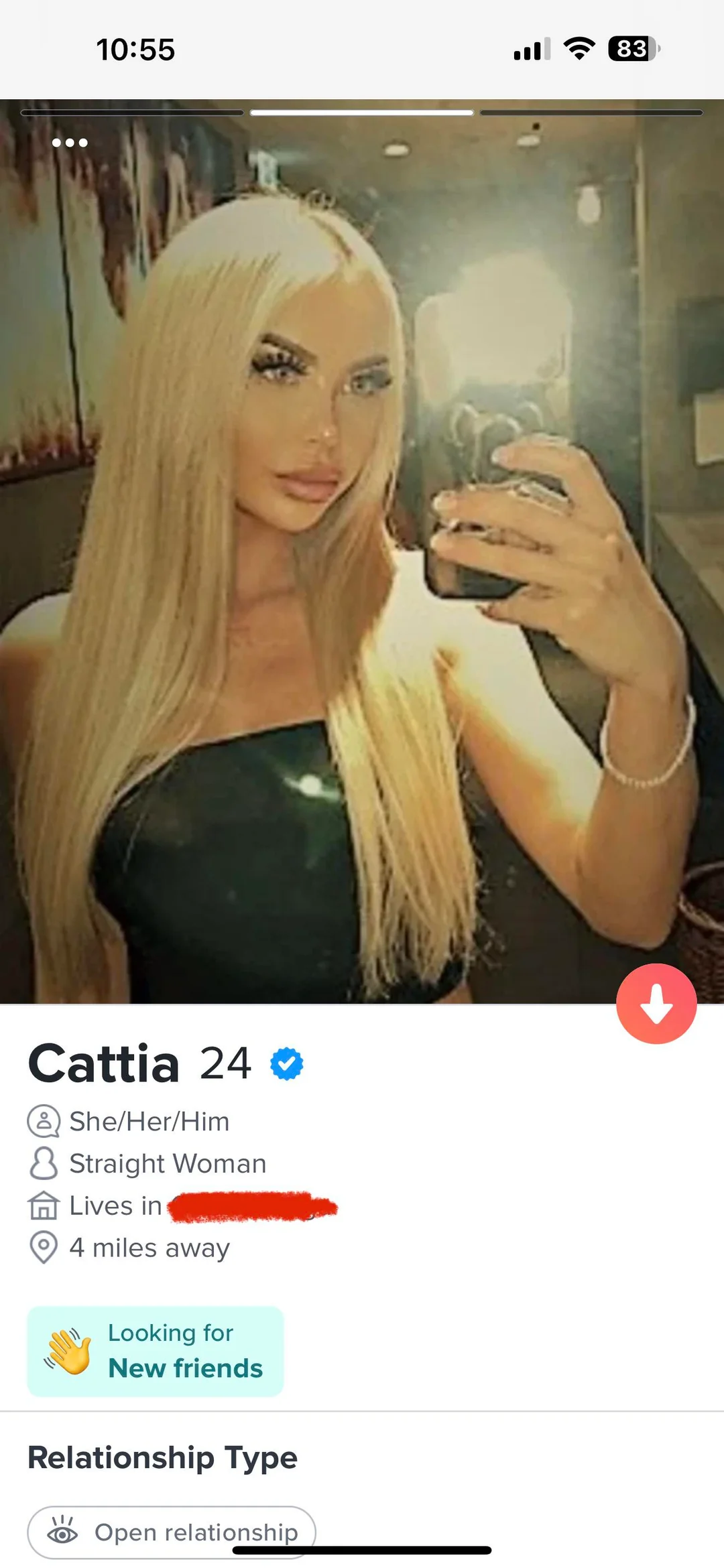
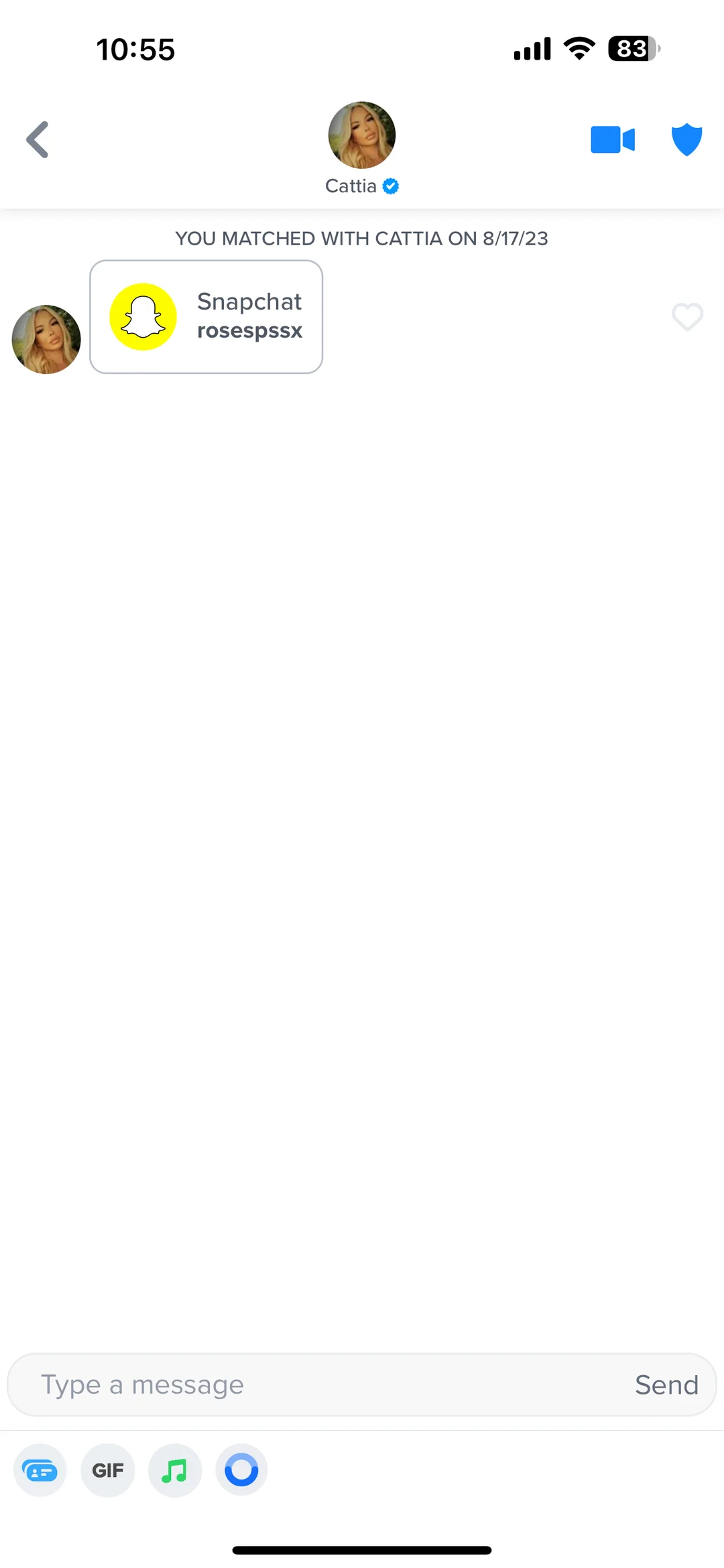
The short answer: Not always.
The Tinder verification badge only confirms that a live selfie matches at least one profile photo. There’s no additional verification of a person’s identity or safety.
In April 2026, journalist Christophe Haubursin was able to create multiple verified profiles on Tinder using stolen photos, with only one of them being altered to match himself.
Tinder has not publicly documented a fix, with Hinge having a similar weakness. Only Bumble removes profile photos that don’t match the live selfie.
12 common Tinder scams
Tinder scams range from fake romance scams to blackmail and malicious links. Understanding how different types of scams work makes it easier to detect suspicious behavior before you get involved.
1. Fake profiles vs. bots


A single scammer or a scammer group can run multiple fake profiles, adapting their stories to build relationships and have real conversations with their victims. Bot accounts, on the other hand, automate matches and use scripted replies, usually steering victims toward phishing or malware links.
AI use is making it easier and less resource-intensive for scammers to operate countless fake Tinder profiles, allowing them to avoid detection through reverse image search. In some cases, they can be more difficult to spot than fully human Tinder profiles.
Typical signals of bot behavior include:
- Instant replies
- Generic enthusiasm
- Misunderstood questions
- Early links
- Abrupt topic changes
If you’re wondering if there are a lot of fake profiles on Tinder, you’re not alone. There is no official percentage or numbers published by Tinder regarding fake profiles, but users themselves report that fake and impersonation accounts are very common on the platform.
Cybersecurity researchers and fraud-reporting organizations have consistently identified fake and impersonation profiles as one of the most common issues reported on dating apps, including Tinder.
2. Catfishing vs. pig butchering
Catfishing profiles use false identities when forming online relationships before evolving into financial fraud or Tinder blackmail. Pig butchering, meanwhile, is investment-focused, using the trust built during the relationship to promote scammy crypto or trading platforms.
Warning signs include a fast-moving relationship, along with excuses not to meet or talk in person. In pig-butchering, the scammer is often eager to provide “proof” of the investment profits, which are often fake. Some are using AI to deepfake real-time video calls.
3. Pig butchering crypto scam

This type of scam takes weeks or months of relationship-building before the match introduces “crypto investing” and directs the target toward a fake online platform. Profits are fabricated, and when the victim attempts to withdraw their earnings, they’re usually blocked until they pay a “fee” or “tax.”
In 2025, the FBI recorded over $7.2 billion in cryptocurrency investment-fraud losses in the US alone.
4. Tinder 2FA/OTP account takeover scam
Sometimes, the target of a Tinder scam is the user’s own Tinder account. In this type of attack, the scammer triggers a login or password reset, then tricks you into sharing the OTP or 2FA code with them.
Others use a fake “safety verification” page that requests account or card details. In some instances, scammers have successfully enrolled victims in subscriptions costing over $100 monthly.
5. Sextortion scam
Sextortion scams on Tinder are different from other romance scams because they quickly escalate the conversation from flirting to exchanging explicit images and videos. Once the scammer receives the content, they demand that the victim pay them a large sum of money, or else they will send the picture to their family, friends, or coworkers.
In some cases, the scammer may pretend to be a minor themselves, threatening the victim with legal consequences if they contact law enforcement.
If you are being blackmailed on Tinder:
- Don’t pay or send more content.
- Save evidence and screenshots.
- Block and report the Tinder account.
- Contact the police.
6. WhatsApp/Snapchat/Telegram migration
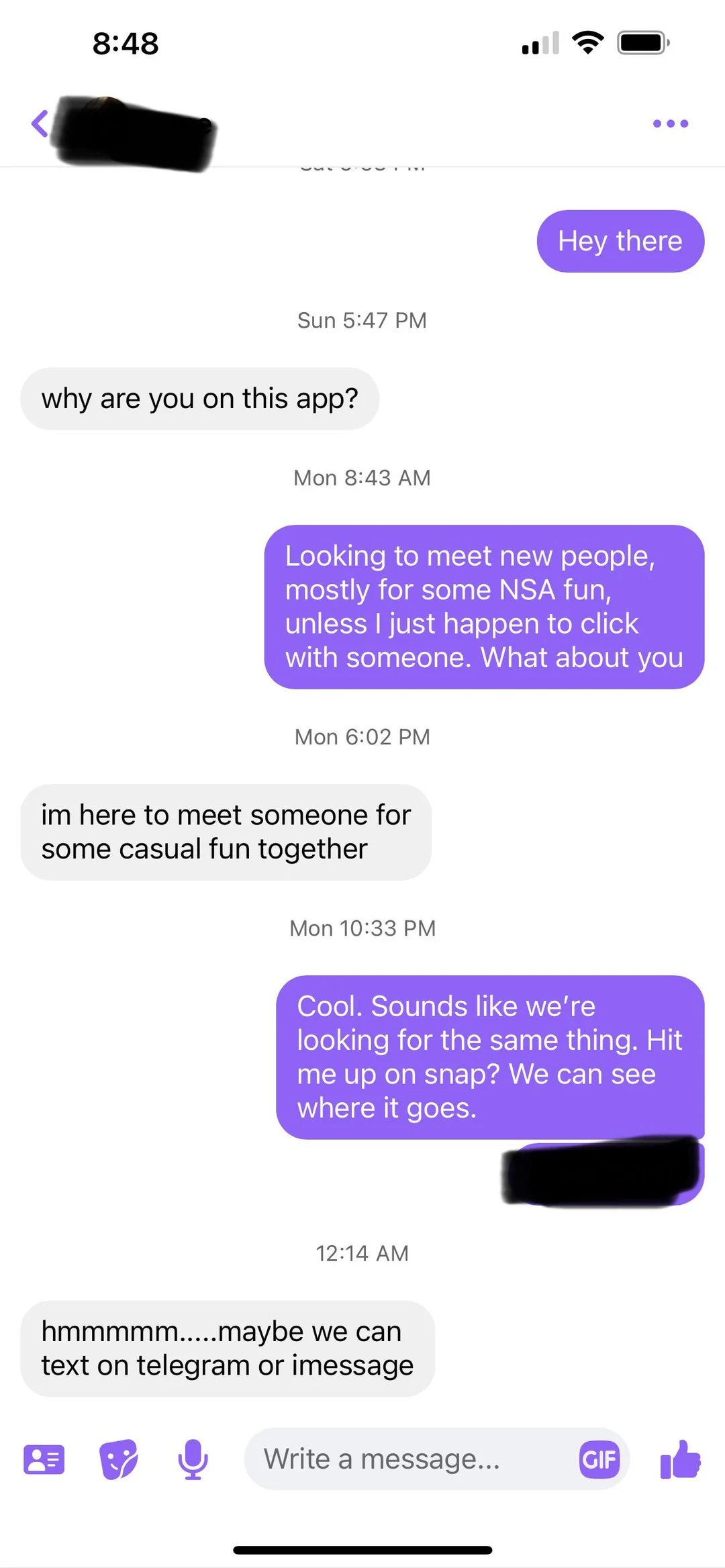
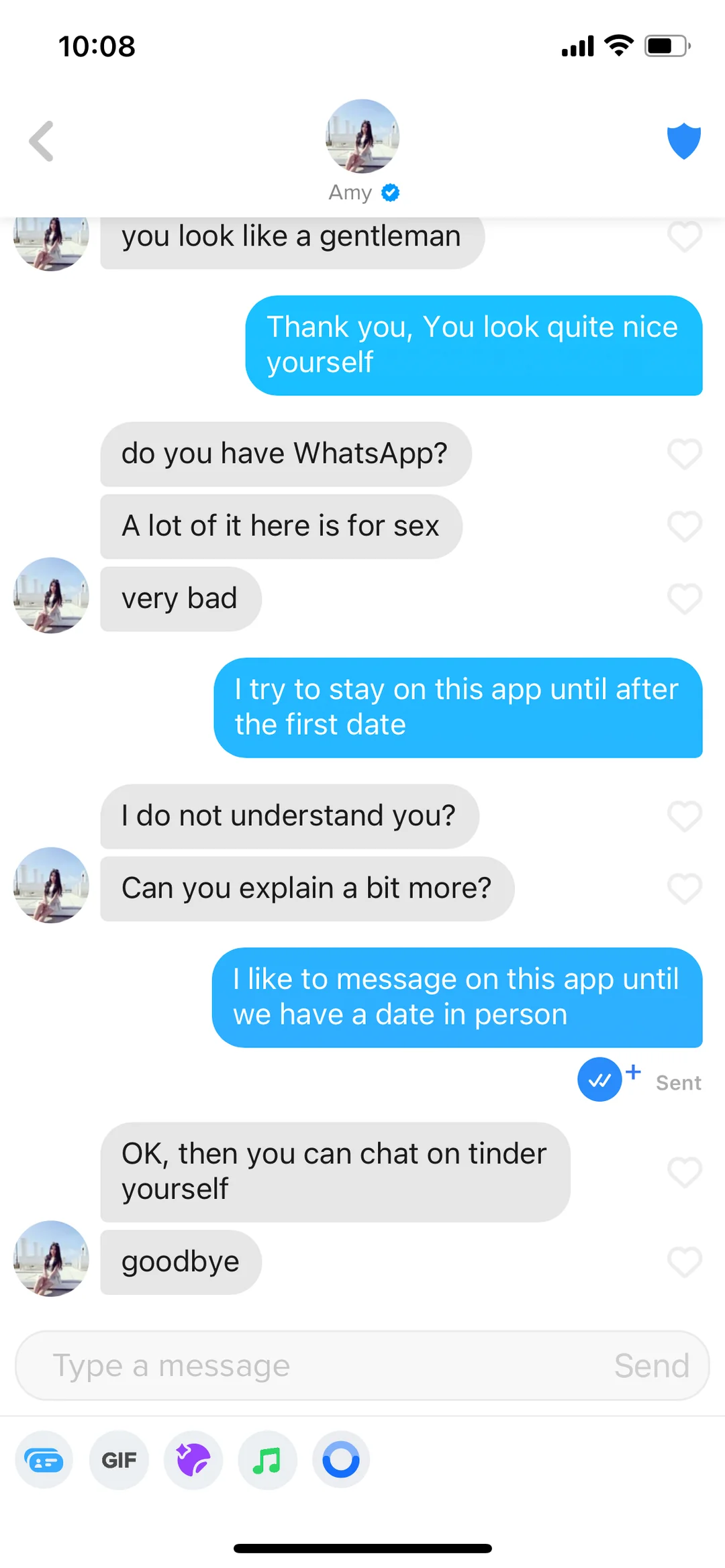
Because Tinder has a lot of safeguards against scams, fraudsters quickly try to move matches off of Tinder to apps like WhatsApp, Snapchat, or Telegram. Some even advertise their handles or phone numbers directly in their Tinder bio, details that most people don’t share. To avoid Tinder’s moderation, they often obfuscate their handles by having “sn a pchat” or “snaap” in their bio to bypass automated filters.
Treat migration requests as suspicious, especially if they occur early in the conversation.
7. Early link phishing (social + malware traps)
Scammers tend to be impatient, even on Tinder. They quickly send malicious links, hoping to steal your login credentials or credit card details, or install malware on your device. Never click on a link or open unexpected attachments in the Tinder chat or outside it.
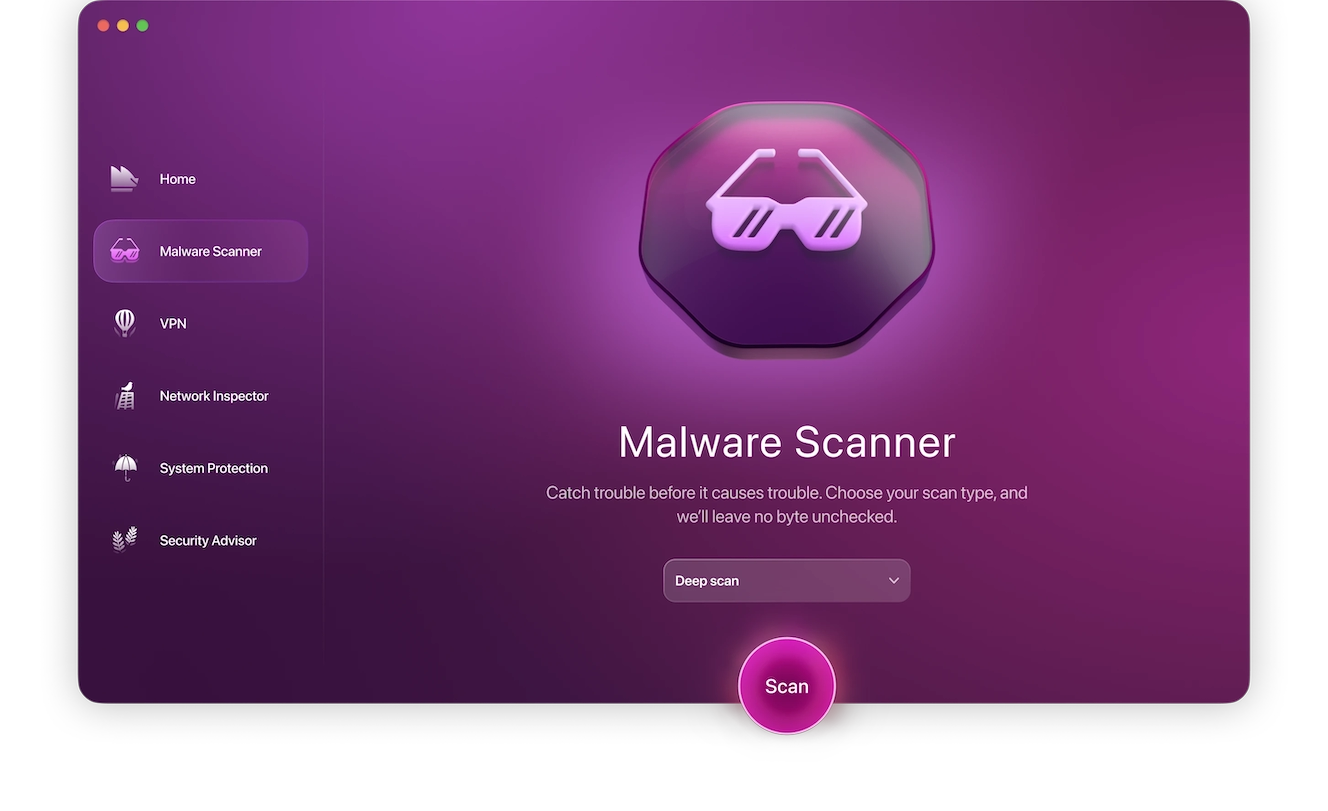
If you do click on anything, immediately run a malware scan with Moonlock:
- Sign up for a free trial.
- Open Moonlock.
- Click on the Malware Scanner on the left.
- Select the Deep scan option from the drop-down menu.
- Click Scan.
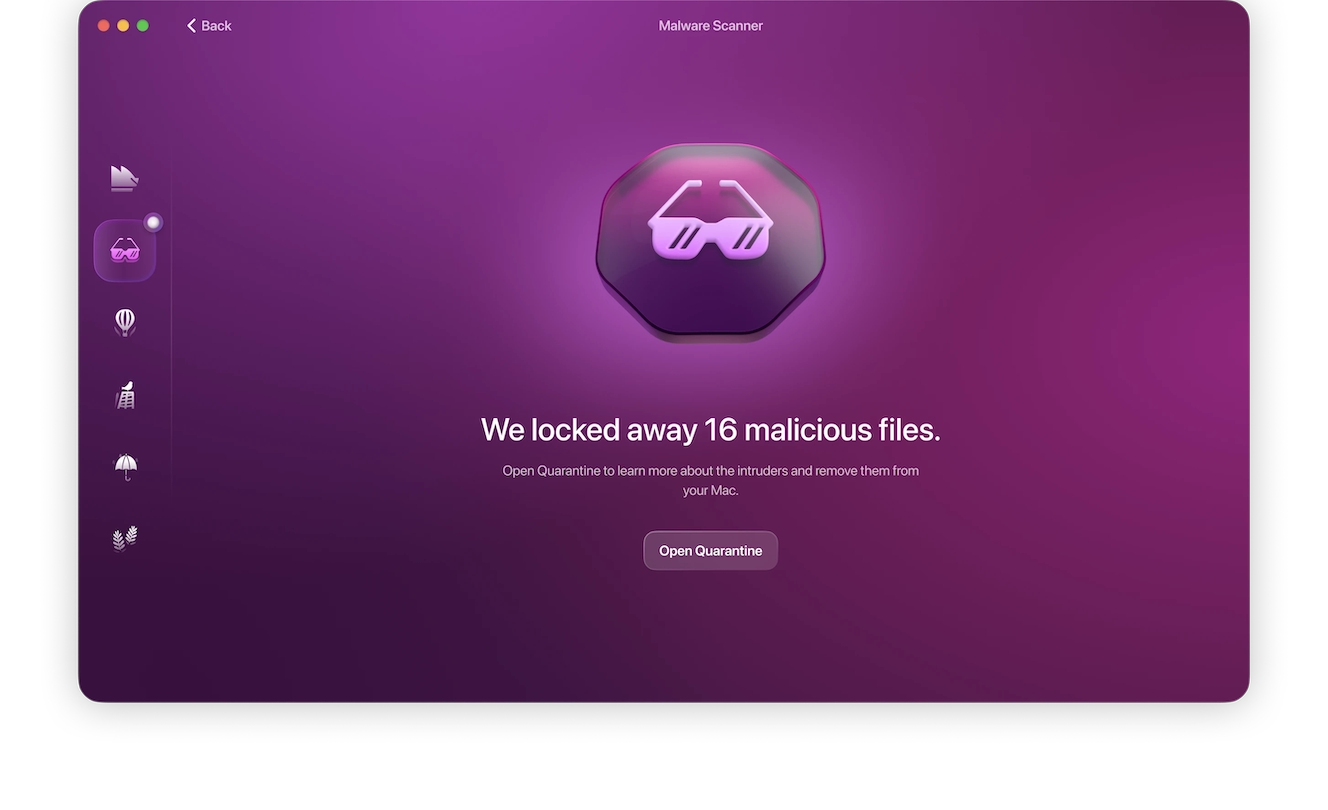
Moonlock will scan your Mac for any malware or spyware that your device might have gotten due to a Tinder scam and immediately quarantine it in preparation for removal.
8. Sugar daddy scam
Here, a scammer promises an allowance in exchange for companionship and pictures. They usually send fake payment receipts or use a stolen credit card before asking you to return a part of it through gift cards or crypto. When the payment eventually reverses, you lose all the money you sent.
Some variants of this scam on Tinder target older users, with the scammers posing as the younger partner and requesting payment instead.
9. Fake verification and subscription scams
A scammer may claim that you need to separately verify your account or your identity through an external website. They usually duplicate Tinder’s branding and layout to make the fake website seem legitimate to trick people.
The fake page will then request personal information and payment details, sometimes enrolling victims in fake recurring Tinder Gold subscriptions to seem more legitimate.
10. Venue/bar lure scam
A match insists on meeting at a specific venue or bar, where the staff might be involved in the scam. The victim is then pressured into ordering overpriced drinks and services and then gets presented with an inflated bill with additional fees and charges.
11. SIM swap and personal data harvesting
If a scammer manages to find out your personal information and the phone number linked to your Tinder account, they can impersonate you to your carrier and swap your SIM card for one that they control. Then they can receive verification and password reset codes for Tinder and other accounts.
12. Military/overseas romance scam
In this scheme, a scammer who matches on Tinder claims to be deployed or working abroad, using that as an excuse as to why they can’t meet in person ot video chat. After building trust over the course of several weeks or months, they begin requesting money for travel or medical emergencies.
What happens if you get scammed on Tinder, and what to do next
Falling for a Tinder scam can lead to all sorts of damages, from financial loss and impersonation to malware and sextortion. With something as simple as your phone number, a scammer can target you with phishing texts and attempt a SIM swap to capture several accounts.
If you ever find yourself the victim of a Tinder scam, act quickly:
- Cut contact: Do not send the scammer any more money or information.
- Save evidence: Keep screenshots, usernames, links, and receipts.
- Report: Report the scammy account to Tinder. Follow the in-app instructions or use their official online form.
- Secure your account: Change your password and enable 2FA.
- Contact providers: Contact your bank and your mobile carrier to report the scam.
How to stay safe on Tinder and avoid romance scams
So, is Tinder a scam? Or is Tinder legit? Like most online platforms, the site itself is legitimate. The risks come from how bad actors use it.
Despite the scams, you don’t need to swear off Tinder altogether. You just need to be careful how you use it. Follow these basic guidelines:
- Don’t migrate conversations: Don’t let someone switch to WhatsApp or Telegram when messaging you.
- Verify independently: Request a video chat or phone call with your match before sending personal or private information.
- Never send money: Refuse requests for money, especially gift cards or crypto.
- Don’t click on links: Don’t open external verification, payment, or photo pages sent on Tinder.
- Use Moonlock’s Scam Detector: Copy and paste suspicious messages into the Moonlock Scam Detector tool to identify phishing and manipulation attempts.
Above all, take a moment to think before trusting a new match on Tinder. Question any inconsistencies in their answers and verify the profile pictures. If you notice anything out of the ordinary, immediately cut all contact and report the account.
This is an independent publication, and it has not been authorized, sponsored, or otherwise approved by Tinder LLC. Tinder is a trademark of Tinder LLC.