Mercari has grown into a massive resale marketplace, with more than 4 billion cumulative listings across the platform. Its cross-border business has also expanded more than 15 times over the past three years, giving buyers access to an increasingly large secondhand market.
That size also gives scammers plenty of opportunities to pose as buyers, sellers, or even Mercari support. Knowing how the platform handles payments, disputes, shipping, and returns can make it easier to recognize when someone is trying to work around those systems.
What Mercari is and how it works
Mercari is an online marketplace where individuals can list new or used products for others to buy. The company was founded in Japan in 2013 and expanded into the US market the following year.
The platform is built around direct transactions between buyers and sellers rather than Mercari acting as the retailer. A seller creates the listing and chooses a shipping method, while a buyer can pay the listed price or make an offer when that option is available. Mercari currently charges sellers a 10% fee on the item price and buyer-paid shipping. Buyers pay a 3.6% Buyer Protection fee calculated on the item price and buyer-paid shipping. Sellers using Mercari prepaid labels also receive tracking and may qualify for up to $200 in Shipping Protection.
A core fundamental of Mercari’s system is its payment hold. After a purchase is made, Mercari keeps the payment until the item is received by the buyer and they have a chance to rate their item/transaction. If the buyer does not rate or report a problem within 72 hours of carrier-confirmed delivery, Mercari completes the transaction and releases the funds to the seller.
So, is Mercari legit?
Many users have concerns about whether Mercari is trustworthy. Mercari is legit. It is an established marketplace operated by Mercari, Inc., rather than a website created to collect payments and disappear. The more useful distinction is between Mercari itself and the people selling through it. Individual buyers and sellers can still commit fraud even when the platform processing the transaction is legitimate.
Public ratings vary, and whether Mercari is reliable or not often depends on the individual seller and transaction. Mercari has high ratings on the Apple App Store and Google Play, while reviews on Trustpilot and the Better Business Bureau are much lower. Complaints on those sites often focus on return disputes and poor customer service.
User experiences are similarly mixed. Sellers have described buyers who claim that shipped boxes arrived empty or report fraudulent returns involving a different item sent back. Meanwhile, buyers have reported receiving counterfeit merchandise or items that did not match the listing.
Is Mercari safe?
Many people ask whether Mercari is safe. In most cases, it is as long as the transaction stays within its payment and shipping systems. Safety here is about what happens during an individual purchase or sale and how much recourse either side has if something goes wrong.
Mercari holds the buyer’s payment until the order is rated or the 72-hour review period expires. Eligible buyers can request a return within that same 72-hour period for an item that is significantly not as described, has been damaged during shipping, or is counterfeit. Eligible Mercari prepaid labels also include Shipping Protection of up to $200.
Approved returns have their own clock. Buyers generally have 72 hours after receiving the return label to hand the package to the carrier. If no tracking update appears within 168 hours, or 7 days, of return approval, Mercari may void the return and release payment to the seller.
Those protections reduce transaction risk, but they do not remove it. The next step is knowing which Mercari scams try to work around them.
Most Mercari scams rely on convincing someone to ignore a normal platform safeguard. A fraudulent listing may exploit the 72-hour review period, while a fake buyer may try to pull a seller outside Mercari’s payment system.
Scams that target buyers
Buyer scams commonly focus on things like the listing itself, the delivery process, or an attempt to move payment off of Mercari.
Phishing and text scams
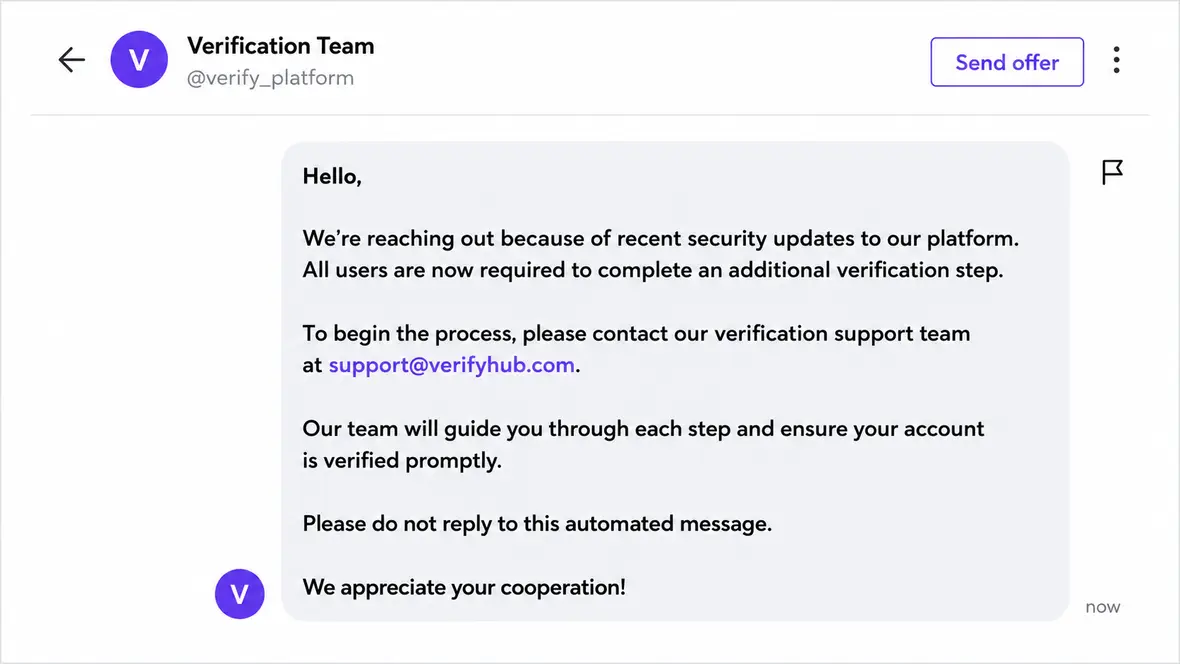
A Mercari phishing message may claim there is a problem with an order or your account, then provide a link leading to a copycat login page designed to steal your credentials.
Text scams can use similar delivery claims. Instead of taking over only the Mercari account, the scammer may ask for payment details or another piece of personal information that can be used elsewhere.
Here’s what a phishing or text scam looks like:
- Setup: The victim receives an unexpected message that looks like it is from Mercari.
- Trick: A link leads to a fake login page or verification page.
- Loss: The scammer is able to access account credentials or financial information.
Red flag: A supposed Mercari message directs you to an outside website or asks for sensitive information.
Fortunately, Moonlock’s Scam Detector can give you an additional set of eyes to review a suspicious Mercari message before you interact with it.
If a text, email, screenshot, or link feels wrong, checking it first is safer than testing the message by clicking through. The Scam Detector is built for situations where a message looks believable, but something about it doesn’t add up. Try Moonlock with a 7-day trial before responding to an unexpected Mercari account alert or payment request.
Fake or counterfeit listings
Counterfeit listings often feature luxury goods or other products that cannot be easily verified for authenticity from a photograph alone. A listing may use stolen images or describe a replica as genuine. The buyer may not discover the problem until the product arrives, and rating the transaction releases the payment and closes the normal 72-hour return process.
Here’s what a fake or counterfeit listing scam looks like:
- Setup: A seller lists a counterfeit item as authentic.
- Trick: The listing may use convincing photos or a price close enough to market value to look believable.
- Loss: The buyer rates the transaction before discovering the item is fake.
Red flag: A seller cannot provide original photos, purchase details, or other information that supports an authenticity claim.
Bait-and-switch scams
This scam starts with an authentic-looking listing but ends with a different item in the package. Buyers have reported receiving lower-value substitutes and even unrelated objects.
Tracking may show that something was delivered. But if the buyer does not open and inspect it before the 72-hour window closes, the seller will receive payment.
Here’s what a bait-and-switch scam looks like:
- Setup: The scammer advertises an item the buyer wants.
- Trick: A cheaper item or worthless package is shipped under the transaction tracking.
- Loss: Payment is released if the buyer misses Mercari’s reporting window.
Red flag: The listing relies on generic images or a seller with little to no transaction history.
Fake customer support
Fake support scams hijack Mercari’s authority rather than impersonating another buyer. You may be told your account has been suspended and you have a short deadline to verify your identity.
Mercari states that official communication in the app appears through Notifications, not ordinary buyer-and-seller chat, and a legitimate Mercari email also uses the @mercari.com domain.
Here’s what a fake customer support scam looks like:
- Setup: Someone claims to be Mercari support.
- Trick: They create urgency around an account or payment problem.
- Loss: The victim gives up login information or financial data.
Red flag: Fake “Mercari support” contacts you through an ordinary marketplace chat.
Off-platform payment requests
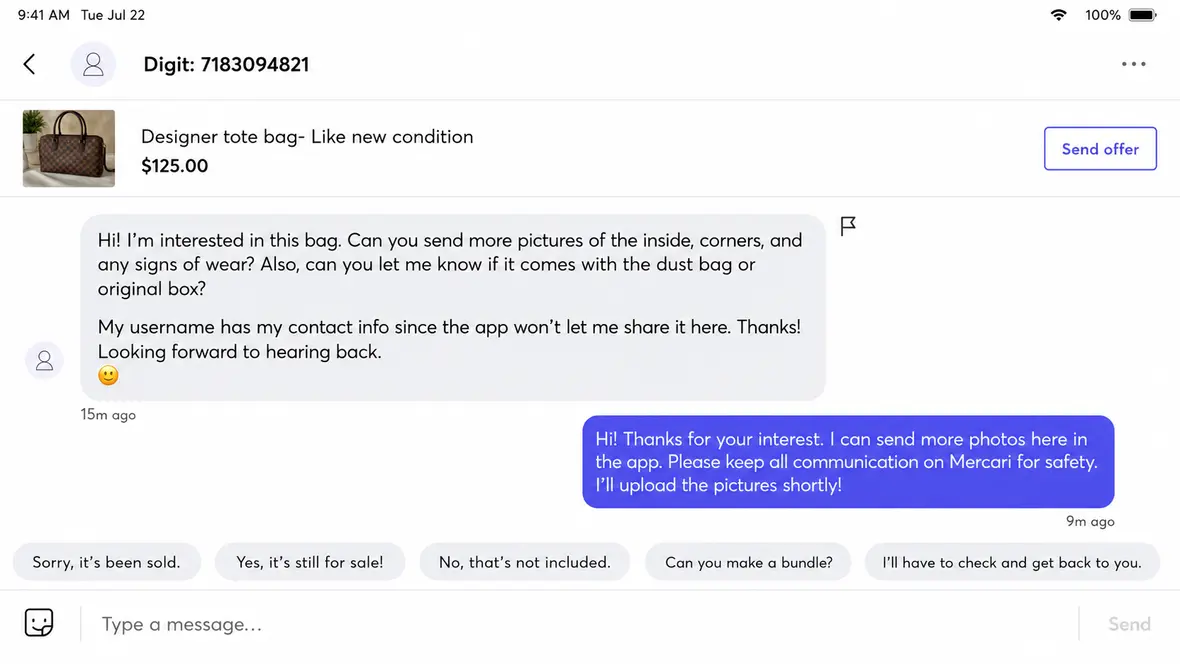
An off-platform payment request removes one of Mercari’s biggest transaction safeguards. Mercari calls these offline transactions and says it cannot resolve problems with payments made outside its system.
A fraudulent seller may ask for a different payment method (Cash App, Zelle, PayPal), then stop responding after the money arrives.
Here’s what an off-platform payment request scam looks like:
- Setup: Buyer and seller connect through a genuine Mercari listing.
- Trick: The seller asks to finish payment somewhere else.
- Loss: The buyer pays without Mercari Buyer Protection.
Red flag: Someone asks you to leave Mercari to complete the purchase.
Scams that target sellers
Mercari scams targeting sellers can lose both an item and the sale proceeds when they exploit refunds or shipping. The following are a few popular examples.
Overpayment and refund scams
An overpayment scam usually requires moving payment outside Mercari first, and the buyer sends more than the agreed amount and asks the seller to return the excess. The original transfer later fails or is reversed, and the seller is left responsible for the money they voluntarily sent back.
Here’s what an overpayment and refund scam looks like:
- Setup: The buyer asks to pay outside Mercari for their convenience.
- Trick: They “accidentally” overpay and request a refund for the amount over.
- Loss: The original payment method then reverses after the seller has already made the refund.
Red flag: A buyer claims to have overpaid and asks you to send money back separately.
Return fraud
Return fraud abuses Mercari’s legitimate return process. One version is the “switcheroo,” where the buyer receives the real item but returns a damaged or counterfeit substitute.
Mercari requires buyers to provide photos and/or videos during a return and may deny claims involving fraudulent conduct. Sellers also have 24 hours after receiving a return damaged in transit to contact Mercari.
Here’s what a return fraud scam looks like:
- Setup: A buyer purchases and receives the seller’s real item.
- Trick: The buyer files a return claim and returns something else that is damaged or a knock-off.
- Loss: The seller may lose the original product while the buyer seeks a refund.
Red flag: A return claim does not match the stated condition or identifiers that were documented before shipping.
Package diversion
A package-diversion tactic can put the seller’s delivery evidence at risk by manipulating where the shipment goes or how tracking reflects the delivery. Mercari Shipping Protection depends on a valid Mercari label, eligible tracking, and carrier possession scans.
If the seller follows a buyer’s alternate shipping instructions instead of the transaction details, those records may no longer clearly support the seller filing a delivery dispute.
Here’s what a package diversion scam looks like:
- Setup: The buyer asks for a shipment change after purchasing.
- Trick: The package is redirected outside the normal Mercari shipping flow and is then “lost.”
- Loss: A later non-delivery claim leaves the seller with weaker platform protection.
Red flag: A buyer asks you to alter the shipping process after the order is placed.
Change of address scam
A change-address scam is more direct than many other types of scams. In this one, the buyer simply asks the seller to ship somewhere other than the address attached to the Mercari order.
Mercari’s shipping protections are built around the transaction and its tracked label. Changing that destination independently can create a mismatch between where Mercari expected the package to go and where the seller actually sent it.
Here’s what a change of address scam looks like:
- Setup: A buyer completes an order using one address.
- Trick: After the sale, they ask the seller to ship to a different address, claiming that the one they put in was accidentally entered incorrectly.
- Loss: The seller may struggle to prove proper delivery, leading to disputes.
Red flag: The buyer asks you to ignore the address attached to the Mercari transaction.
How to recognize Mercari scams
Mercari scams become easier to spot when you know the red flags. If someone asks you to leave the platform, change the shipping process, share account information, or act before the 72-hour review window closes, be wary.
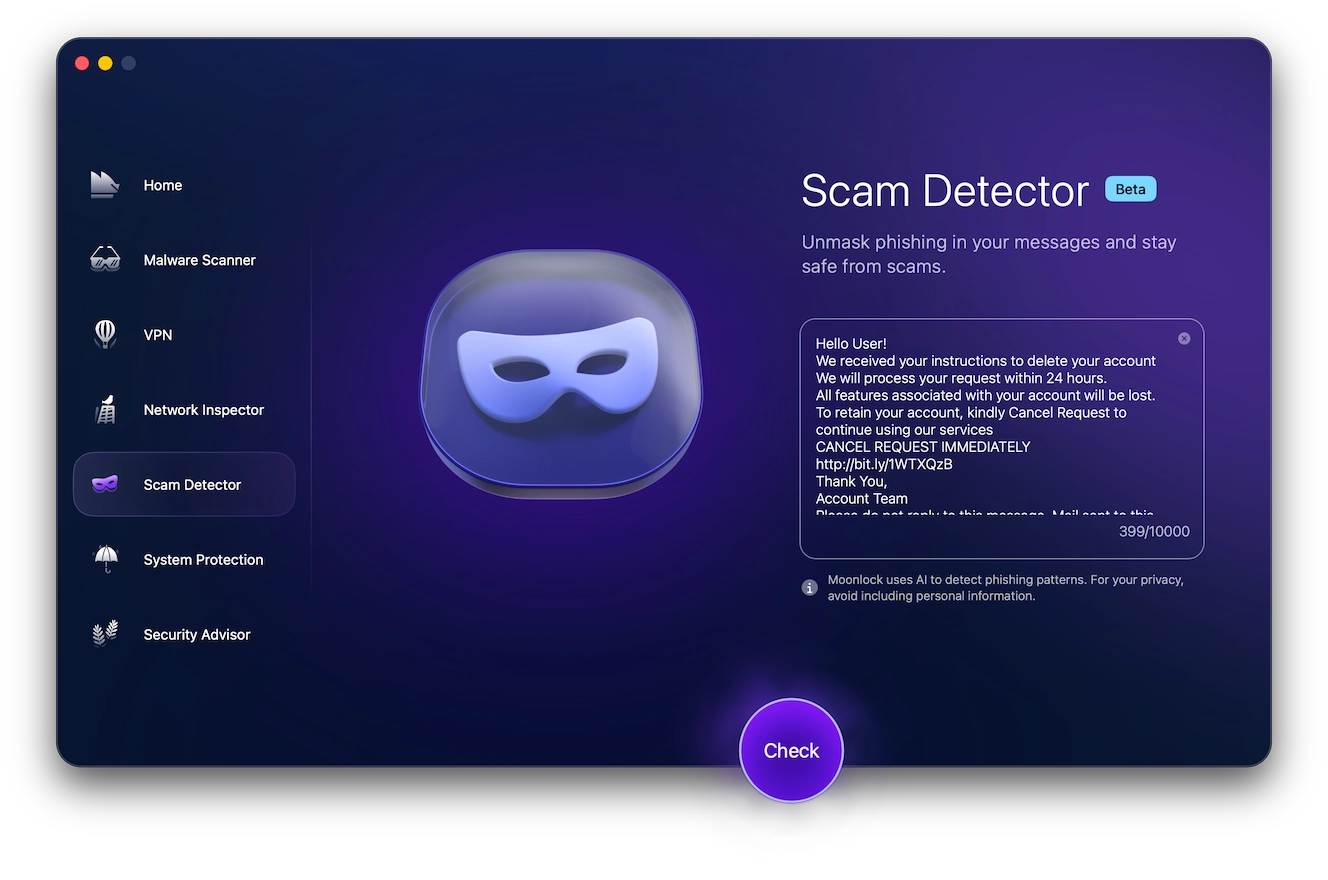
Moonlock Scam Detector can help review a suspicious Mercari text, email, screenshot, or link before you respond. It can be useful when a phishing message or fake support alert looks convincing enough to pass a quick glance.
To use Scam Detector:
- Try Moonlock for free
- Open the app and go to Scam Detector.
- Copy/paste or upload the suspicious message, screenshot, or link.
- Review the result and look for any red flags before clicking or replying.
- If it looks suspicious, return to Mercari through the official app or website and block and report the account that sent you the message.
Scam Detector gives you another way to check a questionable message before acting on it.
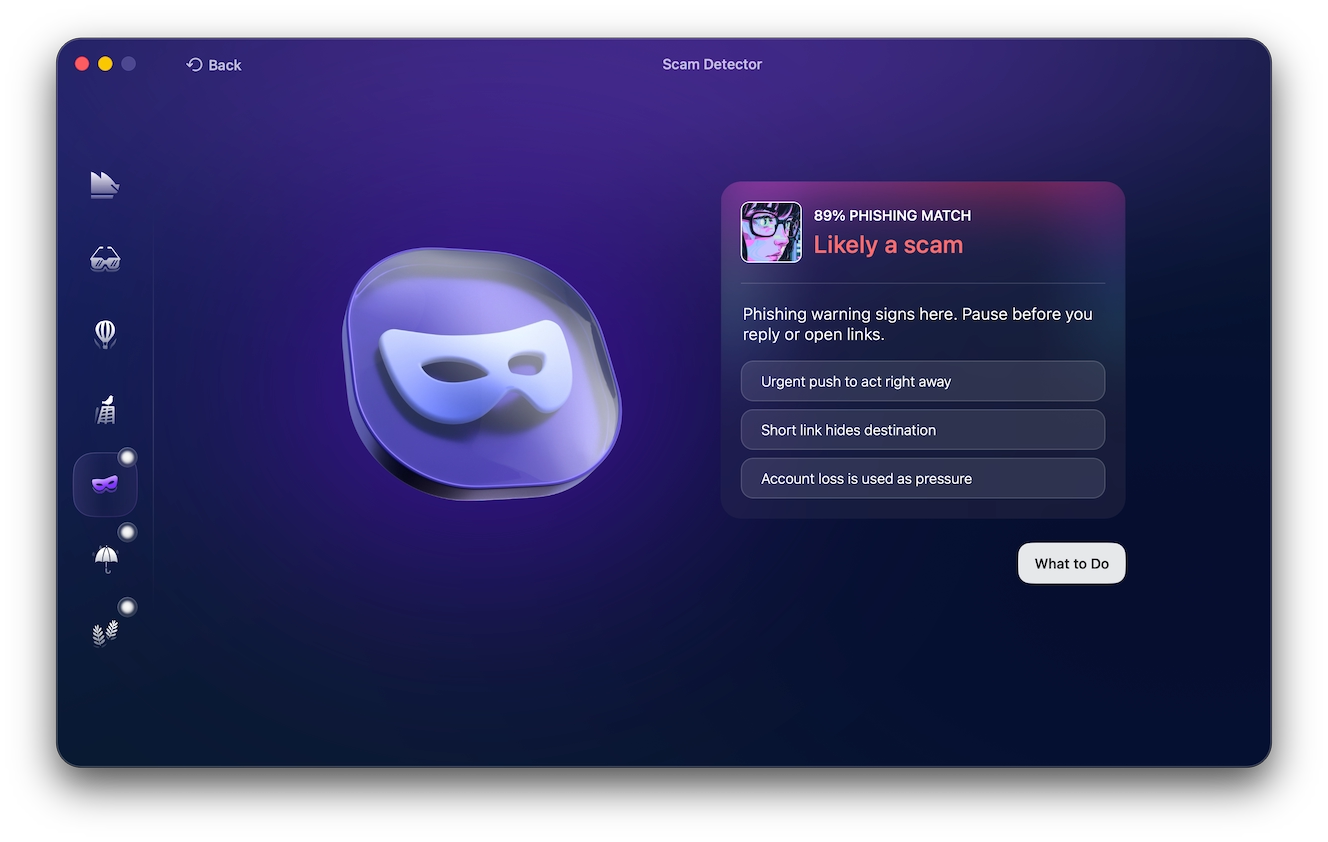
Here’s a recap of common Mercari scam red flags:
- Off-platform payment: Someone asks you to use Cash App, Zelle, or another payment method instead of Mercari.
- Fake support contact: Mercari states that official in-app messages appear through Notifications, not ordinary buyer-and-seller chat.
- Wrong email domain: Legitimate Mercari emails should come from @mercari.com.
- Suspicious links: Be cautious of anything that sends you to an outside login or verification page.
- Pressure to rate early: Rating normally closes the 72-hour return window.
- Shipping changes: A buyer asks you to send the package somewhere other than the address tied to the order.
- Unusually low pricing: A steep discount can be bait, especially for counterfeit-prone items.
- Requests for sensitive data: There’s no reason for a user to need personal information like your bank login credentials, your Social Security number, or a verification code.
- Grammar: It’s worth paying attention to spelling and grammar. However, clean writing is no longer as reassuring as it once was, as AI tools can help scammers produce well-written and polished messages.
How Mercari protects buyers from fraud
Mercari Buyer Protection gives buyers a defined process for pausing a transaction when something arrives wrong.
- Payment hold: Mercari keeps the seller’s funds until the buyer rates the transaction or 72 hours pass.
- 72-hour return period: Eligible problems must normally be reported before the transaction completes.
- Counterfeit coverage: An inauthentic item qualifies as a return reason under the current policy.
- Free approved return label: Mercari provides a prepaid label for most qualifying returns up to 50 pounds.
- Fraud monitoring: Mercari says it validates payments and evaluates suspicious listings or orders.
These protections are one reason why Mercari is safe for many buyers.
How Mercari protects sellers from fraud
Seller protection depends heavily on following Mercari’s transaction and shipping rules.
- Tracked prepaid labels: Mercari labels create shipment records tied to the order.
- Up to $200 Shipping Protection: Eligible standard, economy, and Media Mail shipments may qualify for reimbursement.
- Three-day carrier deadline: Tracking generally must show carrier receipt within 3 calendar days of purchase.
- Carrier scan requirement: Without qualifying scans, a seller is responsible for a lost package.
- Return deadlines: An approved return can be voided if the required carrier tracking does not update within 168 hours (7 days).
Mercari vs. eBay, Poshmark, and Facebook Marketplace
So, how does the Mercari platform stack up to its competitors?
eBay gives sellers access to a much larger international audience and more specialized selling tools, which can be useful for harder-to-find items or sellers who want more control over how a listing is managed. Mercari is geared toward casual resale and keeps the listing process fairly simple, which can make it easier to get an item posted without working through a lot of seller settings.
Poshmark is a more community-driven and fashion-focused marketplace. Mercari includes fashion but also covers a wider mix of secondhand goods, including electronics, collectibles, home items, and everyday products that do not fit as naturally into Poshmark’s fashion-heavy model.
Facebook Marketplace is the most unique of these platforms because many transactions happen locally and may involve direct pickup or payment between users. Mercari keeps more of the buying process inside its own system, which gives buyers and sellers a clearer record of the listing, shipment, and dispute if something goes wrong.
Overall, the biggest difference in these platforms is how much structure they want around the sale. Mercari offers more built-in transaction oversight than a typical local marketplace, while still keeping the process simpler than a larger marketplace such as eBay.
What to do if you’re scammed on Mercari
The 72-hour delivery window makes speed important when a scam involves a Mercari order. Here’s how to proceed:
- Do not rate the transaction. A rating completes the sale and releases payment.
- Save all evidence. Keep the listing and messages (take screenshots if needed), then photograph the item or packaging involved in the dispute.
- Report the account or suspicious message. Mercari provides reporting options for listings and chat activity through its Help Center.
- Change exposed passwords. If a phishing page collected your login credentials, change that password and turn on MFA.
- Contact your financial provider. If money moved outside Mercari or payment information was exposed, contact your card issuer or bank.
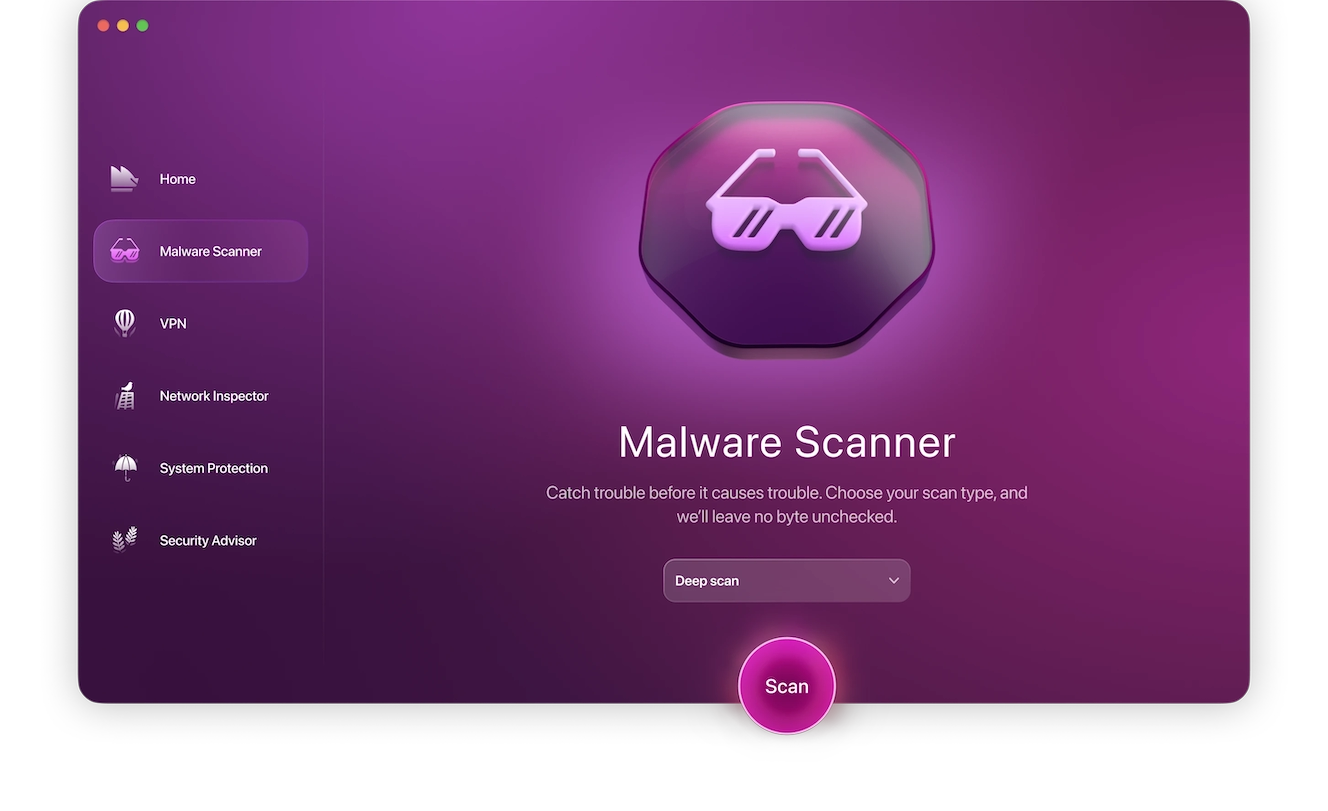
- Scan the device after phishing or a suspicious download. Moonlock antivirus can check a Mac when a scam involved an attachment, a downloaded file, or other possible malware exposure.
- Report broader fraud. Identity theft or financial fraud can also be reported to the FTC.
- Escalate a financial-services dispute when appropriate. The Consumer Financial Protection Bureau (CFPB) accepts complaints about covered financial products and services and says that most companies respond within 15 days.
A chargeback may also be available through a card issuer in some circumstances, but card-network and issuer rules vary. Start with the payment provider rather than assuming that every Mercari dispute qualifies.
Can you get a refund after a Mercari scam?
You can if the transaction still falls within Mercari’s return rules. Buyers generally need to open a return within 72 hours of carrier-confirmed delivery and before the order is rated. Once the transaction is completed, Mercari normally does not allow a return.
After Mercari approves a return, the buyer has 72 hours to get the package to the designated carrier. Mercari then looks for a tracking update within 168 hours of approval. If that update never appears, the return can be voided, and the seller may be paid. When the return is completed properly, Mercari says the refund can take up to 14 calendar days to reach the original payment method.
Mercari buying and selling FAQs
Mercari’s rules can look simple until a transaction reaches one of its deadlines. Here are 3 of the most important FAQs buyers and sellers should know the answers to before money changes hands.
If 72 hours pass without a rating or return request, Mercari will close the transaction and pay the seller.
Yes, US shoppers can buy from Mercari Japan through the Mercari Global App, which launched in the United States in June 2026.
Mercari Authenticate adds a third-party photo review through Real Authentication, so it can be useful as an extra trust signal for eligible luxury listings.
Safety checklist: How to avoid scams on Mercari
A few habits can reduce the chances of a questionable transaction reaching the dispute stage:
- Keep payment inside Mercari. Offline payments are outside normal Buyer Protection.
- Inspect before rating. Use the full 72-hour window when you need time to confirm condition or authenticity.
- Use the transaction address. Sellers should not redirect packages based only on a message from the buyer.
- Ask for more information when needed. Additional photos with timestamps can help expose copied listings or undisclosed damage.
- Document expensive sales. Sellers can photograph and take note of unique and identifying details, as well as the item’s condition before shipping.
- Use Mercari Authenticate where appropriate. The diamond badge adds third-party review for eligible luxury listings.
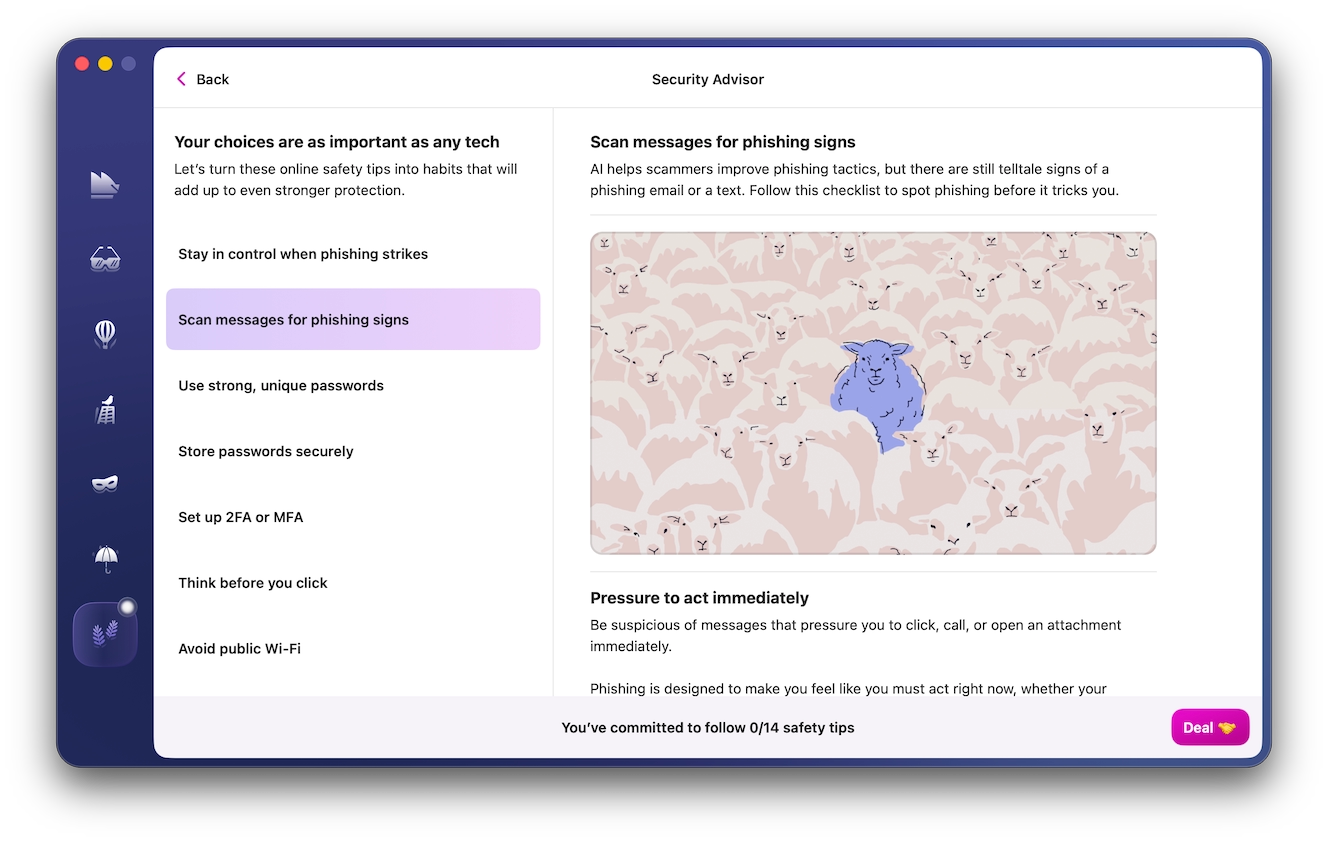
- Protect your Mac, too. Moonlock’s Security Advisor offers practical, actionable recommendations to strengthen your online security habits and build multiple layers of protection while you shop, sell, browse, and bank online.
Following these habits helps keep Mercari safe to buy from.
Overall, Mercari is trustworthy as a marketplace, but every transaction still requires a level of caution.
Staying inside Mercari’s normal process gives you the best chance of using its protections if something goes wrong. A request to move payment, shipping, or communication outside of that process should be treated with caution.
This is an independent publication, and it has not been authorized, sponsored, or otherwise approved by Mercari, Inc. Mercari is a trademark of Mercari, Inc.