


AliExpress is one of the largest online retailers today, selling a wide variety of goods, from clothing and home goods to electronics, at highly affordable prices. But none of this matters if the website itself can’t be trusted. In this guide, we’ll break down whether AliExpress is a legitimate site and how to spot and avoid scams on the site.
So, is AliExpress legit?
AliExpress is a long-standing and perfectly legitimate online retailer. It is not a scam operation. In fact, it’s a subsidiary of the Alibaba Group, one of the world’s largest e-commerce corporations with hundreds of millions of active users worldwide since 2010.
That being said, the company doesn’t have a spotless record. In 2022, the US Trade Representative added AliExpress to its Notorious Markets List due to being “a dominant upstream distributor of counterfeit goods.”
In other words, AliExpress itself is real. Any risk you might face using the platform comes not from the company, but from third-party sellers operating on the platform.
What makes AliExpress a trustworthy platform?
Despite the risk of encountering some counterfeit or low-quality goods tied to individual sellers, AliExpress has built numerous safeguards to protect buyers:
- Buyer Protection Program: Buyers are issued refunds for items that don’t arrive or don’t match the product listing.
- Seller ratings and reviews: Feedback from real buyers is displayed on product listings.
- Secure payment processing: Funds are held by the platform until delivery is confirmed or after 90 days.
- Dispute resolution system: Disagreements between buyer and seller can be disputed and resolved directly on the platform.
- Backed by Alibaba Group: The platform is held and managed by a publicly traded and well-established corporation.
AliExpress scams: What they are and how to recognize them
Once a marketplace opens its doors to third-party sellers, it’ll attract scammers alongside legitimate merchants. This issue isn’t unique to AliExpress. Facebook Marketplace, TikTok Shop, and Craigslist all have their fair share of scammers and sellers of counterfeit goods disguised as the real deal.
One easy way to catch scams or phishing attempts on e-commerce sites is through product descriptions. Look for inconsistencies in descriptions, spelling errors, vague language, or manufactured urgency through exaggerated flash sales.
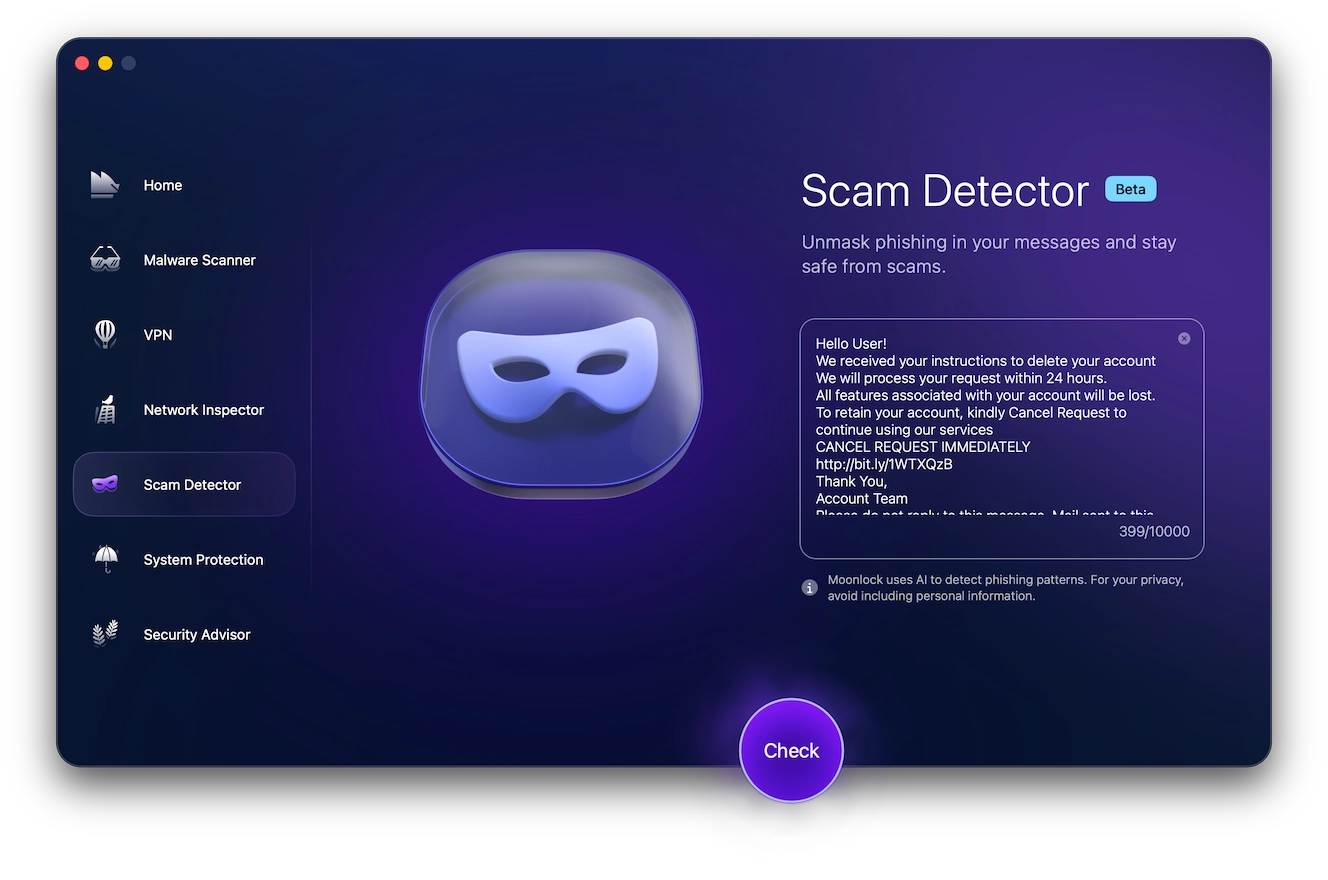
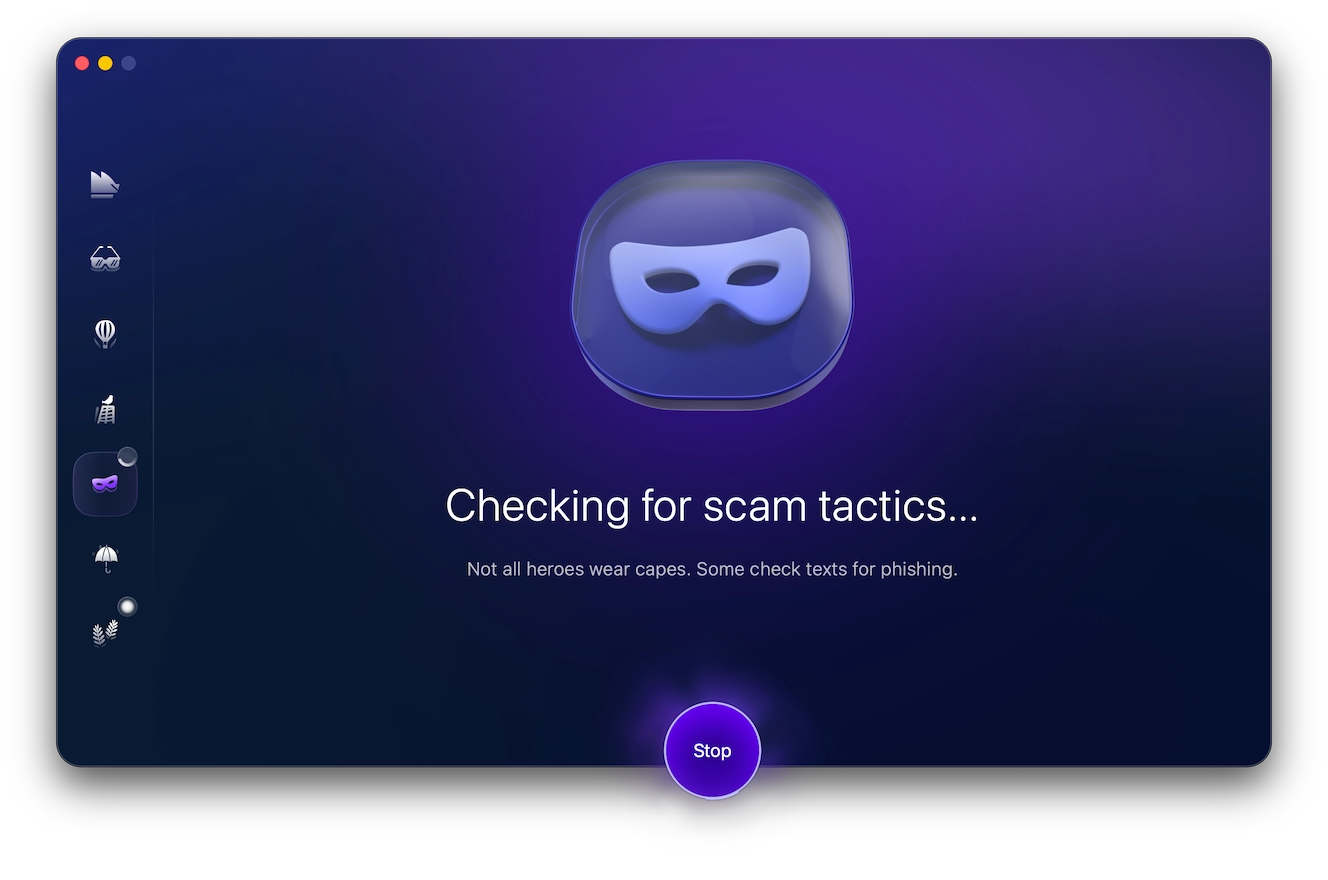
While some red flags are easy to catch at first glance, you can use Moonlock’s built-in Scam Detector to be on the safe side. The Scam Detector will scan product descriptions and seller messages for the telltale signs of a scam. Here’s how you use it:
- Sign up for a 7-day free trial of Moonlock.
- Open Moonlock, then click on the Scam Detector tab on the left.
- Copy and paste the suspicious text into the detector.
- Click Check.
If it sounds fishy, Moonlock will immediately alert you to the scam and provide you with instructions on what to do next to stay safe.
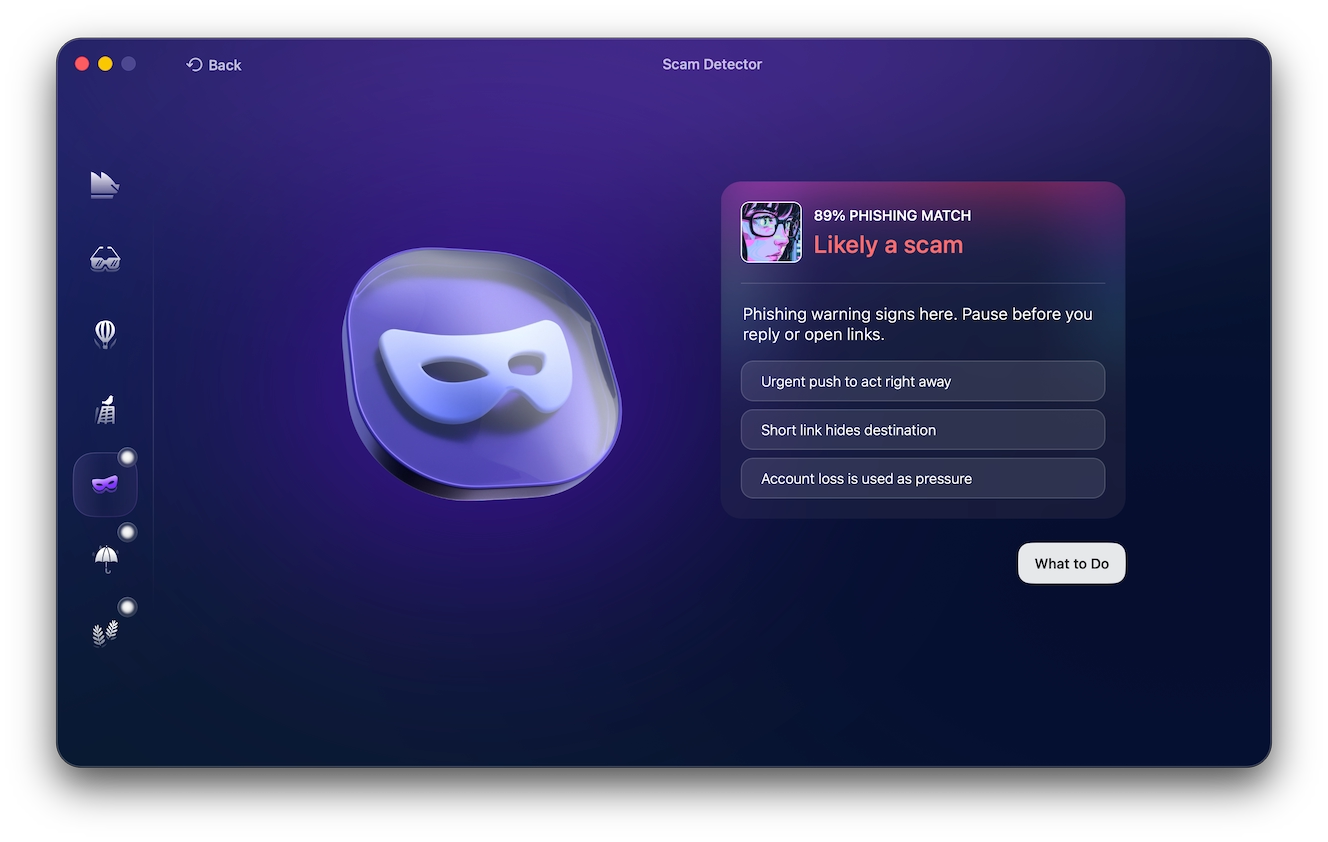
Other than phishing links and fake product descriptions, watch for these other red flags:
- Prices far below market value
- Seller has no reviews or a brand-new store
- Requests to pay or communicate outside of AliExpress
- Listing uses stolen or stock photos
Common scams on AliExpress to watch out for
With over 111 million product listings across thousands of categories, even a small percentage of bad-faith sellers amounts to countless products. Here are the most common scams to recognize and steer clear of.
1. Bait-and-switch and ship-and-switch listings

In a bait-and-switch scam, the seller lures you in with a great deal, only to inform you they’re out of stock right at checkout or after, then pressure you into purchasing a more expensive “alternative.”
A ship-and-switch scam, meanwhile, involves the scammer shipping you a product that is different from the listing. It may be broken, a counterfeit, or a lower-quality version. The seller simply hopes you won’t bother to file a dispute.
2. Off-platform payment requests and the “friend account” scam
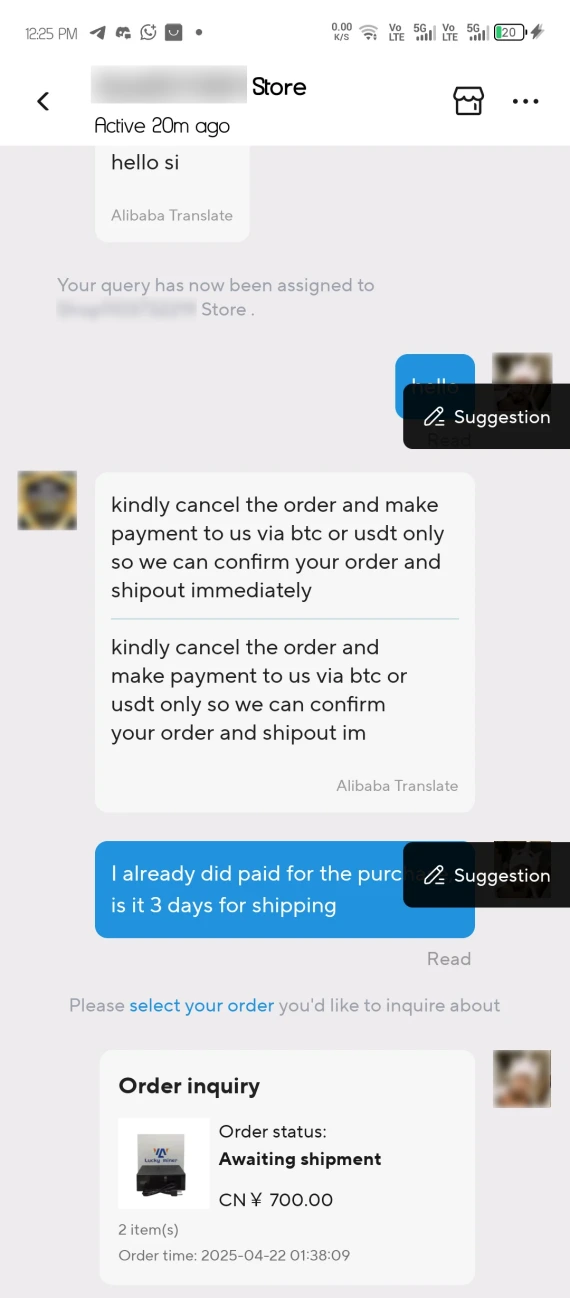
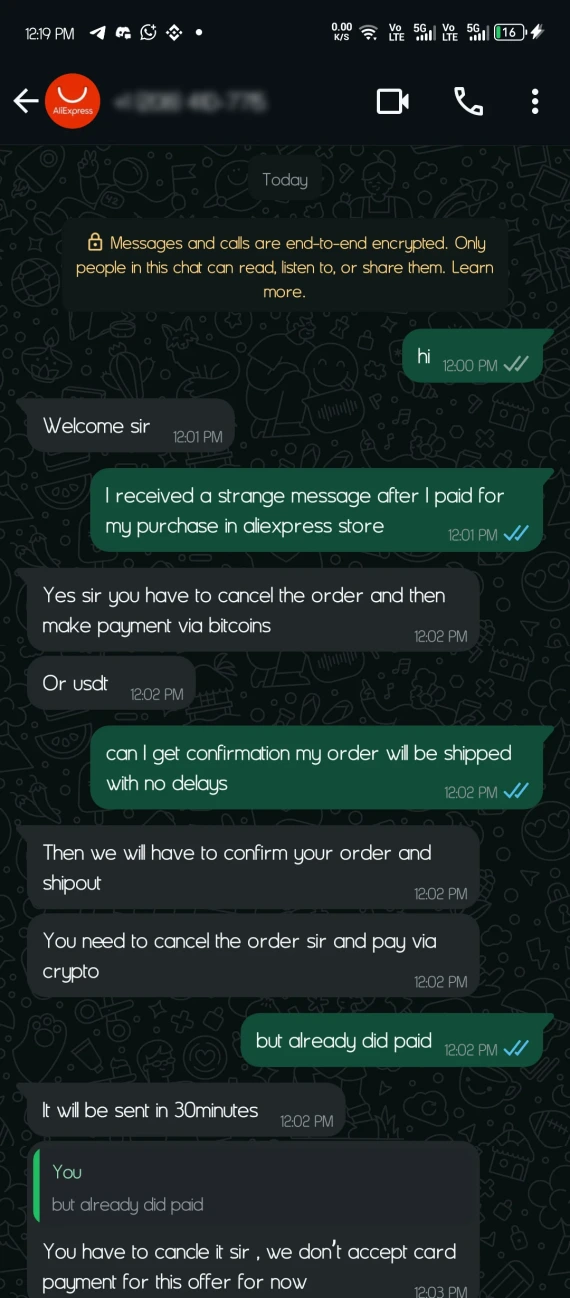
In the product description, some sellers instruct you to contact and pay them outside AliExpress, usually via bank transfers or a “friend’s” personal account. Commonly, this involves enticing you with additional discounts.
Do not communicate with or pay sellers outside of AliExpress, as this voids AliExpress Buyer Protection. You won’t be able to get a refund if there’s an issue with the product.
3. Fake sellers, disappearing sellers, and phishing attempts
Be wary of brand-new stores with no history. If a seller hasn’t invested time and effort into their digital storefront, they can easily vanish after payment.
Check seller tenure and ratings before buying, and never enter your credentials or payment details outside the official AliExpress app or website.
4. Brushing scams and unsolicited packages
If you receive an unsolicited package, don’t get too excited. You might be dealing with a brushing scam. Scammers often send cheap or fake packages to random people, sometimes including gift cards, before demanding that they leave positive reviews on their AliExpress shop to inflate their numbers.
Simply ignore any requests coming from an unsolicited package. A brushing scam doesn’t mean your account has been hacked. However, your address may have been exposed.
5. Malware-infected electronics and preloaded device scams
Electronics purchased from non-credible sellers pose their own malware risks. Some cheap Android TV boxes and IoT gadgets could arrive already compromised, even if they’re sold as “brand new.”
The FBI’s IC3 has warned consumers about BADBOX malware, in which cyber criminals turn compromised IoT devices, like streaming boxes and digital picture frames, into botnets. Criminals can then use them for click fraud or proxy access to conduct DDoS attacks, send spam, or steal data.
6. Fake AliExpress emails and texts
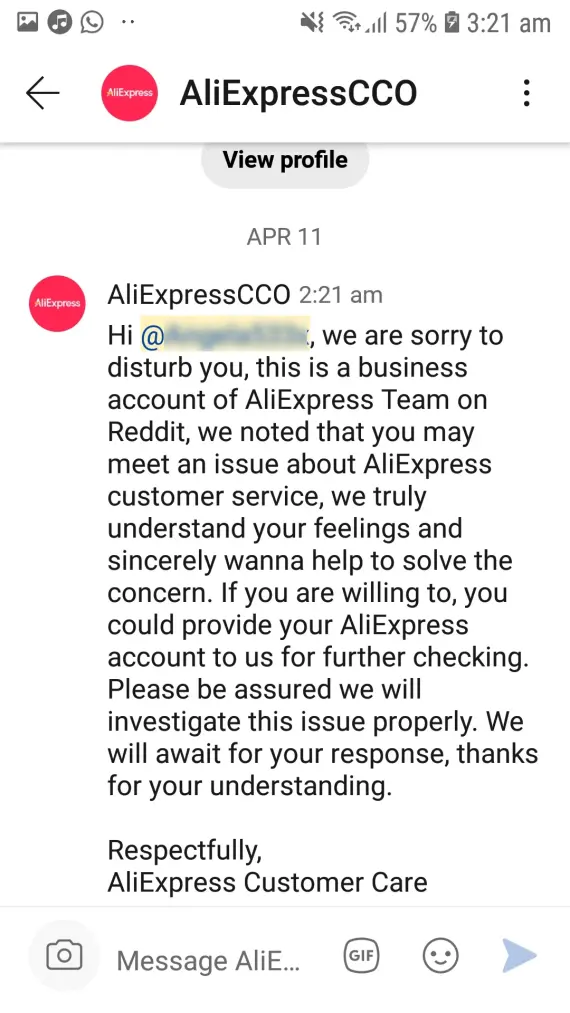
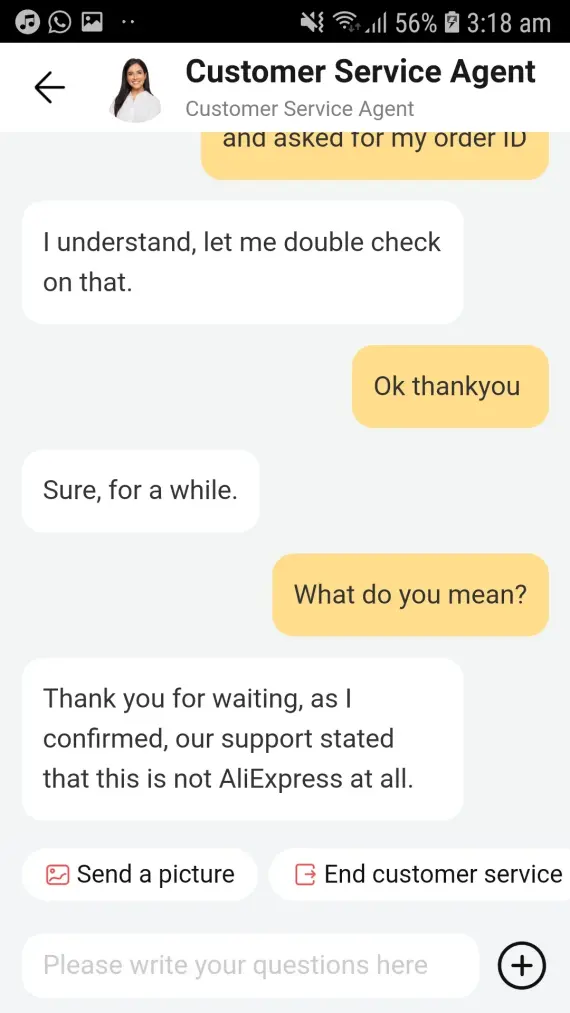
AliExpress scammers aren’t limited to the e-commerce platform itself. They may impersonate AliExpress customer support agents, sending out fake “account suspended” alerts or shipping updates. These often include malicious links, designed to steal your login credentials or payment details.
Thanks to the use of AI, it might be difficult to spot the scam at first glance, especially if the scammer has a lot of personal information on you. To double-check a suspicious message, you can run it through Moonlock’s Scam Detector to receive a verdict.
Simply sign up for a 7-day free trial of Moonlock, then copy and paste the body of the email into the built-in Scam Detector. If it notices any of the telltale signs of a scam, like manufactured urgency, it will immediately warn you against engaging any further.
7. Refund-reroute and “close the dispute” traps
In general, anytime a seller tries to get you off the AliExpress platform, it’s a scam.
In the refund-reroute scam, a seller offers to send you the refund through an alternate method, like PayPal or a gift card, in exchange for you closing the dispute made through the AliExpress platform. They’ll usually claim that an official dispute would hurt their account on AliExpress.
You must only accept refunds made through the original payment method and through the AliExpress platform. As soon as you close the dispute, you won’t be able to dispute the purchase again, and the scammer gets away with your money.
Scam patterns that real buyers report
There’s no secret textbook for scammers, and people sometimes find themselves the victims of all sorts of creative exploits and inconveniences while shopping online:
- Wrong-address delivery: The package can still be marked as “delivered” even if it was sent to an unrelated address.
- Price increase at checkout: Items priced one way in the listing can increase slightly when viewed in the cart at checkout.
- Coupon-triggered cancellations: Orders are automatically canceled when a coupon is applied, forcing you to make the purchase without the discount.
- Unrefunded VAT/customs fees: Refunds rarely cover taxes and fees paid on the item, only its base price.
These aren’t as common, so they require you to be more vigilant when encountering them. Here’s what you can do:
- Screenshot the product listing before adding to cart.
- Screenshot your cart before checkout.
- Track your packages independently and immediately correct a faulty address.
- Dispute through AliExpress for any unrefunded fees or taxes.
Is AliExpress safe to buy from?
Yes, AliExpress is safe for online shopping as long as you’re doing your due diligence.
Don’t get lured in with massive discounts. Instead, stick to sellers with consistently positive ratings and order history. Only pay and communicate with the seller through AliExpress, using Buyer Protection when needed.
Scams do exist on AliExpress, just as with any other e-commerce platform, but they can be avoided in favor of a pleasant online shopping experience.
Beyond scams: The everyday risks of shopping on a global marketplace
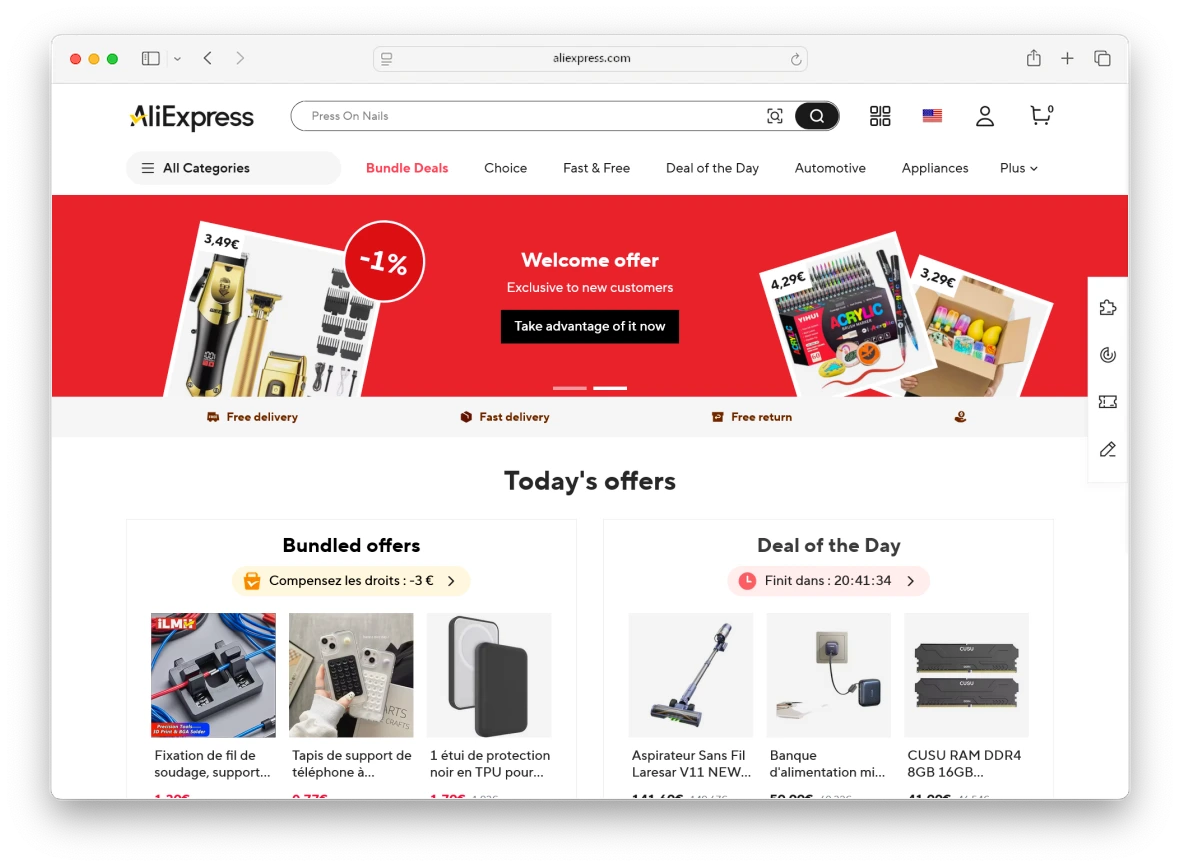
Not every bad experience shopping online is a scam, especially if you’re ordering from global sellers, unlike retailers local to the US like Poshmark.
For example, with clothes and shoes, there are different sizing and quality standards. Some product listings might be machine-translated into English, leading to some inaccurate or faulty descriptions that aren’t malicious in nature. Furthermore, returning or exchanging items from overseas sellers can be slow and costly, even if the seller is legitimate.
How AliExpress protects buyers
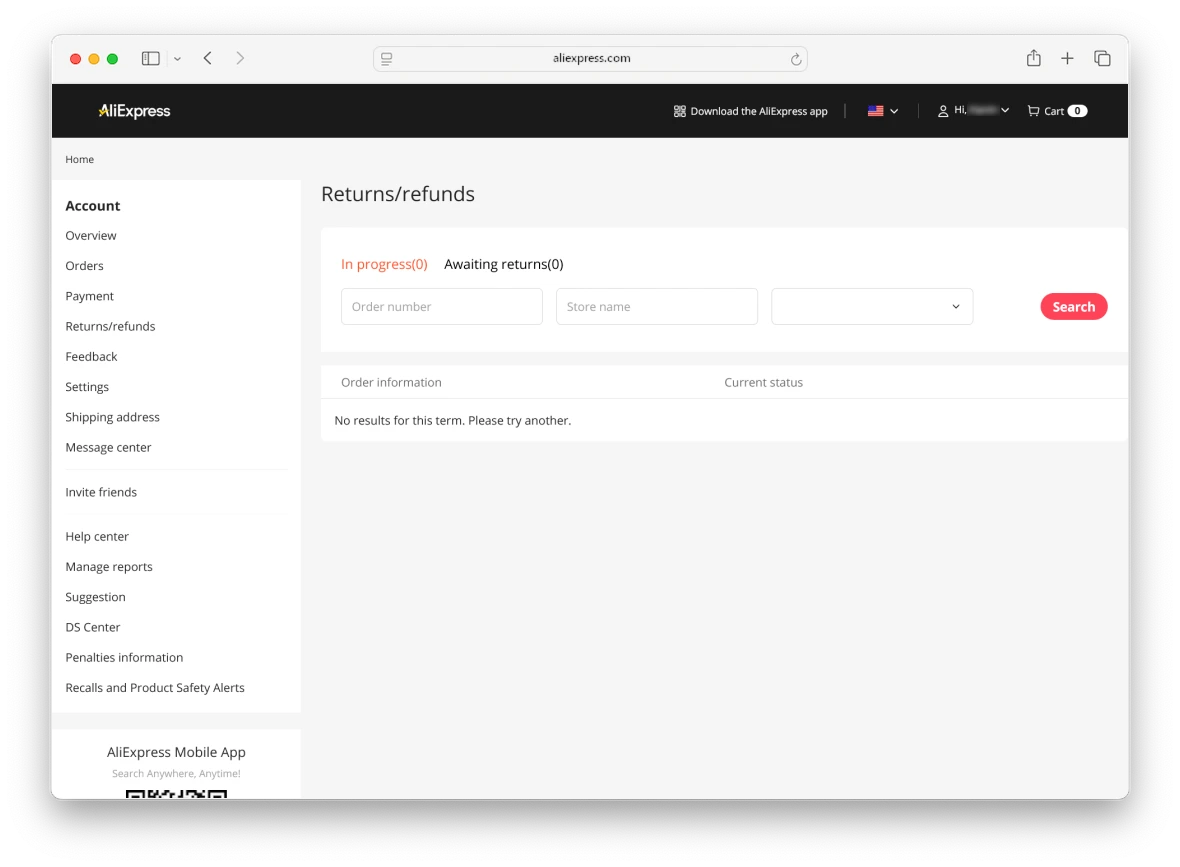
AliExpress’s Buyer Protection program enables you to get a refund on items that arrive damaged or different from the product listing. There are some limitations to the policy, as it’s only valid for 15 days after delivery confirmation and doesn’t apply to:
- Perishable items (like food or flowers)
- Custom-made items
- Items you damaged yourself
- Items not eligible for return due to hygiene reasons
If your item qualifies for a refund, here’s how the process will usually go:
- You’re first encouraged to contact the seller through the platform to reach an agreement.
- If that doesn’t work, you have the right to request a refund, a partial refund, or a replacement by going to Account, then Orders.
- Provide screenshots. An explanation for the refund request is required.
- Once your request is approved, you’ll receive the refund within 1 to 10 days to the same payment method used.
Note that Buyer Protection is only available for purchases and payments made through AliExpress.
Is your data safe on AliExpress?
AliExpress uses standard SSL encryption, keeping your personal and financial data safe, including your payment card. That’s not to say the company has no history of compromised user privacy incidents.
In 2014, a bug allowed malicious actors to hijack merchant accounts to scam buyers, and a 2017 coupon exploit tricked shoppers into revealing sensitive information. More recently, South Korea fined the parent company Alibaba $1.4 million for sharing the data of 180,000 customers with overseas sellers without consent.
Immediate steps after an AliExpress scam
Depending on how you were scammed when shopping on AliExpress, you can still act to reverse it or at least minimize the damage:
- Gather evidence: Take pictures of the received items and screenshots of the product listing, checkout, package tracking, and any communication with the seller.
- Open a dispute: Before the 15-day window closes, start a dispute through your Account tab.
- Report the seller: Use the “report” option to report the seller to AliExpress.
- Secure your accounts: If you suspect phishing, change your AliExpress and email passwords, and contact your card provider to report it.
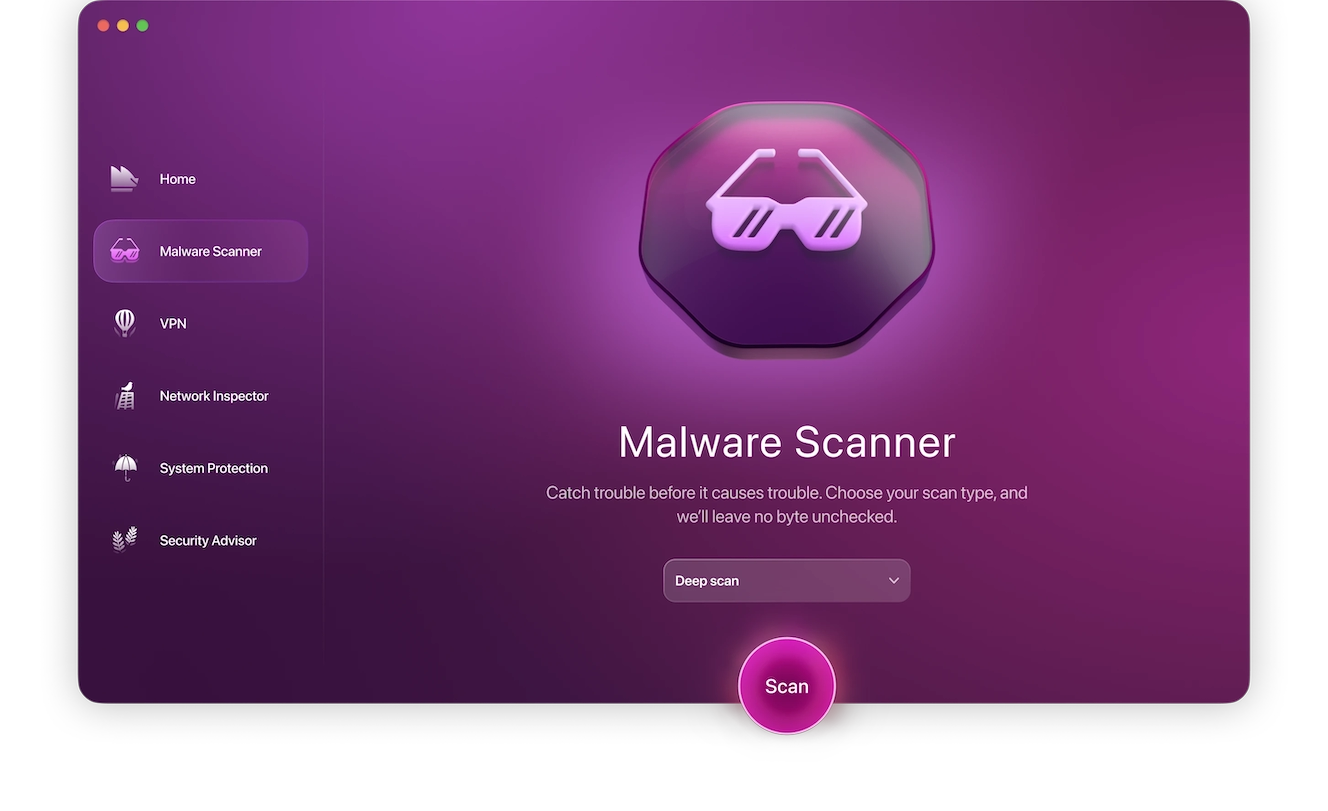
- Run a malware scan: If you clicked on a link or downloaded a file, immediately run a malware scan with an antivirus.
AliExpress vs. Amazon, eBay, and Temu: How do they compare?
These 4 are some of the largest online marketplaces in the world. They are all legitimate, with built-in buyer protection policies and safeguards to protect against scammers and bad-faith actors.
Between them, Amazon offers the strongest seller vetting and the fastest shipping for US-based buyers. eBay, meanwhile, specializes in third-party sellers and custom orders, so avoiding scammers might be a bit trickier despite the buyer protection policies.
Temu shop, like AliExpress, is a Chinese online retailer and uses a similar dispute system and carries a similar risk of receiving counterfeit goods.
AliExpress safety and security FAQs
The following are some quick answers to common questions AliExpress shoppers might have.
Yes. As long as you download the official app from the Play Store or App Store, it uses the same encryption standards as the AliExpress website.
Yes. AliPay is a widely used digital wallet and mobile payment system that can be used to make online and in-person payments.
Yes. As long as you’re paying through the official AliExpress checkout, your credit card information is safe.
Yes. Ordering from AliExpress is legal, although VAT and customs duties may apply depending on your country.
How to shop safely on AliExpress
While shopping online holds some inherent risks of getting scammed, developing a few consistent habits can help protect you from the worst of it:
- Check seller ratings, reviews, and order history before buying.
- Only pay through the AliExpress checkout.
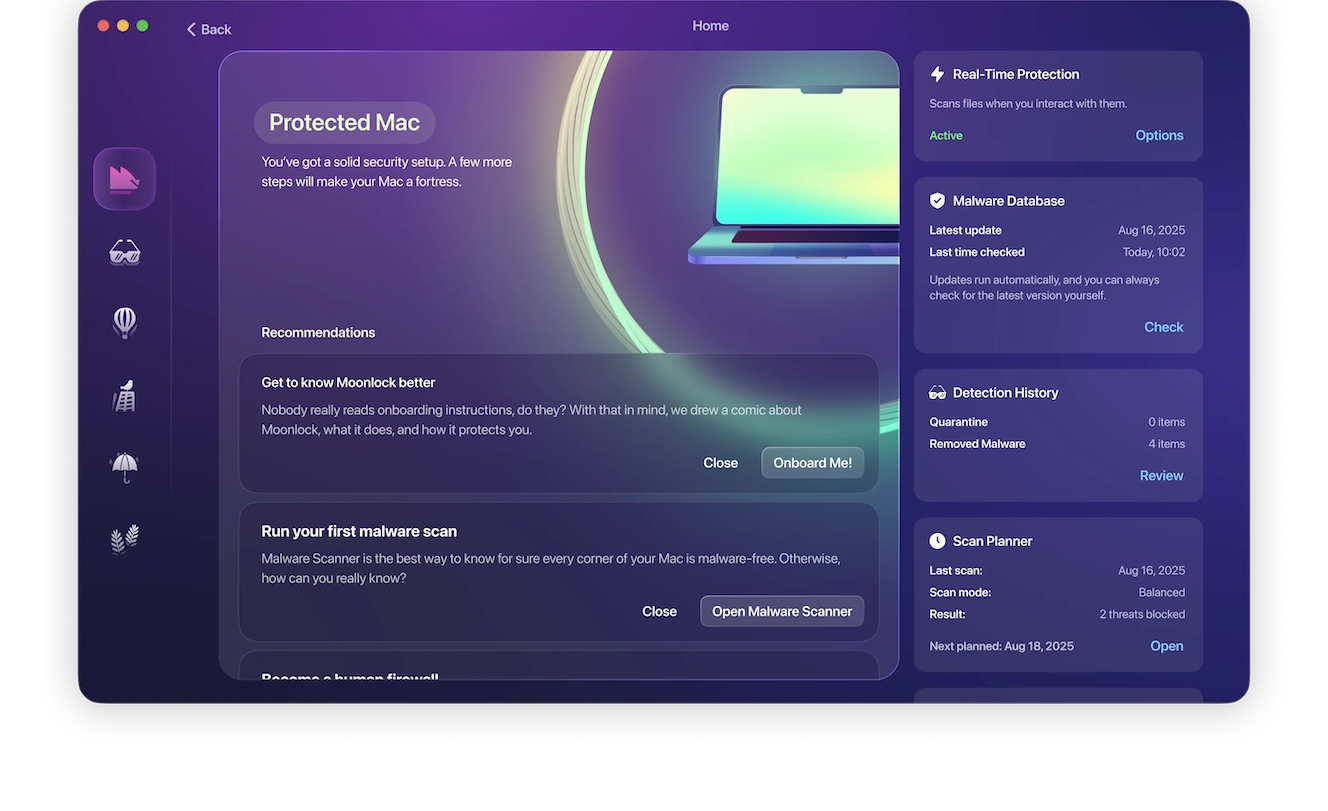
- Enable Moonlock Real-Time Protection for round-the-clock threat detection.
- Screenshot orders and save evidence to be safe.
- Open a dispute with AliExpress as soon as anything goes wrong.
AliExpress is a legitimate online marketplace that you can trust. However, it’s important to remain vigilant of scams and learn how to spot and avoid them for the best shopping experience.
This is an independent publication, and it has not been authorized, sponsored, or otherwise approved by the Alibaba Group. AliExpress and AliPay are trademarks of the Alibaba Group.