A stranger contacts you on LinkedIn claiming to be royalty who wants to invest millions in a humanitarian project. The conversation becomes personal, and eventually, you are shown money in what appears to be a real bank account. There’s just one catch: Before any of the funds can be withdrawn, you have to pay a fee.
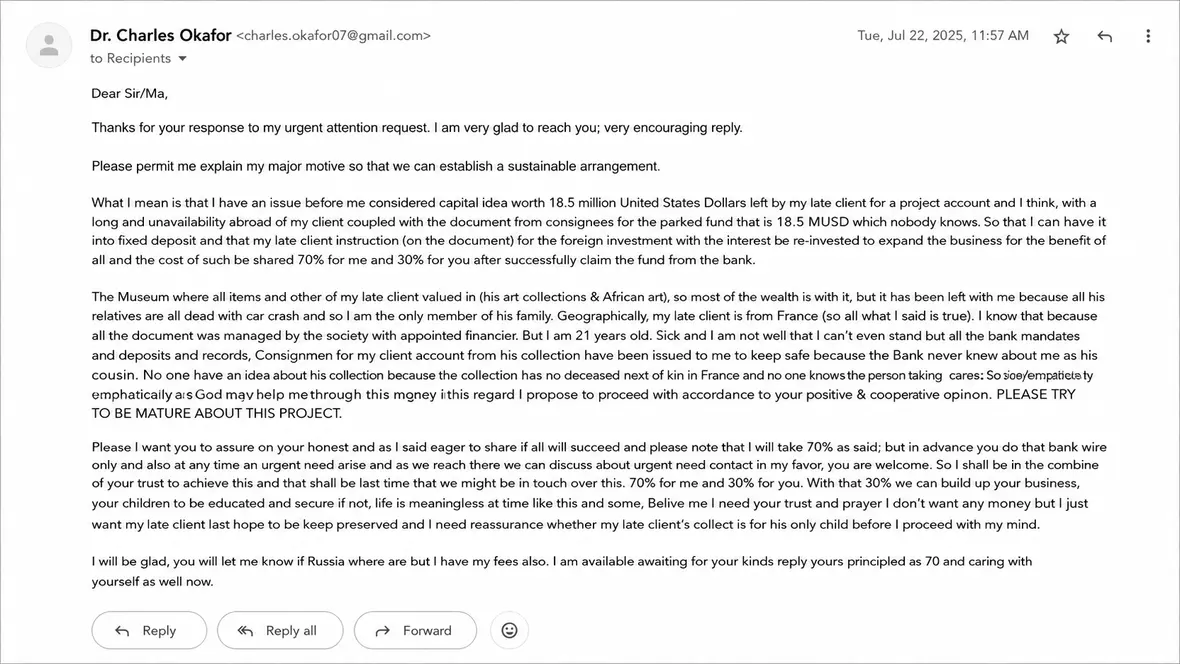
Dating all the way back to the early days of email, the notorious “Nigerian prince email” has become so well-known that it’s practically a punchline. Yet variations of this type of advance-fee impersonation fraud prevail to this day. In 2025 alone, consumers reported losing $3.5 billion to imposter scams in the United States, according to the Federal Trade Commission. Here’s everything you need to know to stay safe.
What is the Nigerian prince scam, and is it still active?
While we use the terms “Nigerian prince” and “African prince” in this article, it goes without saying that these scams can originate from anywhere. What we’re really referring to is an enduring category of online fraud that came to be associated with a specific fictional archetype.
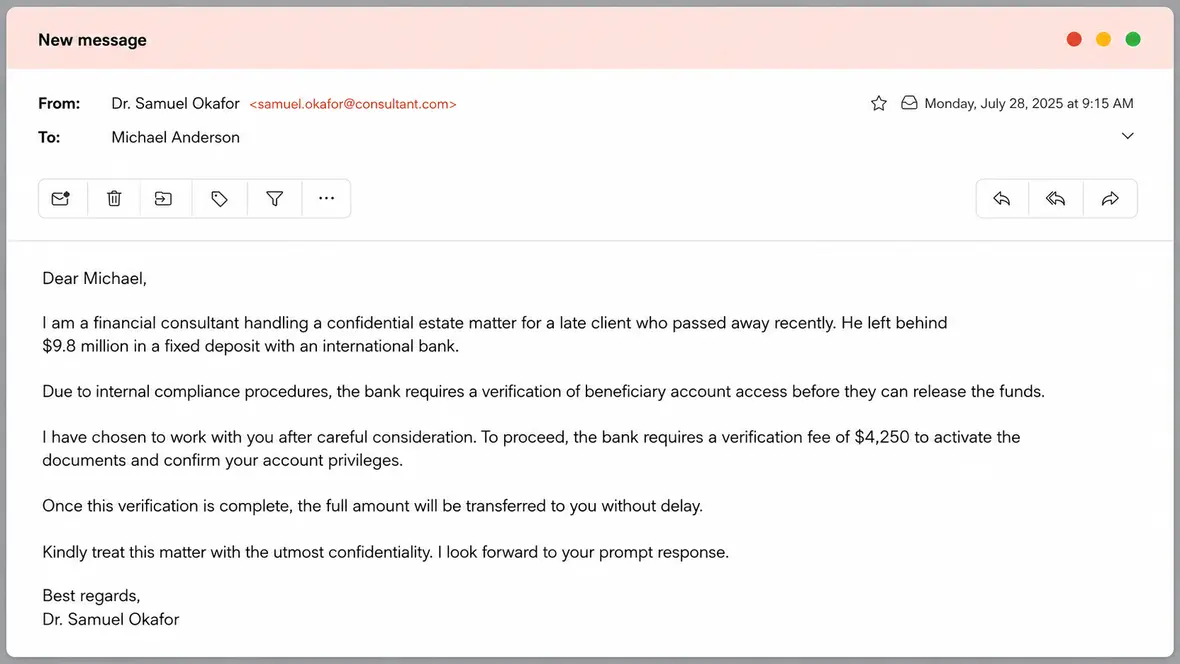
There are many variations to the African prince scam, but it is basically a type of advance-fee fraud. The victim is promised money or another valuable payoff. However, they first have to cover a supposed expense before the funds can be released. Depending on the story, that payment may be presented as a tax, a processing charge, a transfer cost, or a legal expense.
The scheme is also known as a 419 scam or 419 fraud, a name associated with Nigerian fraud law. Again, despite the nickname, the sender does not have to be Nigerian, and most modern versions may have nothing to do with royalty.
The story may have changed, but the scam is still very much alive. Between December of 2025 and January 2026, INTERPOL’s Operation Red Card 2.0 led to 651 arrests across 16 African countries, identified 1,247 victims linked to more than $45 million in losses, and recovered over $4.3 million in the process. In Nigeria, authorities also dismantled a fraud ring using social engineering and fake digital-asset investment schemes, with more than 1,000 fraudulent social media accounts taken down.
How the Nigerian prince scam works
The storyline is very consistent: A Nigerian prince scammer first creates a reason for you to believe that a large sum of money exists and that your help is needed to access it. Then, they proceed as follows:
- The scammer makes contact. An unsolicited Nigerian prince scam email may introduce an inheritance or financial opportunity, though newer versions can begin through social media, a dating platform, or a professional network.
- A believable story develops. The sender may claim to have money trapped overseas or to have access to an investment they cannot move without outside help. The victim is offered a substantial share for participating.
- A payment becomes necessary. Before the money can arrive, an unexpected obstacle appears. The victim is asked to cover a fee or make another payment to keep the transaction moving.
- The costs keep growing. Paying once rarely solves the supposed problem. New complications arise, each carrying another charge and another promise that the payout is almost ready.
- The promised money never arrives. The scam may end when the victim refuses another payment, discovers the deception, or the fraudster decides there is nothing more to collect.
The origins of the Nigerian prince scam
Despite its strong link to email, the Nigerian prince scam predates the internet. Its basic structure resembles the Spanish Prisoner scam, which was an advance-fee con documented centuries ago in which a stranger was asked to help free a supposedly wealthy prisoner in exchange for part of their fortune.
The version now associated with Nigeria developed much later. During the 1970s, Nigeria experienced an oil boom followed by economic decline. By the 1980s and 1990s, scam letters were circulating internationally from people claiming to be Nigerian princes or figures connected to the petroleum industry. Carlos Barragán, author of The Yahoo Boys, connects that period to the boom-and-bust years that left many younger Nigerians facing unemployment.
Fax and postal mail eventually gave way to email, which made mass distribution much cheaper. The familiar prince of Nigeria scam became so recognizable that it entered popular culture, and recognition of the old script pushed scammers toward new tactics.
How to spot the signs of a Nigerian prince scam
A modern Nigerian prince scam, or 419 fraud, can look much cleaner than those old messages sitting in spam folders. Instead of judging a message by how professional it looks, pay attention to what the sender ultimately wants you to do.
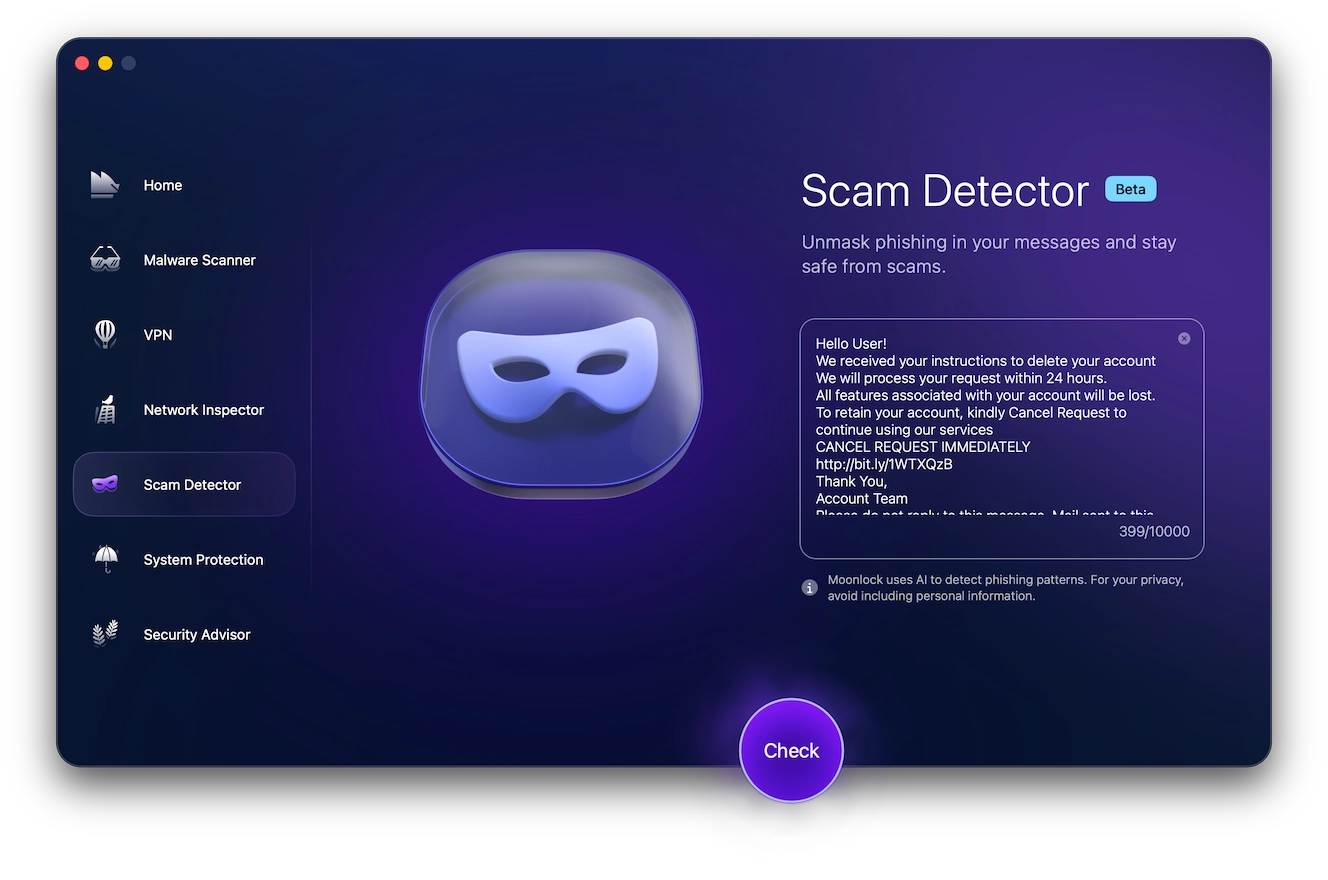
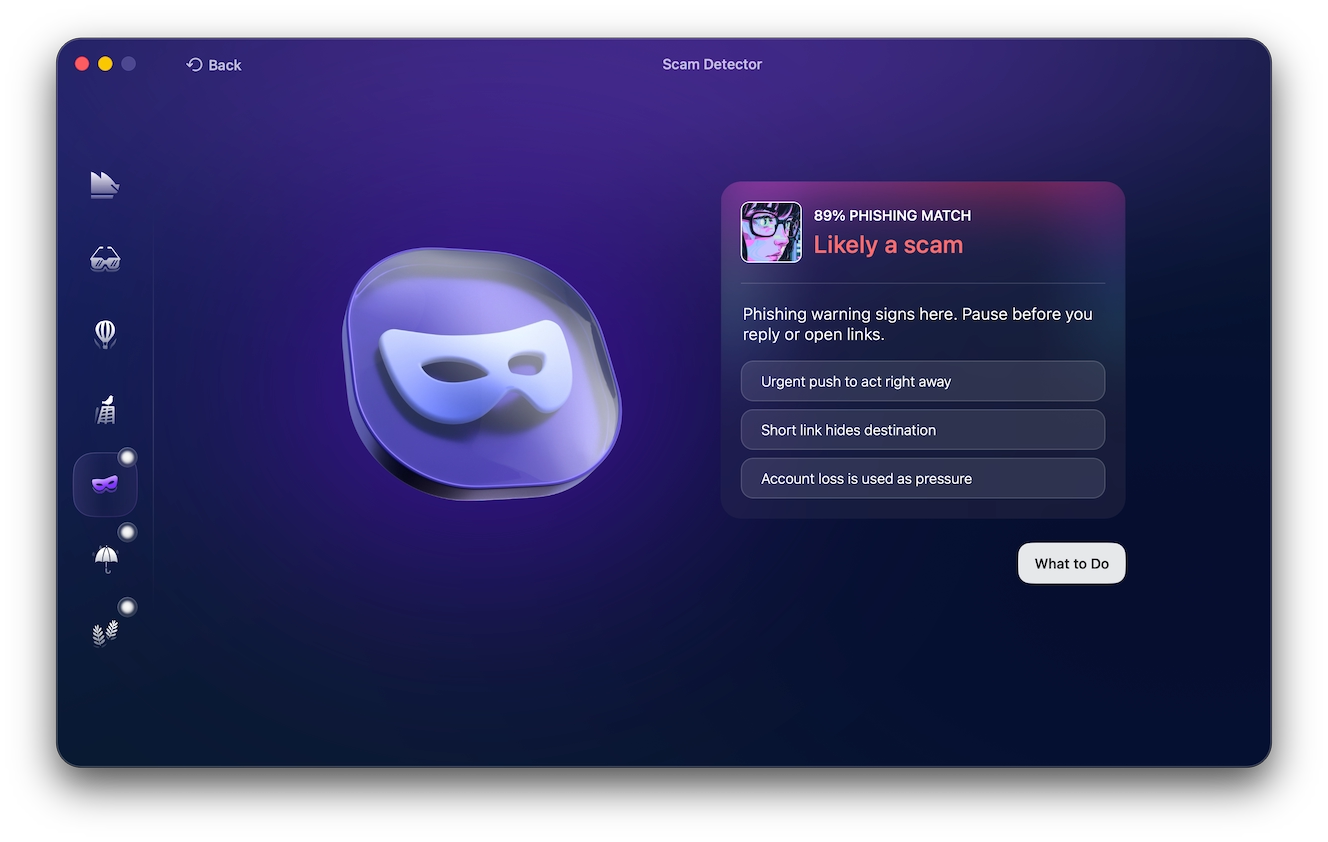
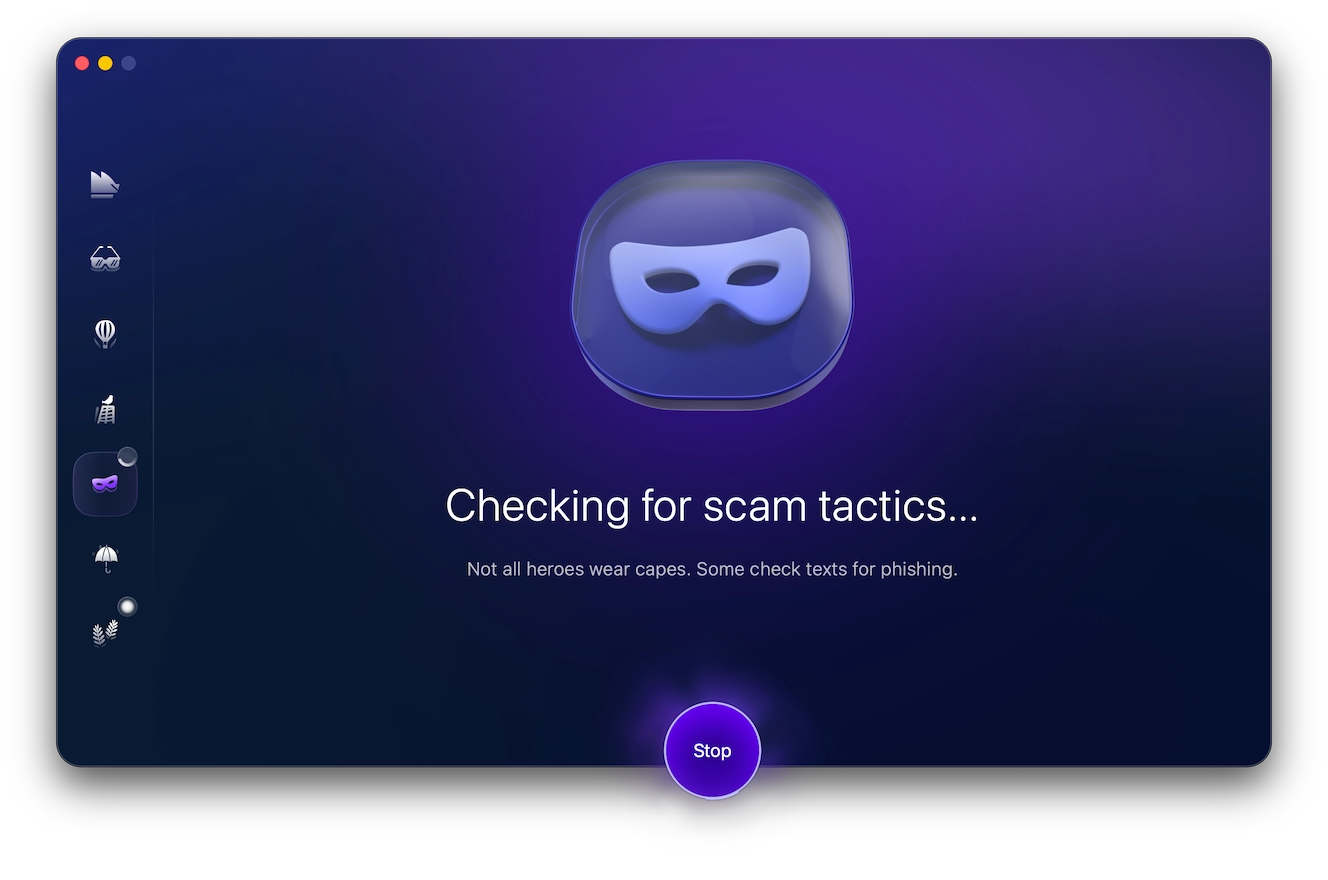
Moonlock’s Scam Detector can review a suspicious email, text, screenshot, or link before you respond. This can be useful when you think an unfamiliar financial offer seems plausible but cannot tell whether the language is part of a known scam pattern.
You can also use the Scam Detector when a possible Nigerian prince email has already evolved into a longer conversation. Checking the message before following its instructions gives you another way to examine the request without interacting further with the sender.
To use Scam Detector to detect fraud patterns:
- Open Scam Detector.
- Paste or upload the suspicious text.
- Review the Scam Detector’s analysis before pursuing the message further.
- If the message appears fraudulent, end the conversation. Never test the scammer yourself.
You can try Moonlock with a 7-day trial if you want another way to check suspicious messages before responding.
Scam Detector cannot verify that every person online is who they claim to be. What it can do is help shine a spotlight on suspicious language and scam patterns while you still have time to independently check the story.
Common warning signs include:
- Money from a stranger: Someone you have never met promises a large inheritance, investment return, or share of a fortune.
- Payment before payment: You are told money is waiting, but you have to spend your own money before you can receive it.
- A story that depends on secrecy: The sender discourages you from discussing the arrangement with someone else for fear they might question it.
- An identity that cannot be independently verified: The person claims to hold an impressive title, but their contact information does not lead back to a legitimate institution.
- Repeated new expenses: Every apparent solution reveals another financial obstacle.
- Requests for financial information: A scammer may ask for banking information under the pretense of arranging the transfer.
- Pressure to act before checking: The opportunity suddenly expires if you contact the supposed bank or take time to verify the sender.
- Official-looking documents that prove very little: A convincing letterhead or account dashboard can be fabricated.
- A request for gift cards: No legitimate transaction is ever completed with retail gift cards.
- Pressure to pay in cryptocurrency: Crypto payments can’t be refunded the way a card chargeback can.
Poor spelling may still appear in a Nigerian prince scam email, but clean grammar should not reassure you, as modern AI tools can produce well-written and polished messages that leave the error-riddled messages of the past in the dust.
How the Nigerian prince scam has changed in 2026
The biggest change is the “who” behind the scam. Research into newer Nigerian prince-style campaigns found some surprising results. Roughly half of the messages in one large sample used a business transaction rather than the traditional personal inheritance story. Other versions impersonated government officials or people connected to international institutions instead of royalty.
Current events also give scammers more material. So far in 2026, researchers documented advance-fee messages built around active military conflicts involving investors supposedly attempting to move their capital to safety. Another reported case involved a man allegedly posing as the Crown Prince of Dubai while presenting a humanitarian investment opportunity to a businesswoman.
The impersonation can now extend beyond text. AI-assisted impersonation scams may use synthetic voices or deepfake video to make a supposedly important person appear to speak directly with the target. A familiar-looking face on a video call should therefore be treated as supporting evidence, not proof of identity.
How Nigerian prince scams typically begin today
Not only is a modern 419 scam unlikely to mention Nigeria at all, but it is no longer limited to email. It can start anywhere that 2 people can communicate online:
- Social media: An account may approach the target with an investment proposal or another financial opportunity.
- Professional platforms: LinkedIn creates an opening for supposed investors or business partners to approach people in a work context.
- Messaging apps: Conversations may move into private chats, with similar tactics appearing in WhatsApp scams or Telegram scams.
- Dating platforms: A relationship may develop before money ever enters the conversation. The evolution overlaps with modern Tinder scams.
- Phone calls: A caller can reinforce a story first introduced elsewhere and make the person behind it feel more tangible.
- Email: Traditional Nigerian prince scam emails remain in circulation, including newer business versions.
The psychology behind the scam
A huge promised reward gets attention, but the scam often becomes more effective after the first small commitment.
Psychologists have described a “foot-in-the-door” effect in which agreeing to one minor request can make a person more willing to accept a larger one later. A “Nigerian scam” may begin with nothing more than replying. Later, the victim agrees to keep the arrangement confidential. The first payment can make abandoning the deal even harder because walking away means accepting that the money already spent is gone.
Newer versions can build commitment through emotional manipulation instead. Barragán’s reporting on “Nigerian scammers” using the romance angle found several relationships that lasted months or even years, with the scammer taking the victim’s life savings little by little. Others engage with sugar daddy scams that use a related dynamic by introducing money through a relationship that already feels personal.
Major Nigerian prince scam arrests and convictions
Not every scammer gets away with it, especially with the digital paper trail their leave behind. In March 2026, a federal judge sentenced a Nigerian national, Saheed Sunday Owolabi, to 15 years in prison after a jury convicted him of conspiracy to commit wire fraud and conspiracy to commit money laundering. Prosecutors said the operation used fake romantic relationships and moved more than $1.5 million to Nigeria.
Another Nigerian defendant, Sobanke Idris Sunday Adereti, received a 33-month federal sentence in 2022 after pleading guilty to passport fraud and attempted bank fraud. Investigators said he was likely acting as a money mule and connected him with additional fraud activity.
What to do if you’ve sent money to a Nigerian prince scammer
If you have already paid the requested fee, here’s how to proceed:
- Stop sending money. End the conversation. Even if the scammer claims that one final payment will unlock everything, any continued contact gives them another chance.
- Contact your financial provider. Tell your bank or the service used to send the payment that fraud occurred. Ask whether the transaction can still be stopped or recalled. Recovery is not guaranteed, and the longer you wait, the fewer options are available to you.
- Secure exposed accounts. If you shared credentials or used a password on a site sent by the scammer, change your passwords. Review financial accounts for activity you do not recognize.
- Save all evidence. Keep the messages and payment records before blocking the account. That material can help a financial institution or law-enforcement agency understand what happened.
- Report the fraud. In the US, Nigerian prince fraud and other advance-fee scams can be reported to the FBI’s Internet Crime Complaint Center and the FTC. If the scam occurred through a platform, report the account there as well.
Be ready for recovery scammers afterward. The SEC warns that previous fraud victims may be approached by people claiming that they can retrieve lost funds in exchange for an upfront payment. This is just another advance fee scam aimed at someone the criminals already know has paid once.
What else should you know about Nigerian prince scams?
The familiar African prince scam is only one version of a much broader fraud technique. These answers cover a few distinctions that can get lost behind the nickname.
The name comes from widely circulated versions in which the sender claimed to be Nigerian royalty who needed help moving a fortune due to political unrest or family troubles.
No. Replying to a scam email is not illegal. The situation changes if someone knowingly participates in fraud or agrees to move stolen funds for another person.
A classic Nigerian prince scam leads with a financial opportunity and asks the victim to help unlock money. A romance scam usually builds an emotional relationship before introducing a financial problem.
Modern schemes can combine both. A relationship may begin on a dating app and later turn into an inheritance story or an investment proposition.
Yes. Modern Nigerian prince-style messages can target business inboxes with investment pitches or impersonation rather than a royal inheritance story.
The prince may change, but the scam doesn’t: Key safety tips
A Nigerian prince scam text or email is easier to manage before you start following the sender’s instructions. The best time to investigate the story is before any money or private information changes hands.
Scam Detector can be used when a financial request arrives through email or another messaging channel and you want another assessment before responding. See for yourself with a 7-day free trial of Moonlock. It’s a useful tool to have on your side in the fight against fraud, especially now that polished AI writing and convincing digital identities can make older visual warning signs less dependable.
If you want to be prepared, a few good habits can make an advance-fee scam pattern easier to recognize:
- Treat any unsolicited promises of large financial rewards with skepticism.
- Verify the sender through contact information you find independently.
- Do not pay money simply to release a larger promised payment.
- Discuss secret financial opportunities with someone outside the conversation.
- Treat additional fees after an initial payment as a sign to stop.
The Nigerian prince scam is easy to recognize in its original form, but newer versions are harder to spot. Today, they may use business offers, professional titles, or more convincing communication. Overall, any request to pay money before receiving a promised payout should be treated as a warning sign.