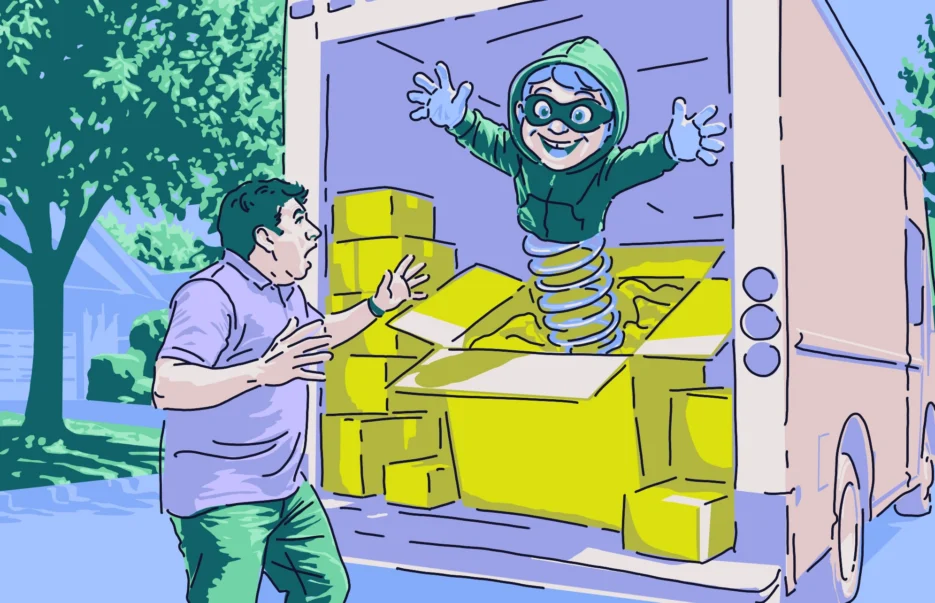
You receive a text from FedEx, but instead of confirming the delivery of your package, it notifies you that your address is incomplete or that you have unpaid fees on your account. To top it off, the message is accompanied by a suspicious-looking link. If you click, you’ve just fallen for a FedEx scam.
Scammers pose as FedEx to trick you into sharing payment details, passwords, or other personal info. It usually starts with a fake delivery text or email made to look official. In 2024, the FTC reported $470 million in losses from text-message scams, with package-delivery problems being the most common type.
In this guide, we’ll explain how to recognize these FedEx scams and protect yourself from them.
What is a FedEx scam?
A FedEx scam is a type of fraud in which criminals impersonate FedEx to gain your trust and steal your personal and payment information. FedEx is a particularly attractive company for scammers to impersonate because it’s a well-known brand recognized and used by millions of people, many of whom already expect to receive text updates and notifications from the company regarding their packages.
FedEx scammers typically contact you through one of 3 channels:
- Text messages (smishing): Fake delivery alerts and phishing links
- Emails (phishing): Legitimate-looking FedEx emails containing delivery confirmations or malicious links and attachments
- Phone calls (vishing): While less common, callers may pose as FedEx representatives and pressure you to provide payment information or verification codes
How to spot a FedEx scam
FedEx scams are sometimes so convincing that they’re hard to tell apart from the real deal. Fortunately, there are usually some signs that it’s a scam, often relating to how the email or text message was written.
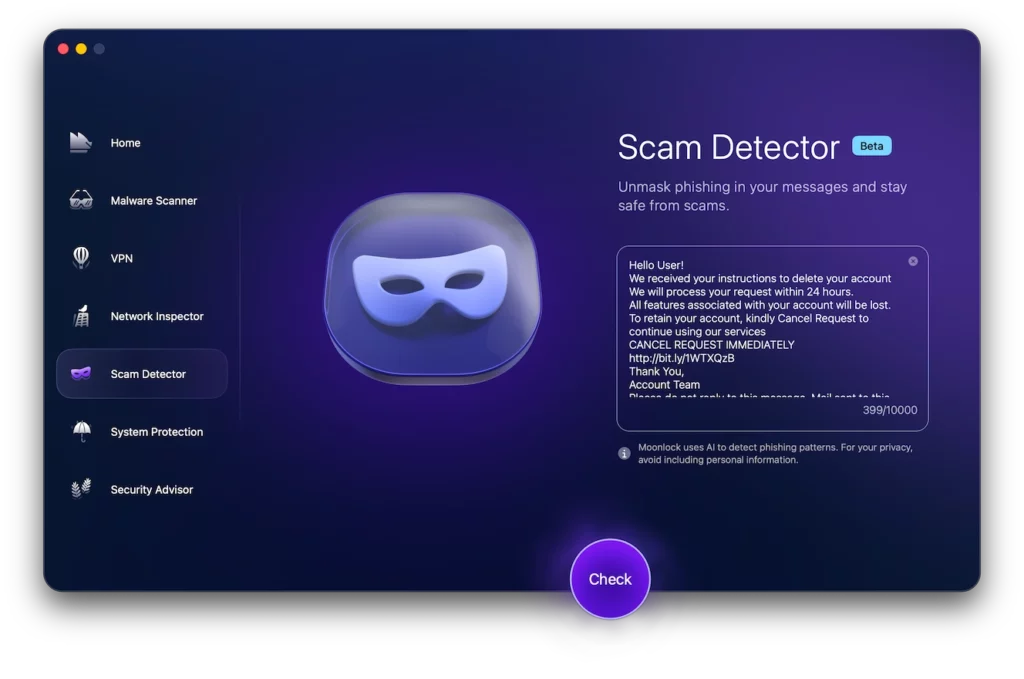
Before clicking, replying, or paying, use Scam Detector to check the message for phishing language and manufactured urgency.
Here’s how you do it:
- Try Moonlock for free
- Open the app, then click on Scam Detector from the left-hand sidebar.
- Copy and paste the suspicious message into the text box.
- Click Check.
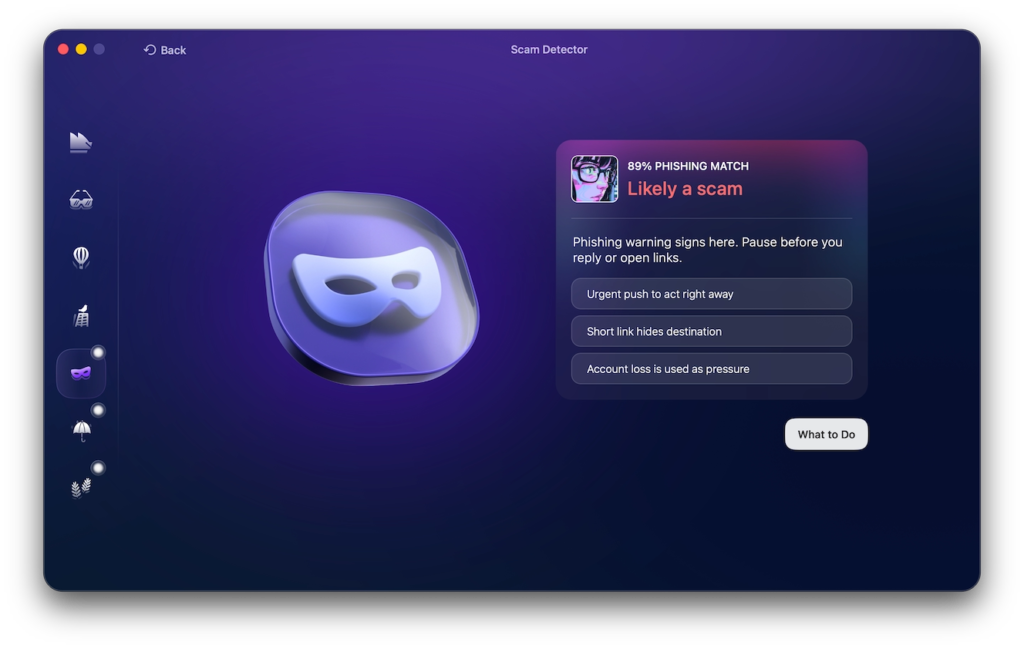
Moonlock will then analyze the FedEx message to determine its legitimacy. If there’s a high likelihood that the message is associated with a scam, Moonlock will provide you with actionable advice on what to do next to stay safe.
You can also learn to notice some of the most common red flags in FedEx and courier scams, such as:
- Unexpected notifications or communication
- Manufactured urgency through deadlines or penalties
- Suspicious sender names or domains
- Requesting a “small fee” for delivery or customs
- An invalid tracking number that doesn’t work on the FedEx website
- Unusual payment methods, such as crypto or gift cards
- Requesting sensitive and personal data, like payment information
- Risky links or attachments in the email or text message
Typical FedEx scams in 2026
While FedEx scams have been around for as long as the company has existed, in 2026, the scammers are getting more creative in how they trick people.
FedEx scam text messages
Scammy text messages are short and quick, and they don’t require the scammer to duplicate the design of the company’s legitimate communication. They typically include everything from fake tracking to failed deliveries from FedEx Ground.
However, the issue is with the link they urge you to click on. Usually, following a “Smishing Triad” operation, a FedEx or FedEx Ground text scam leads to a message claiming a fake delivery with a link promising more details. This may lead you to an Amazon survey or fee payment page that steals your personal and payment information.
FedEx scam emails (phishing)
Phishing emails from FedEx tend to be more elaborate. They often claim that your package has been delayed or that they’re awaiting confirmation before delivery, prompting you to click on a link or download your “invoice,” which is, more often than not, malware.
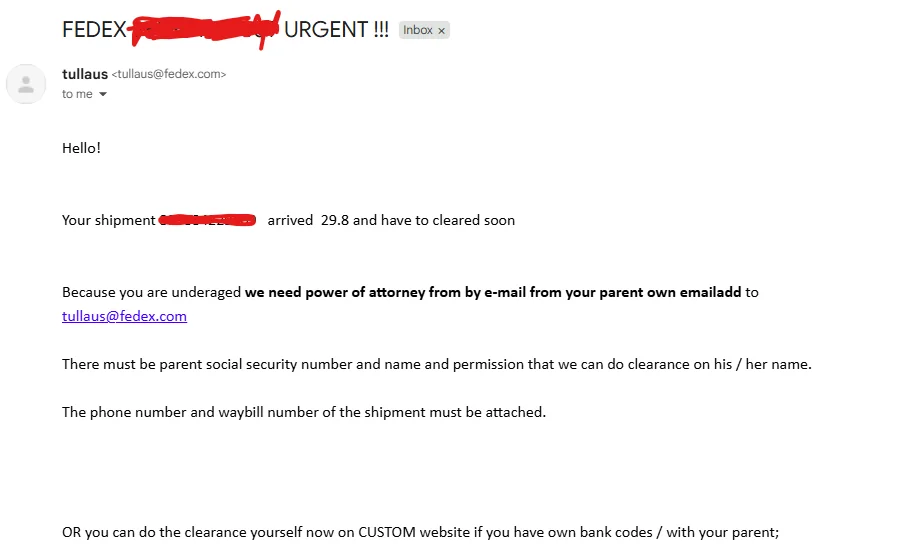
If you click it, this will open a fake tracking page designed to steal your account or payment details. Sometimes, instead of a fake FedEx website, the link redirects you to a fake Gmail, Yahoo, or Outlook login screen to capture your email credentials rather than FedEx information.
Some common subject lines to watch out for include:
- “FedEx Delivery Attempt Failed”
- “Your Package is on Hold”
- “Your Shipping Invoice is Ready”
- “Action Required: Confirm Delivery Address”
FedEx phone call scams
In FedEx phone scams, a caller impersonates a FedEx employee and claims that “your package was seized” or that it “contains illegal items” such as drugs or counterfeit goods. They say this to create a sense of panic, threatening you with fines and police involvement. They’ll then demand immediate payment or personal information to “clear” the shipment.
It’s not only over the phone. Scammers are also known to operate fake FedEx support social media accounts, offering to help you sort out a delivery issue before requesting account or payment details. FedEx’s official X accounts are @FedEx and @FedExHelp. Anything else is likely a fake.
FedEx job scams
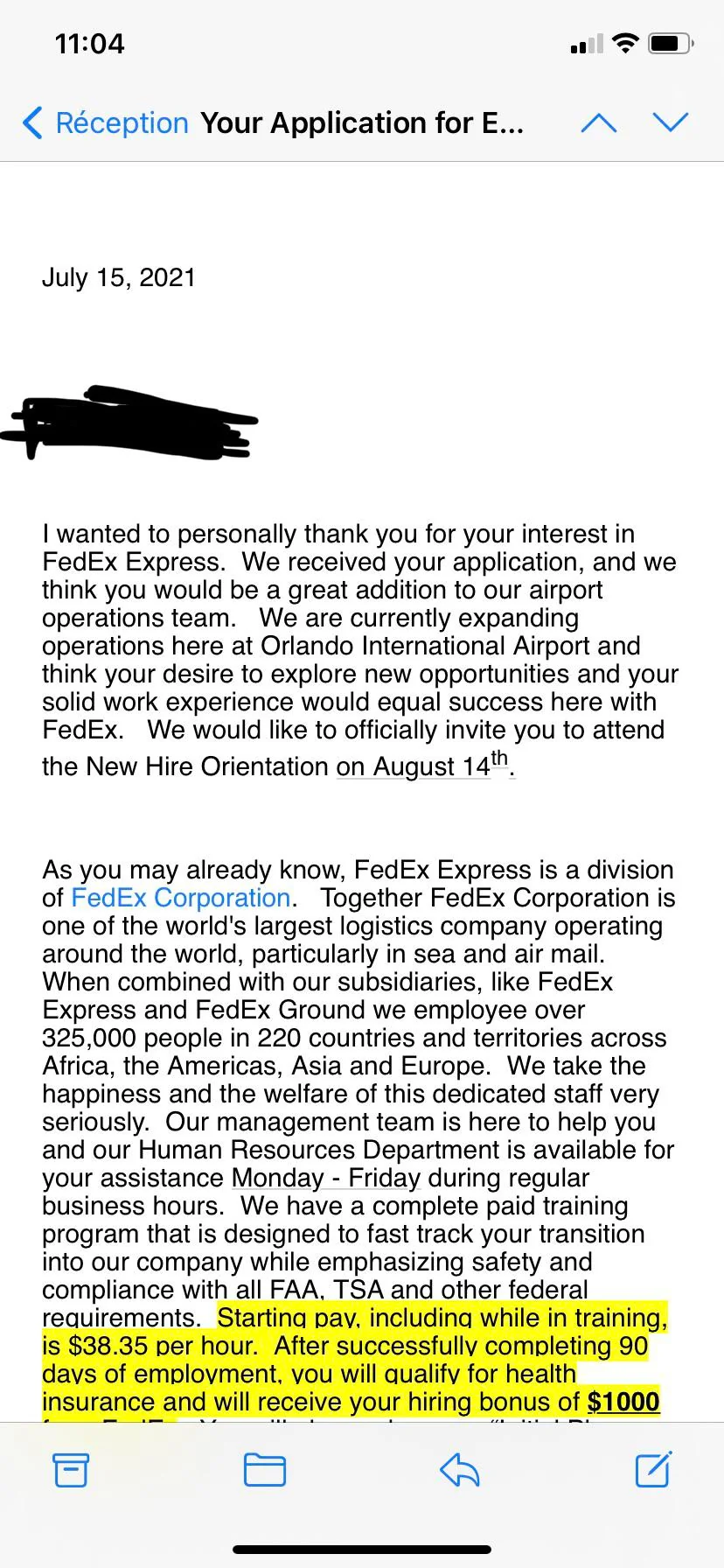
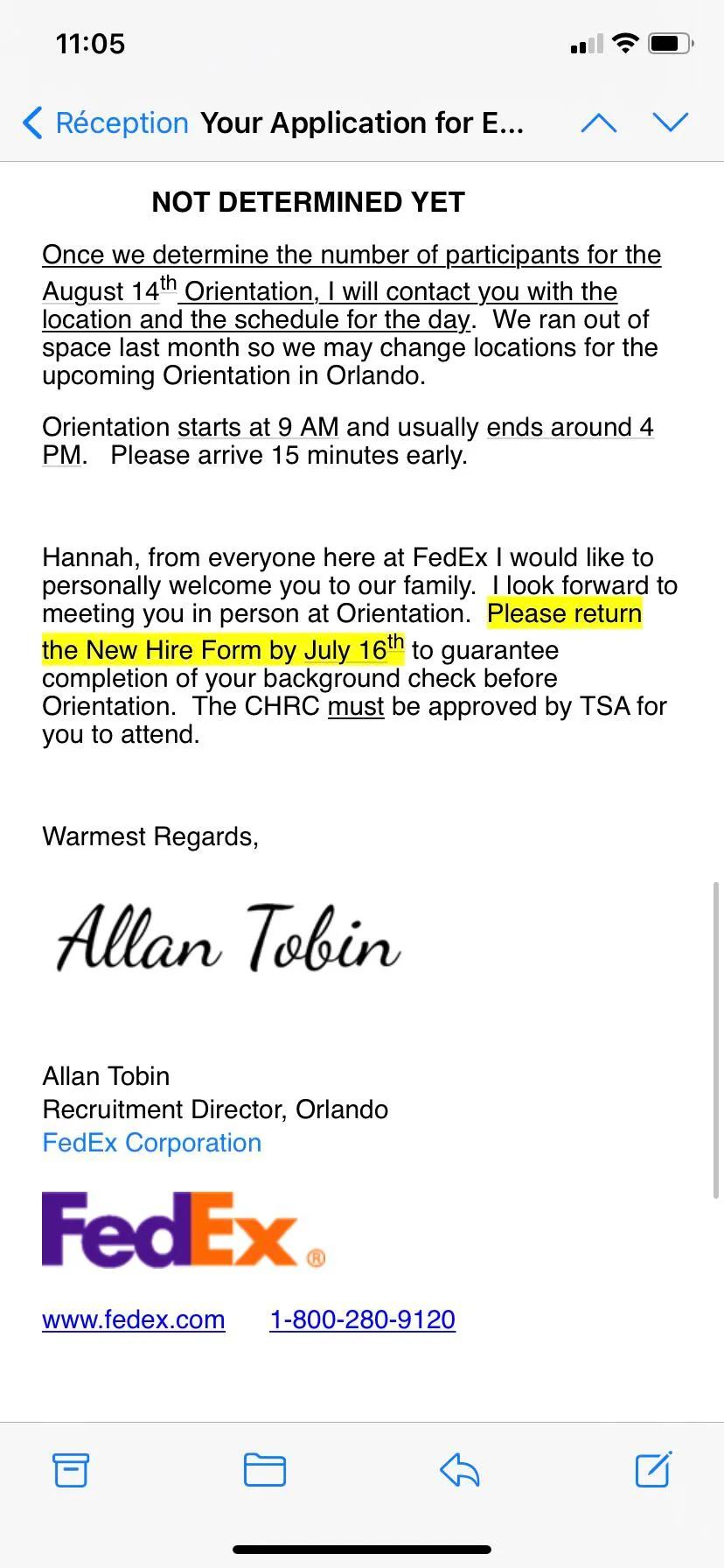
Fake jobs from FedEx advertise roles such as “delivery operations specialists” or “quality control manager,” usually promising flexible hours with high pay. Typical fake job scams aim to steal your personal information or demand that you pay for training and onboarding fees, which FedEx never asks for.
FedEx, in particular, is used by attackers for reshipping scams, where you actually get “hired” to receive and forward goods between addresses. The goods are usually bought using stolen credit cards, and the criminals are looking to hide their trail through you. Other job scams involve brushing scams, where unexpected packages are sent in exchange for fake verified reviews to boost the product.
FedEx customs and duties text scam
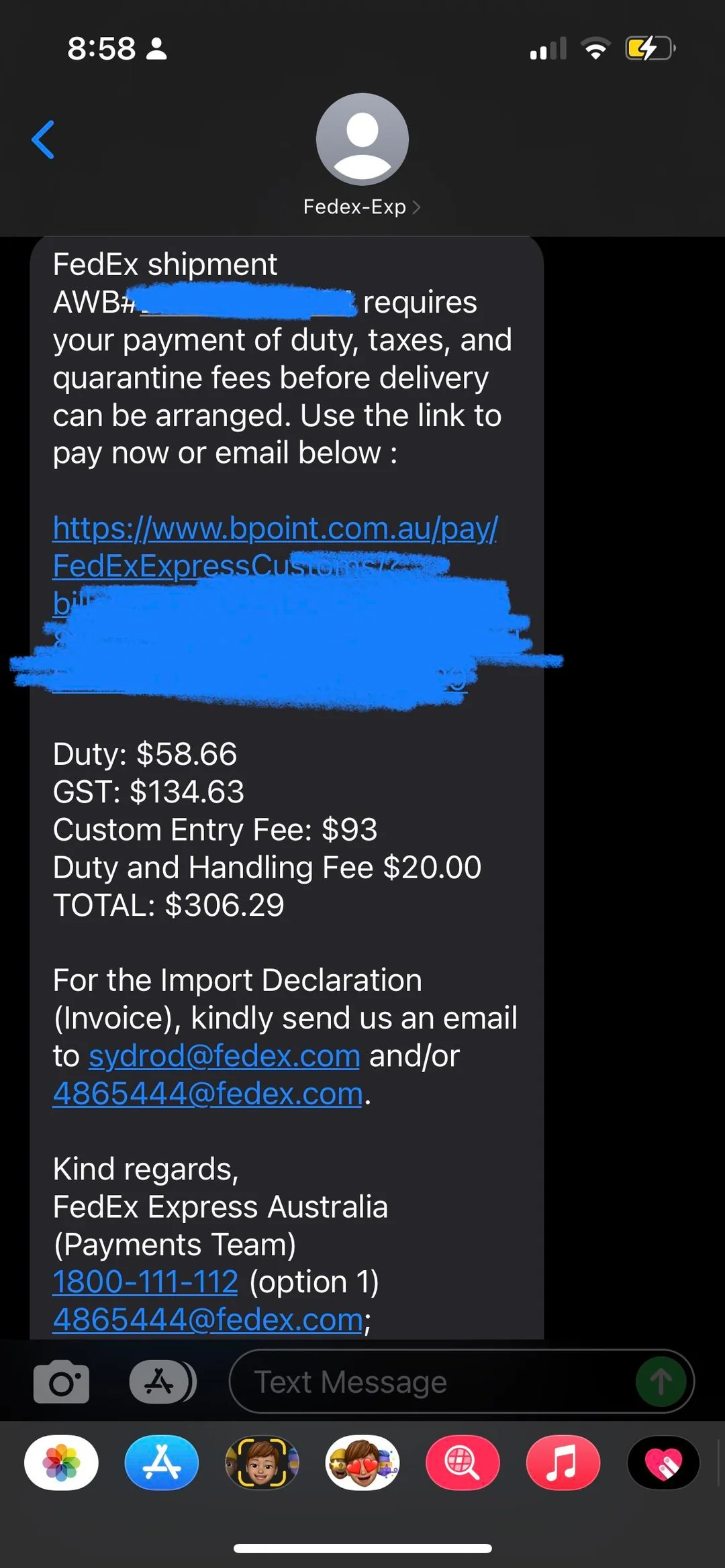
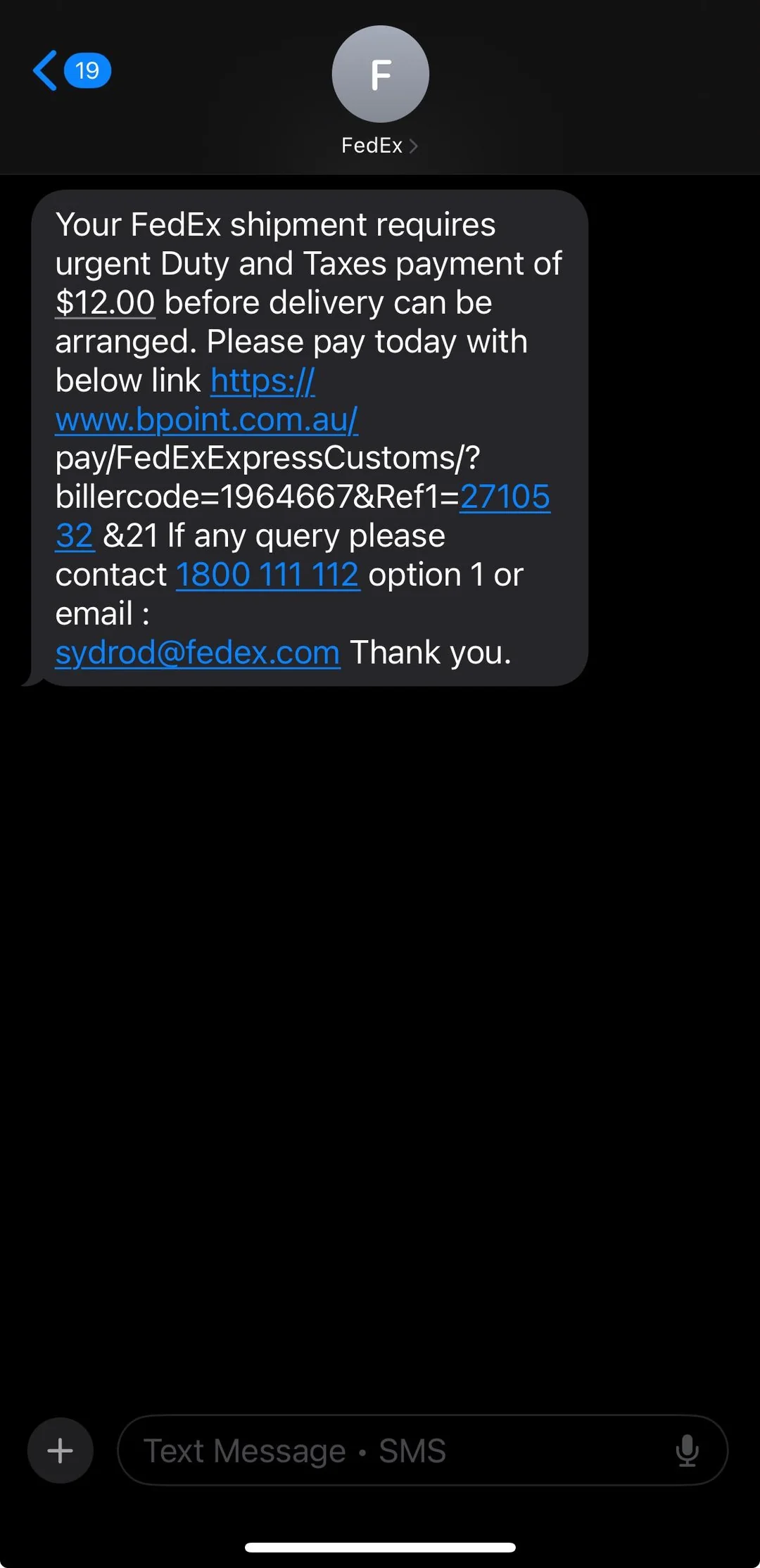
Receiving a duty text doesn’t automatically indicate a scam, especially if you ordered something from overseas. However, FedEx often pays the import charges itself before billing you, sometimes after the delivery.
Scammers exploited the confusion around the 2025 tariff laws by sending fake payment demands while impersonating FedEx. So, if you receive an email or text message with a link prompting you to make a payment, do not click it. Instead, go to the official FedEx website and enter your tracking number. If there are any fees or duties attached to your order, you’ll be able to pay them through FedEx’s online portal.
What FedEx will and will not do when contacting you
FedEx does contact customers with updates concerning their shipments and import fees. To best differentiate between legitimate and scammy communication, you should familiarize yourself with what FedEx will and will not do when contacting you:
- Will: Provide tracking updates, request necessary custom documents, and send invoices for applicable shipping charges
- Will: Link you to the official FedEx website for tracking and billing
- Will: Ask to confirm delivery instructions or update your pickup location through official FedEx partners
- Will not: Ask you for passwords, verification codes, or full credit card details
- Will not: Demand payment through cryptocurrency or gift cards
- Will not: Contact you through a personal email or phone number
What can you do if you clicked on a FedEx scam?
If you accidentally clicked on a link in a FedEx scam, you need to act quickly to minimize the damage. Here’s what to do:
- Close the page: Do not click on anything else. Immediately close the webpage in your browser.
- Disconnect from the internet: This will interrupt any drive-by downloads triggered by clicking on the link, limiting possible malware downloads or activity.
- Change your passwords: If you entered any login credentials on the fake page, immediately update them, preferably through a separate device.
- Contact your bank: Freeze the affected card and dispute any unauthorized charges if your card was used in the scam.
- Report the scam: Report the scam to both FedEx and the FTC through the official websites.
- Monitor for follow-up fraud: Scammers sometimes reuse stolen details in future phishing attempts targeting the same victim.
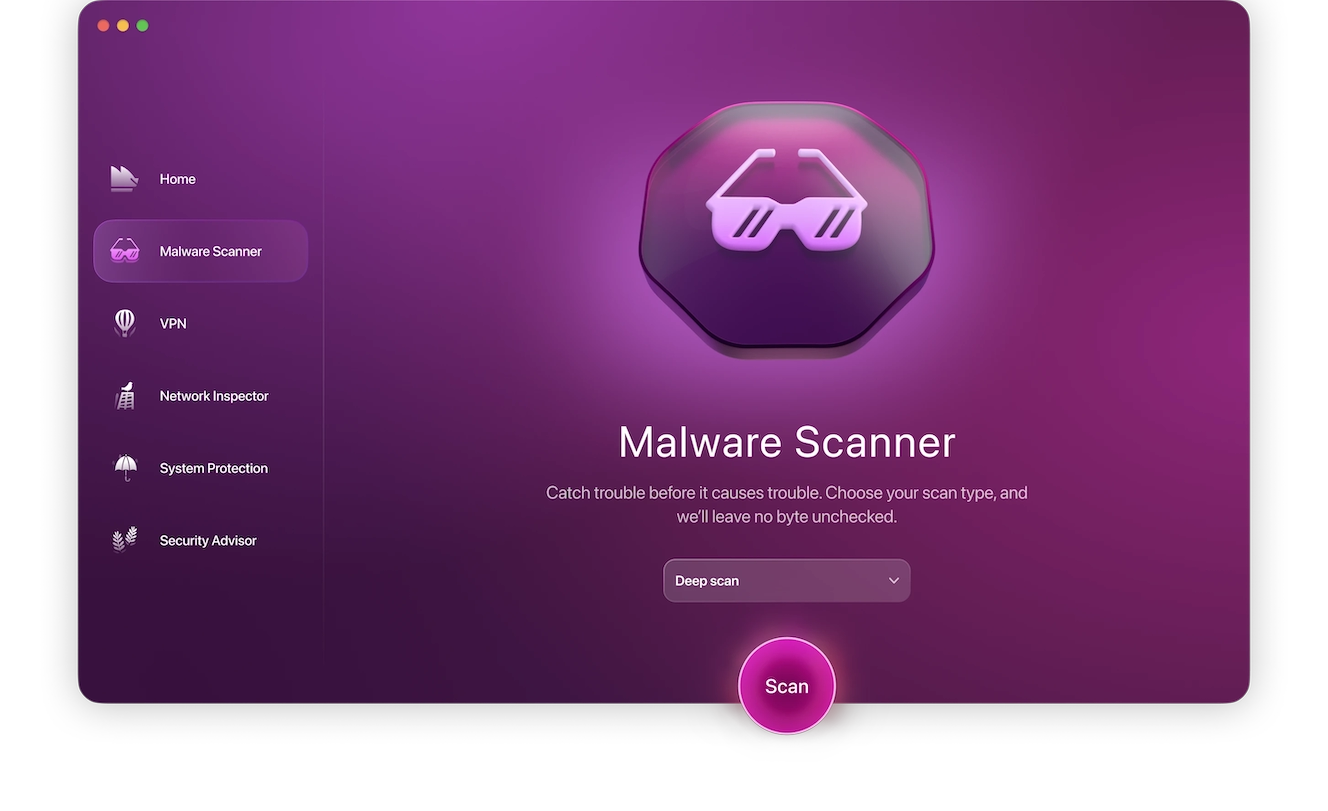
- Scan your Mac with Moonlock: Run a Deep Scan with Malware Scanner to check your device for malware or spyware.
Where to report FedEx scams and suspicious messages
Taking the time to report the scam to FedEx and law enforcement helps them investigate and block future attempts. Here’s how to report FedEx scams:
- FedEx: Report the scam to FedEx by forwarding the scam email to [email protected].
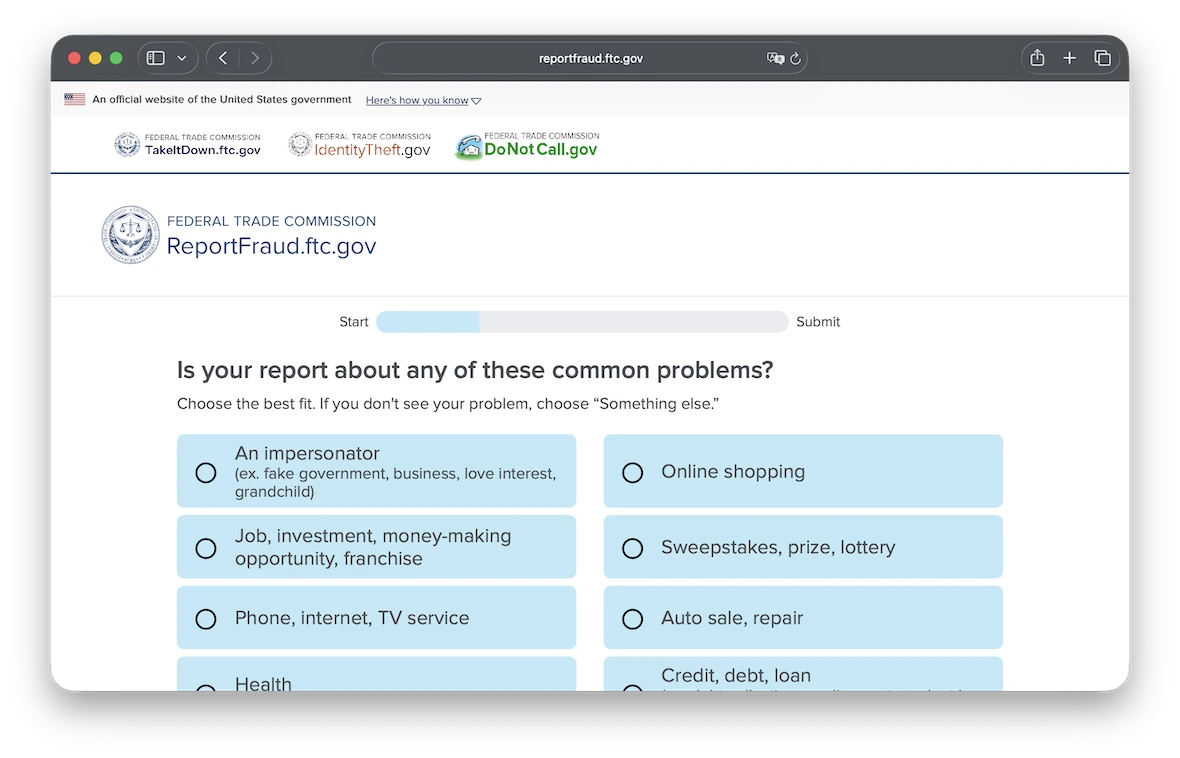
- The FTC: Submit a report to the FTC, including the sender’s information, the link URLs, and any financial losses at ReportFraud.ftc.gov.
- Mobile carrier: Forward the scam text message to 7726 (SPAM) to report it to your mobile carrier.
- Bank: If your credit card was involved in the scam, contact your bank to report the fraudulent charge and freeze your card.
- Police: Contact local law enforcement if you lost money in the scam or if your identity was stolen by the scammers.
FAQs about FedEx scams
These quick answers should address some of the most common concerns regarding FedEx scams.
FedEx will sometimes send legitimate texts about shipments or import duties. Always verify unexpected payment requests through the official FedEx website or app.
Yes, package delivery scams are still common in 2026, with criminals impersonating FedEx agents through texts, emails, and phone calls.
Check the sender’s full address, verify the tracking number, and check the URL for misspellings or odd characters before clicking.
In the US, door-tag tracking uses 48773 to follow the package’s journey.
How to prevent FedEx scam texts, emails, and calls
If you’re careful, you can avoid falling for delivery scams before they steal your data and money. Here’s what you need to do:
- Track your packages directly: Only use the official FedEx website and app to track your packages instead of text messages and emails.
- Verify unexpected requests: Contact FedEx through a trusted number or through the official app or website before paying any fees or duties.
- Inspect URLs and sender addresses: Watch for misspellings, extra characters, shortened links, and unofficial domains.
- Avoid sharing sensitive data: Never provide passwords, payment details, or verification codes over SMS or email.
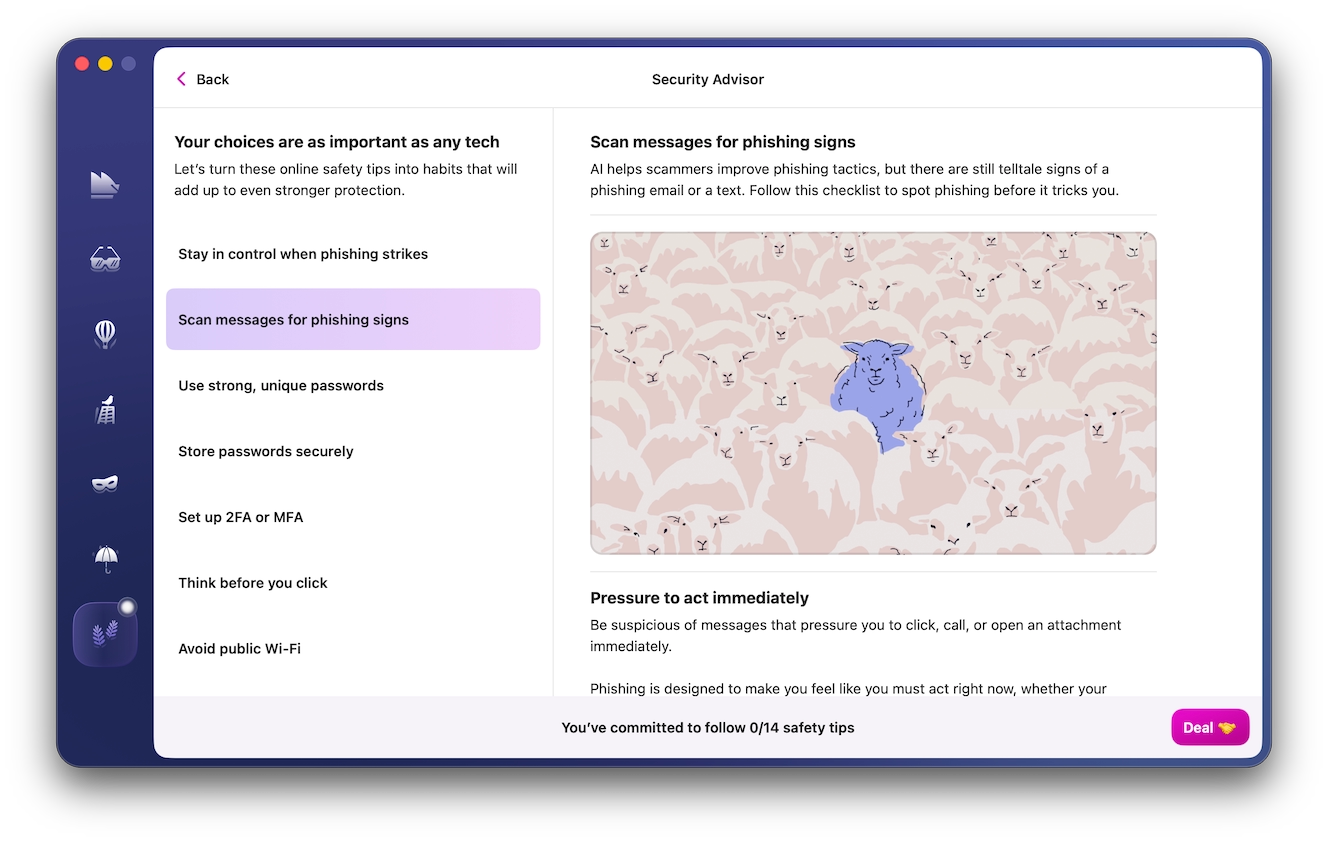
- Use Moonlock’s Security Advisor: Follow the Security Advisor’s recommendations on how to strengthen your Mac’s defenses and reduce phishing risks.
FedEx scams succeed by turning routine delivery updates into an opportunity to defraud people. Always check tracking and payment details through official channels before clicking on any links or downloading attachments. And make sure you use Moonlock to help you catch scammy messages and protect your Mac from malware.
This is an independent publication, and it has not been authorized, sponsored, or otherwise approved by the Federal Express Corporation. FedEx is a trademark of the Federal Express Corporation.