


Walmart scams can start in the most ordinary of ways, whether it’s a text about an order you never placed or a phone call about suspicious charges. Like many legitimate companies and services, scammers borrow Walmart’s name for its associated credibility because millions of people already shop there and may not question an unexpected message at first.
The tactics in 2026 extend beyond online shopping. Walmart gift cards and money-transfer services have been pulled into fraud schemes, while third-party marketplace sellers have been caught selling counterfeits under stolen business identities. In this article, we cover everything you need to know to stay safe from Walmart scams.
What is a Walmart scam?
A Walmart scam is any fraud scheme that uses Walmart’s name, services, website design, or customer relationships to make a false story appear legitimate. The scammer may pretend to work for Walmart or simply use the retailer as part of another scheme.
Walmart fraud can also happen through legitimate services. A criminal may tell someone to buy a Walmart gift card or send a money transfer, for example, even though Walmart had nothing to do with the original contact. ProPublica found that more than $1 billion in fraud losses were routed through Walmart-related financial systems between 2013 and 2022.
14 types of Walmart scams
The Walmart name can appear at nearly any stage of a scam. Sometimes it is the identity being impersonated. In other cases, Walmart becomes the payment channel after a scammer has already convinced the victim that an emergency or financial problem is real.
Walmart scam texts and phishing emails
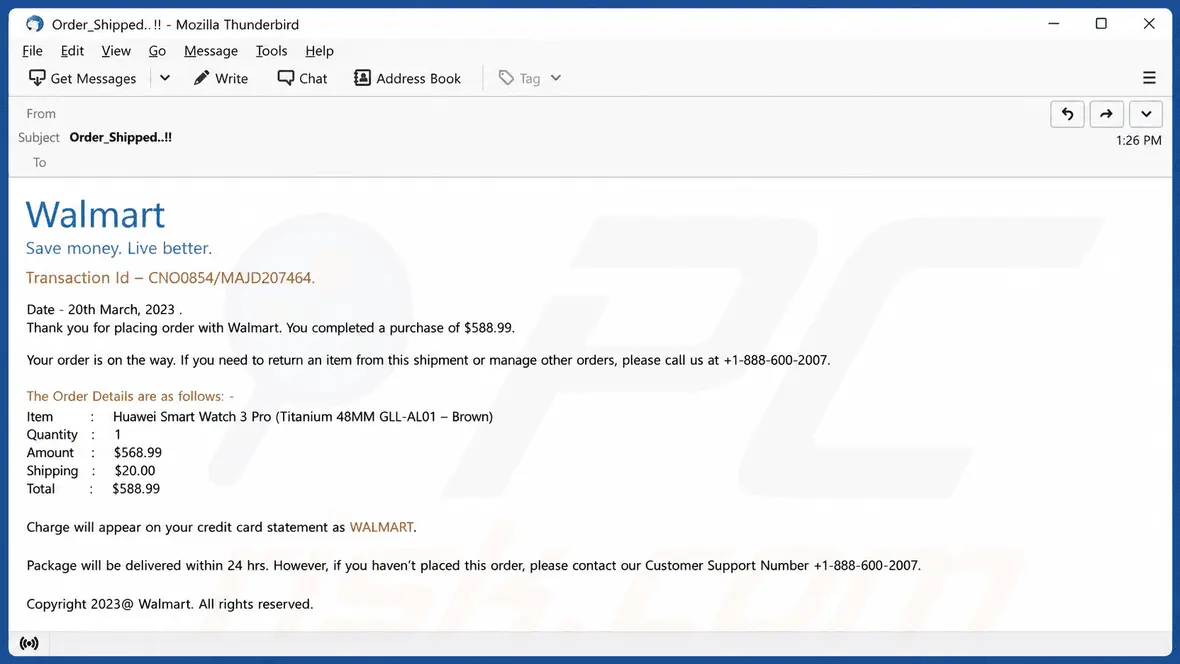
A Walmart text scam or phishing email may claim that an order was placed on your account, that your password needs to be reset, or that a delivery has been delayed. Another version mimics a Walmart order verification scam and asks you to confirm account activity through a link.
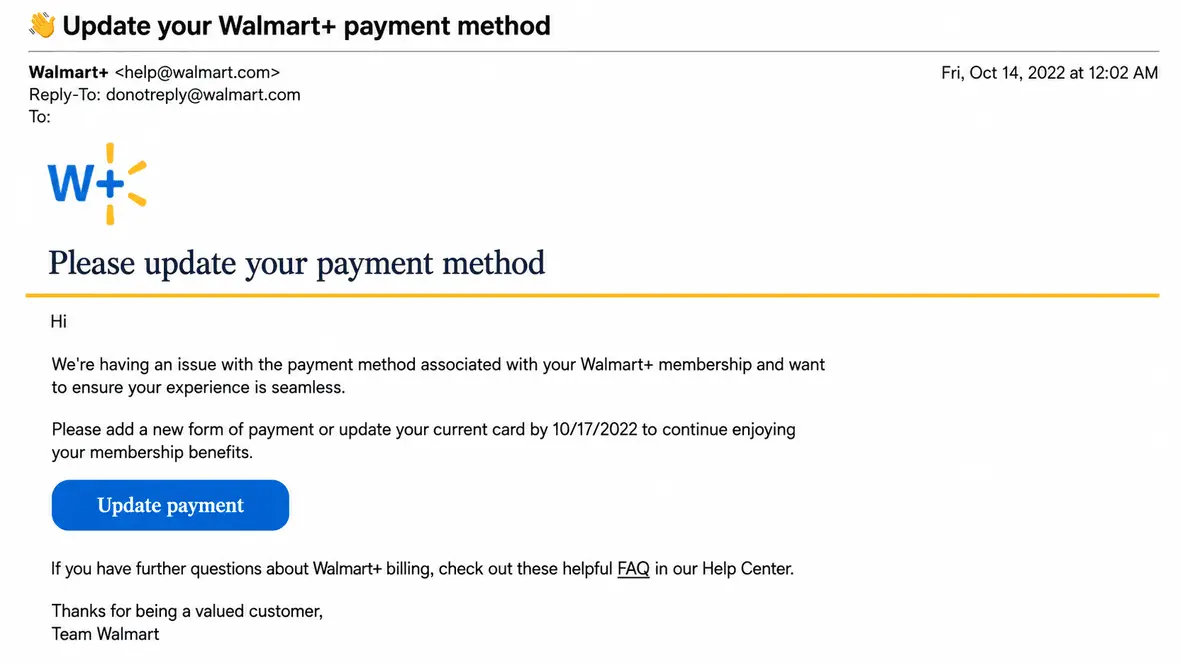
Check where the message actually came from before responding. An email that is not from an official Walmart domain deserves scrutiny. Poor grammar used to be a strong indicator of a scam, but this test is less useful than it once was. AI can produce polished phishing messages that are practically indistinguishable from the real thing.
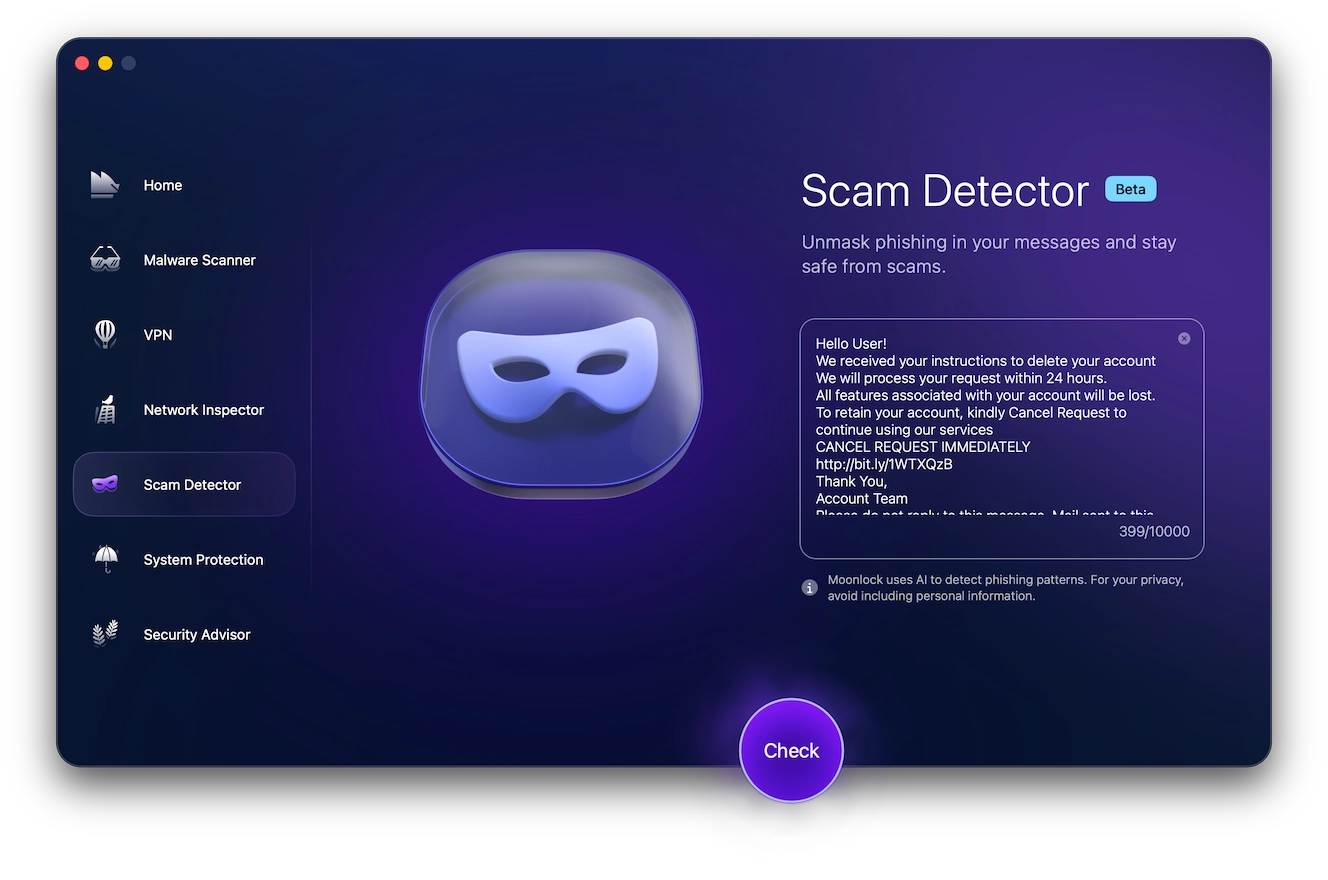
Moonlock’s Scam Detector can provide a second opinion when a Walmart email, text, or screenshot looks suspicious. Instead of interacting with the message to find out whether it is legitimate, you can submit it for analysis first. This can be especially useful when the message looks professional enough that the usual visual clues are difficult to spot. Try it free for 7 days to see how it works before you rely on it in a real scam situation.
Walmart scam calls
Walmart scam calls often invent an expensive purchase that has been made, possibly by mistake, and offer an immediate way to cancel it. The goal is to create enough concern that the recipient responds before checking whether the transaction exists.
In 2025, a Walmart PlayStation 5 scam call used AI voices identifying themselves as representatives “Emma” and “Carl.” These robocallers claimed that a PlayStation 5 and Pulse 3D headset had been purchased by the callee for $919.45. From there, the targets were told to press 1 to cancel, at which point they were connected to someone claiming to be there to help cancel the purchase. The “agent” would then begin to ask for personal and financial information.
This wasn’t a small operation. On December 2, 2025, the FCC ordered SK Teleco, the voice provider carrying these calls, to stop transmitting them after tracking roughly 8 million robocalls tied to the scheme. Millions of people got the same script.
Walmart fraud department scam calls
A Walmart account scam call may sound more convincing when the caller claims to work for Walmart’s fraud prevention department or an investigations team. The supposed employee may state that Walmart fraud charges have appeared on the account, requiring immediate attention. Caller ID cannot be trusted as proof of identity. Walmart warns that scammers can spoof the name or number shown on a phone.
If you are contacted in this manner, hang up and contact Walmart through a number found independently on its official website rather than using anything supplied by the caller. This is also the safest approach when someone claims to represent the Walmart fraud department. A legitimate problem will still be there after you verify it yourself.
Walmart gift card scams
A Walmart gift card scam often begins outside of Walmart. An imposter or scammer invents a debt or emergency and tells the victim, typically senior citizens, to remedy the situation by loading a Walmart gift card, then providing the card number and PIN.
Other Walmart gift card scams use fake balance-checker sites or already-drained cards offered for resale. Moonlock’s guide to gift card scams explains why these payments are so difficult to undo. Discounted cards found through Facebook Marketplace fraud or Craigslist scams deserve the same caution.
Use Walmart’s own Check Gift Card Balance tool rather than a site reached through an ad or search results. Walmart also operates a system called Redemption that can freeze some suspicious balances; ProPublica reported that about $4 million in frozen funds was turned over to the Secret Service in 2022.
Fake Walmart websites and lookalike stores
A scammer using a fake Walmart store may copy the familiar Walmart branding and product pages, then advertise steep discounts (like 80% off) through social media posts. While you may believe that you are buying from the “real” Walmart, the site may collect payment without shipping the promised item.
Scam sites can disappear quickly and return under new addresses, and memorizing individual domains is less useful than recognizing the pattern. If the URL is not www.walmart.com, it isn’t Walmart. Similar risks appear across social commerce, which is why it also helps to understand whether TikTok Shop is safe before following shopping ads.
Look closely at the web address, how you reached the site, and whether the price bears any resemblance to normal retail pricing. When in doubt, open Walmart directly and search for the product there.
Walmart Marketplace seller and counterfeit scams
Walmart Marketplace is part of Walmart.com, but third-party businesses sell many of the products listed there. CNBC found at least 43 marketplace sellers that had used another company’s identity to create accounts.
CNBC also tested 20 products connected to sellers using stolen identities and found that all 20 were counterfeit. Some sellers advertised premium products at discounts above 90%, making an unusually low price worth a closer look.
Walmart told CNBC it maintains a “zero-tolerance policy” for prohibited or noncompliant products. Before buying from Marketplace, check who is actually selling the item rather than assuming Walmart is the seller.
Walmart “gift card virus” pop-ups and adware
A browser pop-up promising a free Walmart gift card after a short survey is not necessarily coming from Walmart. If these offers appear repeatedly, adware or another unwanted browser component may already be generating them.
Close the page without clicking the offer. Interacting with the pop-up can lead to another scam page or expose the device to additional unwanted software.
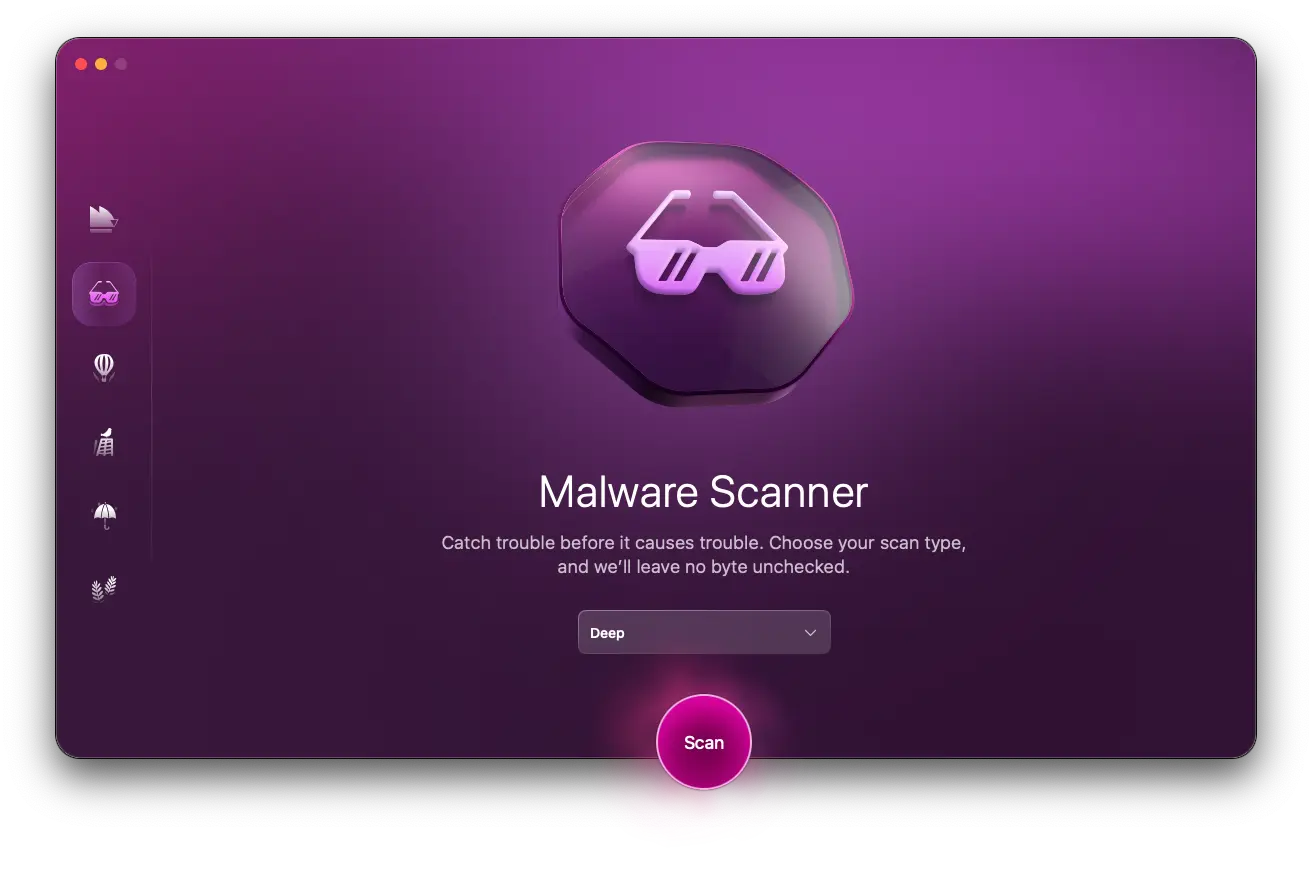
Moonlock antivirus can detect and remove malware when suspicious advertising keeps returning.
Here’s how to check your Mac for malware after visiting a fake Walmart site:
- Sign up for a free Moonlock trial.
- Open Moonlock antivirus.
- Find Malware Scanner on the left and hit the Scan button.
- Review anything it detects before deciding what to remove.
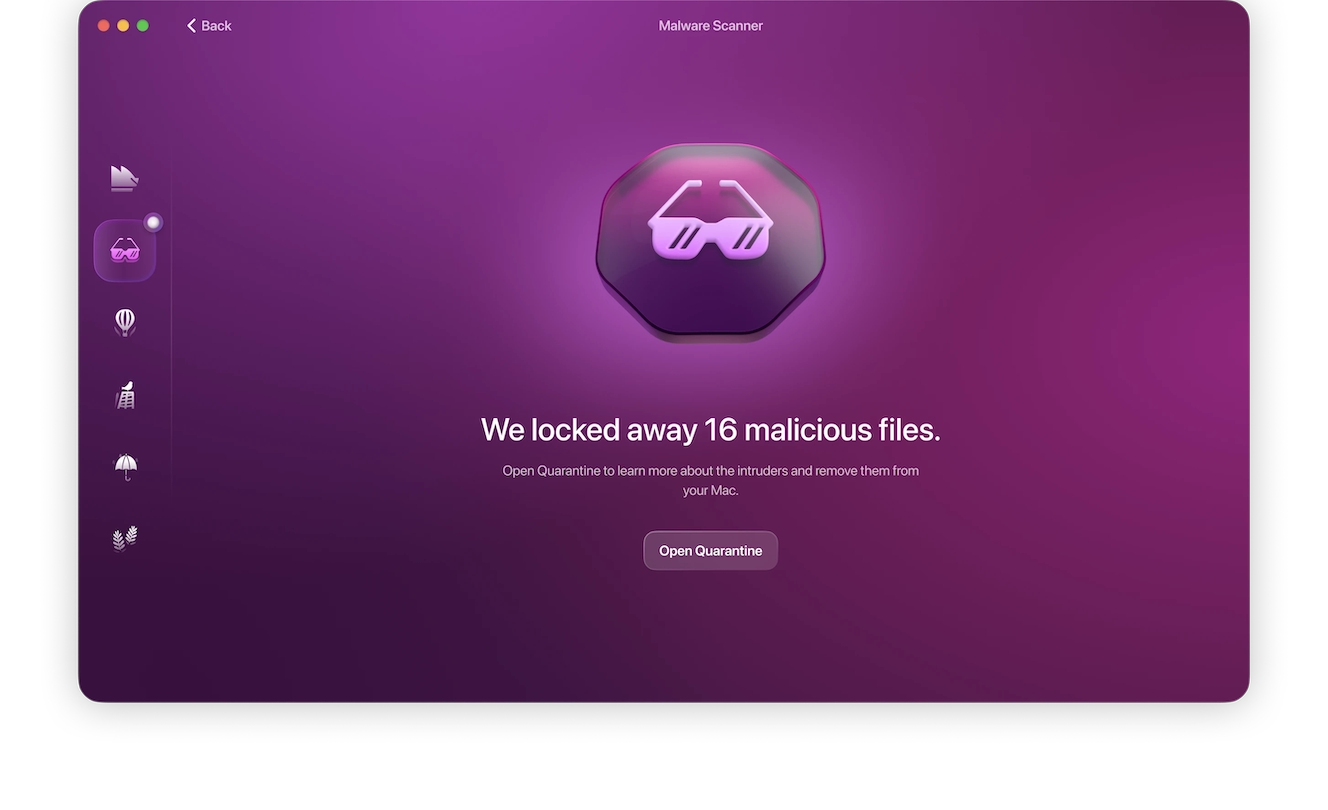
If unwanted pop-ups have become persistent, a scan can help you determine whether the problem extends beyond one bad website.
Fake Walmart surveys, giveaways, and sweepstakes
Walmart does operate a legitimate post-purchase survey, which makes malicious survey impersonation more believable. The official survey is available through survey.walmart.com and may also be reached from a Walmart receipt or an authorized email.
A Walmart survey scam instead uses the promise of a prize to direct someone to a fake form. Walmart has also warned that it does not notify contest winners by text, so an unexpected message claiming you won a Walmart prize should not be treated as proof.
Secret shopper and mystery shopper scams
Fake Walmart mystery shopper jobs promise easy work and may send the new “employee” a check before any work has been completed. The recipient is then told to deposit it and use part of the money for an assignment.
Walmart warns that it will never mail someone a check and instruct them to deposit it, make purchases, and then keep the remaining money as payment. When the original check fails, any money already sent or spent comes from the victim’s account.
Delivery and shipping scams
A delivery scam usually starts with a message claiming that a Walmart package cannot be delivered or that there is a new tracking alert that needs attention. The link then leads somewhere other than Walmart.
If you really are waiting for an order, open Walmart directly and check the purchase in your account. Walmart itself recommends returning to the website where the order was placed rather than using an unsolicited tracking link.
Government imposter scams
Someone claiming to represent the IRS, the FBI, the police, or another agency may tell a victim to visit Walmart and buy gift cards or send money. Threats of arrest or legal trouble are used to keep the person from checking the story.
Walmart states that legitimate government agencies do not accept gift cards as payment. ProPublica documented one victim who lost $2,000 after a caller posing as the FBI convinced her to buy four $500 Walmart cards.
Walmart money transfer fraud
Not all money transfers through Walmart are scams, as they do offer legitimate money transfers through MoneyGram, Ria, and Western Union. However, some scammers direct victims to use those services because transferred funds can be difficult to retrieve.
In 2025, Walmart agreed to pay $10 million to settle an FTC case concerning alleged fraud through its in-store transfer services, and the FTC said its earlier complaint involved consumers who lost hundreds of millions of dollars.
Fake Walmart Foundation charity and relief scams
Scammers may impersonate the Walmart Foundation or Walmart.org and claim that an individual has qualified for financial assistance or a grant. The supposed recipient is then asked to provide information or make an upfront payment.
Treat unsolicited grant offers as something to verify independently. A real charitable organization should be reached through its own published website rather than through the contact details supplied by the person offering money.
Self-checkout scams
One self-checkout scheme involves a scammer loading a prepaid debit card at the self-checkout scanner. They then leave with the card before the transaction is finished. The goal is for the next shopper in line to begin their transaction and pay without noticing that they are also paying for the prepaid debit card. If they don’t notice the difference in balance, they may finish the transaction without realizing that the card is on their purchase.
Card skimmers have also been found on self-checkout terminals. Before paying, check that the transaction started with your purchases, and look at the card reader if anything appears altered.
How to tell a real Walmart message from a scam
A Walmart logo or familiar caller ID does not establish where a message came from. Compare what the sender wants you to do with how Walmart actually handles customer communication.
An official Walmart communication should not:
- Ask you to pay another business or government agency with Walmart gift cards
- Ask you to disclose your account password or a one-time security code
- Require you to act immediately before you can verify the issue yourself
Common Walmart scam warning signs include:
- An unexpected order or account problem that exists only inside the message
- A sender address or website that is not actually Walmart
- A caller who objects when you say you will hang up and contact Walmart yourself
- A prize that requires payment before you can receive it
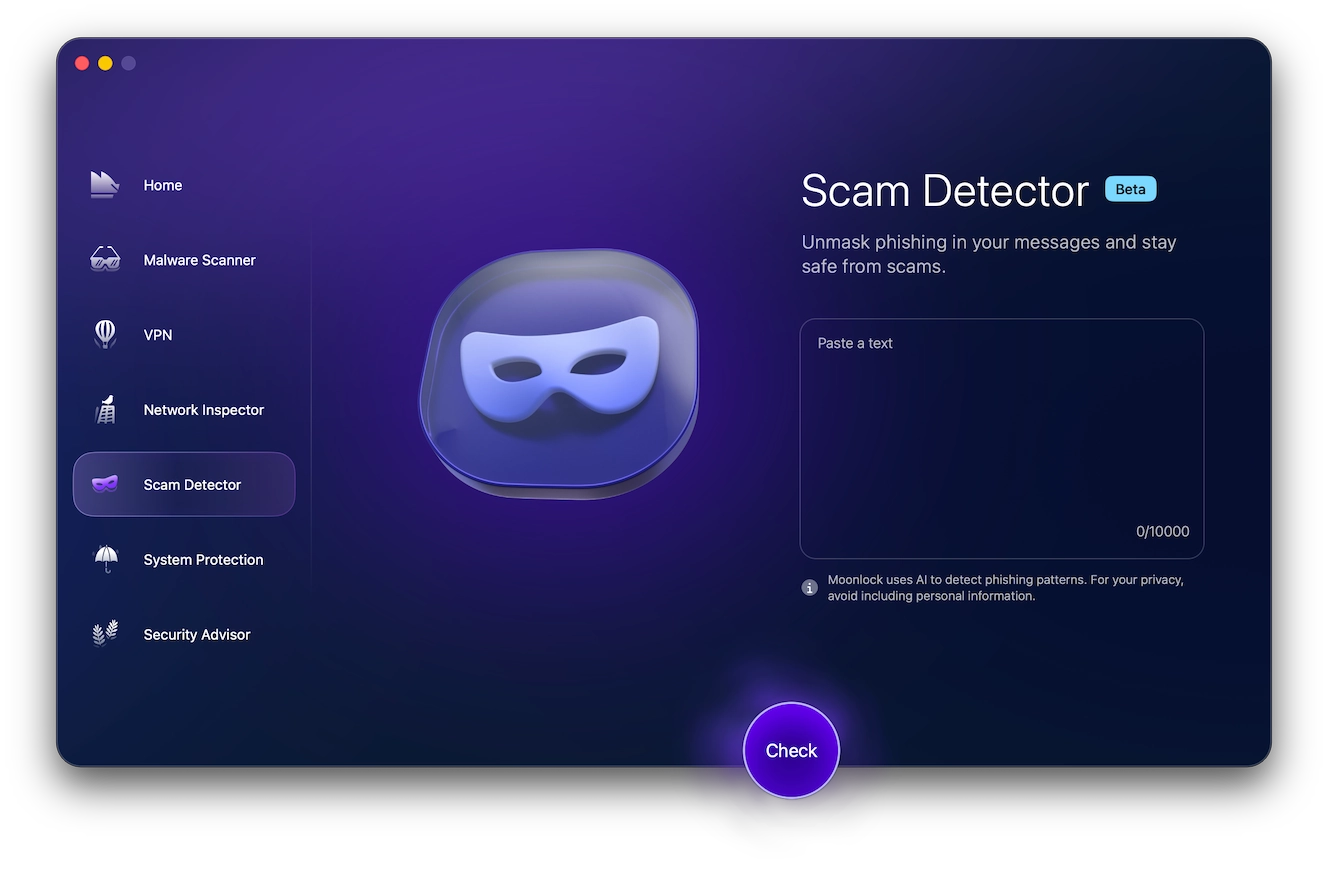
Moonlock’s Scam Detector can help when a Walmart message looks convincing but still feels off. It can analyze suspicious text, links, screenshots, or other scam-related content and give you another point of reference before you respond.
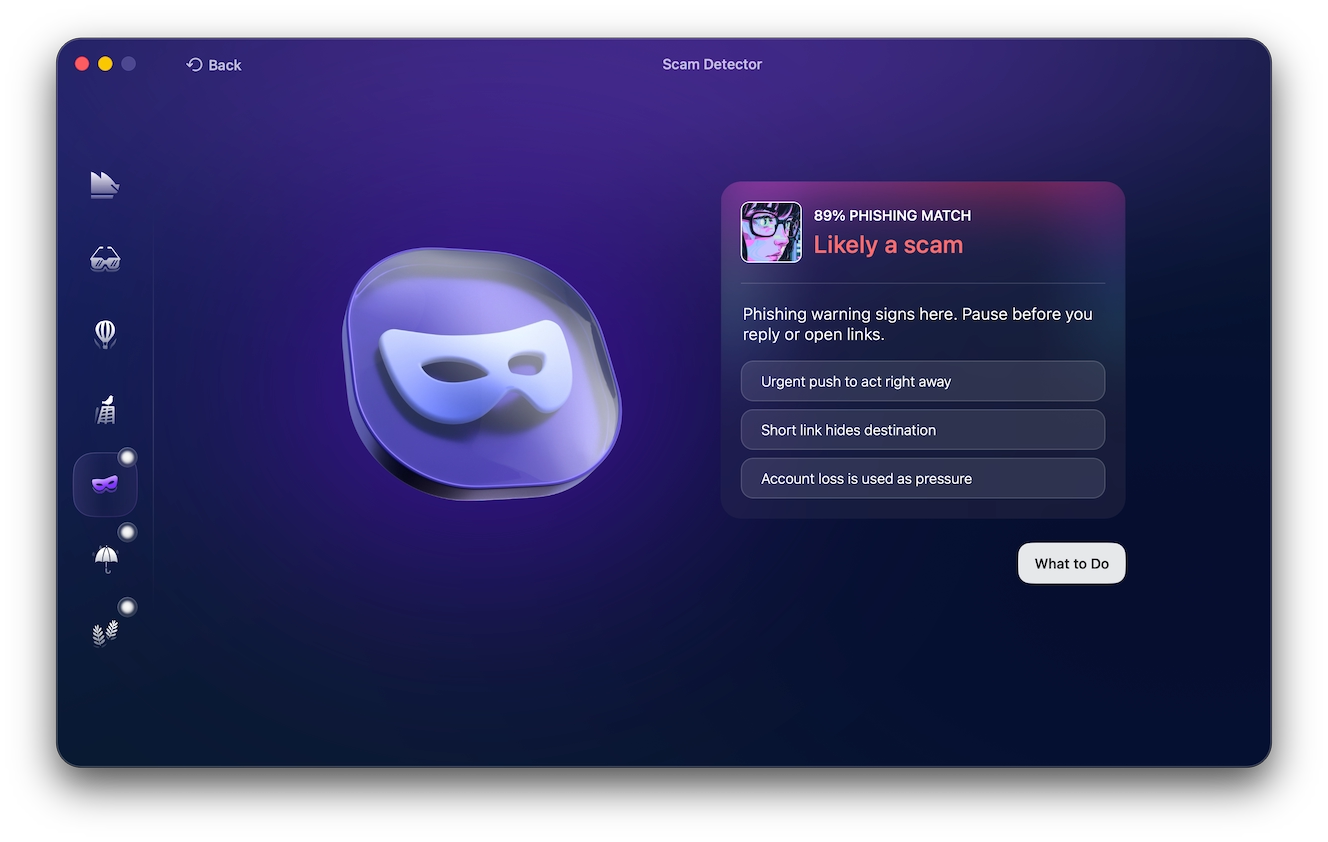
This is especially useful when a message doesn’t have obvious warning signs. A polished email or realistic-looking text can still be fraudulent, so Scam Detector gives you a way to review the content without relying only on appearance.
To use Moonlock’s Scam Detector to scan a suspicious message:
- Open the Scam Detector in the Moonlock app.
- Paste the suspicious text or upload a screenshot.
- Review the analysis before clicking links or replying.
If you want to keep that extra security in your pocket, you can try Moonlock with a 7-day free trial and use Scam Detector whenever a message raises an eyebrow.
What to do if you fell for a Walmart scam
If a Walmart scammer has gotten the best of you, here’s what to do:
- If you shared payment information, contact your bank or card issuer and report the transaction.
- If you gave away a Walmart password, change it and review the account for unfamiliar activity.
- If gift cards were involved, contact Walmart at 888-537-5503 as quickly as possible.
- If malware may have been downloaded, disconnect from the suspicious page and scan the device.
Once the immediate risk is under control, report what happened:
- Contact local law enforcement if money or identity information was stolen.
- Send fraudulent Walmart emails as an attachment to [email protected].
- Report scams to the Federal Trade Commission through ReportFraud.ftc.gov.
- Cyber fraud can also be reported to the FBI’s Internet Crime Complaint Center.
Walmart scam FAQs and answers
If you’re still unsure about a suspicious Walmart message or transaction, these FAQs can help clear things up.
Yes, but an unsolicited call or text asking for sensitive information or payment should be verified through Walmart directly.
Walmart gift cards are not a legitimate way to pay government agencies or unrelated businesses.
Walmart does not list one universal fraud department number, but gift card fraud can be reported at 888-537-5503.
Possibly, depending on how you paid and how quickly the bank, card issuer, or Walmart receives the report.
Yes, but check the third-party seller and be cautious when a price or product history doesn’t make sense.
Ways to protect yourself from Walmart scams
The best Walmart fraud prevention habits remove the scammer from the verification process:
- Check unexpected orders inside your Walmart account. Do not use the link that arrived with the warning.
- Use Walmart’s own gift card tools. A search result or advertisement can lead to a fake balance checker.
- Inspect the seller on Marketplace. The Walmart website may be legitimate even when the third-party seller deserves more scrutiny.
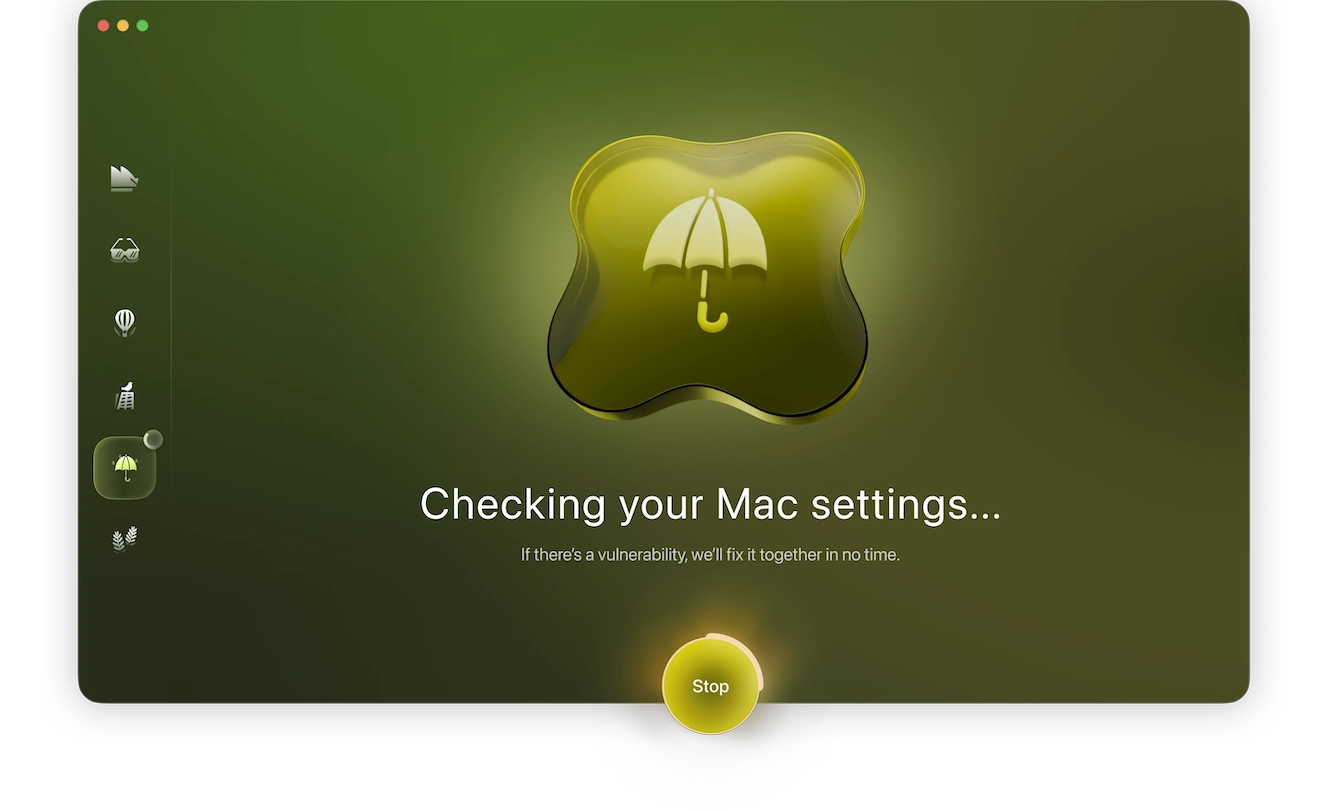
- Use Moonlock antivirus to check your active security settings. A lot of Mac security comes down to settings that simply haven’t been enabled. System Protection checks your Mac against Apple’s built-in security options and walks you through enabling whatever’s been left off, so you’re not relying on guesswork to know if your Mac is actually locked down.
- Slow down unexpected requests for money. A caller who creates an emergency benefits when you act before verifying the story.
Walmart scams work because the company is familiar enough to make an unexpected message feel plausible. When a message involving Walmart asks you to leave the normal purchase process, share information, or send money because time is supposedly running out, verify the claim through Walmart before doing anything else.