

Dating apps like Hinge are no stranger to romance scams. In fact, they are an easy means for cybercriminals to find potential targets. With AI tools so readily available, it is easier than ever for fraudsters to trick victims with fake photos or generated images of their likeness for fraudulent purposes. Fortunately, some basic awareness of the methods they use could save you from engaging with scammers on Hinge.
In 2025, the Federal Trade Commission reported that around $2.1 billion was lost in scams, of which 60% were associated with romance scams on social media. Hinge dating scams are part of this equation. In this article, we will cover Hinge scams and how to discern the different types of scams so you can prevent falling victim to them on the dating app.
What counts as a Hinge scam?

It’s important to note that Hinge itself is not a scam. It is a legitimate dating app where users can successfully find potential mates. But, as with any dating app, proceeding with caution is recommended. Scammers are present everywhere, including on Hinge and other platforms.
Hinge scams occur when a fraudster or imposter targets a victim and pretends to show genuine interest when they have a hidden agenda to get money or personal information from them. Generally, there are observable signs that a Hinge scam is in effect soon after you connect with someone you met on the Hinge app.
Scammers on Hinge build a connection to earn your trust. They can use psychological tactics like manipulation, love bombing, or urgency to make you more likely to respond to their financial requests. Reasons for requesting money can range anywhere from sudden emergencies, promises of making you a lot of money via a crypto investment, needing help before a military deployment, pretending to offer a “sugar baby” arrangement, or, worse, blackmailing you with intimate photos that are possibly AI-generated.
How Hinge scams work (the typical playbook)

Hinge scammers apply these techniques to lure victims into lowering their defenses, allowing them to be susceptible to sending money when requested.
1. The approach
A scammer engineers their profile to imitate an attractive, interesting person or someone with a desirable lifestyle. This makes it easier for potential victims to reach out to them or reply to their messages on the Hinge app. Scammers on Hinge post attractive photos that have often been stolen from people they are impersonating or fabricated by AI tools.
It’s important to know how to tell if a Hinge profile is fake, especially when it looks too good to be true. Always look out for Hinge verification as a way to be more confident that the person you are communicating with is who they claim to be.
2. Establishing trust
They build rapport by messaging you on a consistent basis, asking details about your life to get to know you better. They may claim to have common interests or experiences to build a connection that appears organic. That way, later on down the road, when they ask for a financial favor, their new friend or partner will be willing to help.
3. Emotional escalation
Once trust is built, the friendship or relationship begins to move at a quicker pace. The scammer escalates by giving lots of compliments, sending flirty texts, asking personal questions, and being vulnerable to make the victim feel special. They can use “love-bombing” tactics by showering the victim with affection, praise, or attention. They may even discuss the possibility of marriage or meeting in person soon.
4. Get off Hinge
After building trust, the scammer will ask the victim to chat on another platform like WhatsApp, Telegram, Instagram, or Snapchat, or another social media platform. Sometimes, they’ll ask you to text them via iMessage or an email address, or tell you to email them instead. Doing this makes it easier to bypass Hinge’s safety protections and avoids getting flagged or reported for scams or racy content.
Keep in mind that moving off Hinge doesn’t always automatically indicate a scam. However, when there are red flags present, plus the scammer wants you to get off Hinge, it’s worth investigating.
5. Urgency and asking for a favor
Now that the scammer has you where they want you, you trust them and are willing to respond to their requests. They will ask you for a financial favor with urgency. They need you to help them by sending money immediately.
The reason can be anything from a serious medical emergency to being stuck in another country where they are in danger and need to get out. They may claim a serious issue has occurred, and they need money to cover an unexpected expense. At times, they will give you reassurance that you will get paid back very soon or it will be returned in double the amount. But any funds you send them will likely never be seen again.
6. Financial escalation
If the victim complies with the request, the scammer now knows they are capable of extracting money from them. Before the victim realizes it, they are sending larger amounts of money, time after time. When the scammer doesn’t get what they want, they can manipulate the victim with guilt trips or get upset until they do.
Scammers attempting to be less obvious may ask for money more frequently but in smaller amounts. Sometimes, the scammer promises that the victim will get their money back at a certain date or when a deal comes to fruition. They may claim the victim will double their money if they let them invest it in cryptocurrency or another investment trading scheme.
7. Disappearance or continued exploitation
When the scammer’s objective has been achieved, and money has been extracted from their victim, they can suddenly disappear. This is usually the case when the victim realizes they fell for a scam and confronts them about it.
Scams on Hinge sometimes involve continued exploitation. The scammer will test their limits by bringing up new and sudden emergencies that continue to escalate over time. This pressures their victims into sending money over and over again.
Does Hinge protect against scammers?
In the dating app realm, scammers are prevalent. You may be asking yourself, “Is Hinge safe?”
Hinge is safe as long as you follow their guidelines and stay on the app to communicate with matches on Hinge. The Hinge dating app enforces safety and security protections for its users, as seen in the app’s Community Guidelines. These are several protections that Hinge uses to protect you from potential dating scams:
- Safe message filters: Filters are put in place to help detect and prevent harmful or suspicious messages. Examples include messages with flagged keywords that can indicate scams or financial fraud.
- Selfie verification: Hinge’s verification process allows users to verify their identity with a video selfie to prove their identity before they receive a verification badge.
- Face check: In some regions, Hinge uses facial checks to help detect fake or duplicate accounts.
- Reporting: Anyone who uses the dating app can report suspicious profiles, messages, or behavior directly to Hinge.
- Fraud notifications: Hinge may warn users who have interacted with an account flagged for financial fraud.
How to spot a scam on Hinge
Hitting it off with a match on Hinge doesn’t always mean you are interacting with a scammer. Look out for multiple red flags that indicate a Hinge scam is in effect. These include your match building rapport with you and escalating the relationship before asking for money, avoiding video calls at all times, or telling you to continue communicating off the Hinge app via another platform, text, or email.
Make sure the photos on a person’s profile are really them. This is especially important if their looks or lifestyle seem too good to be true. Reverse-image search their photos on Google or other search engines, and make sure the results don’t link them with another profile or scam profiles.
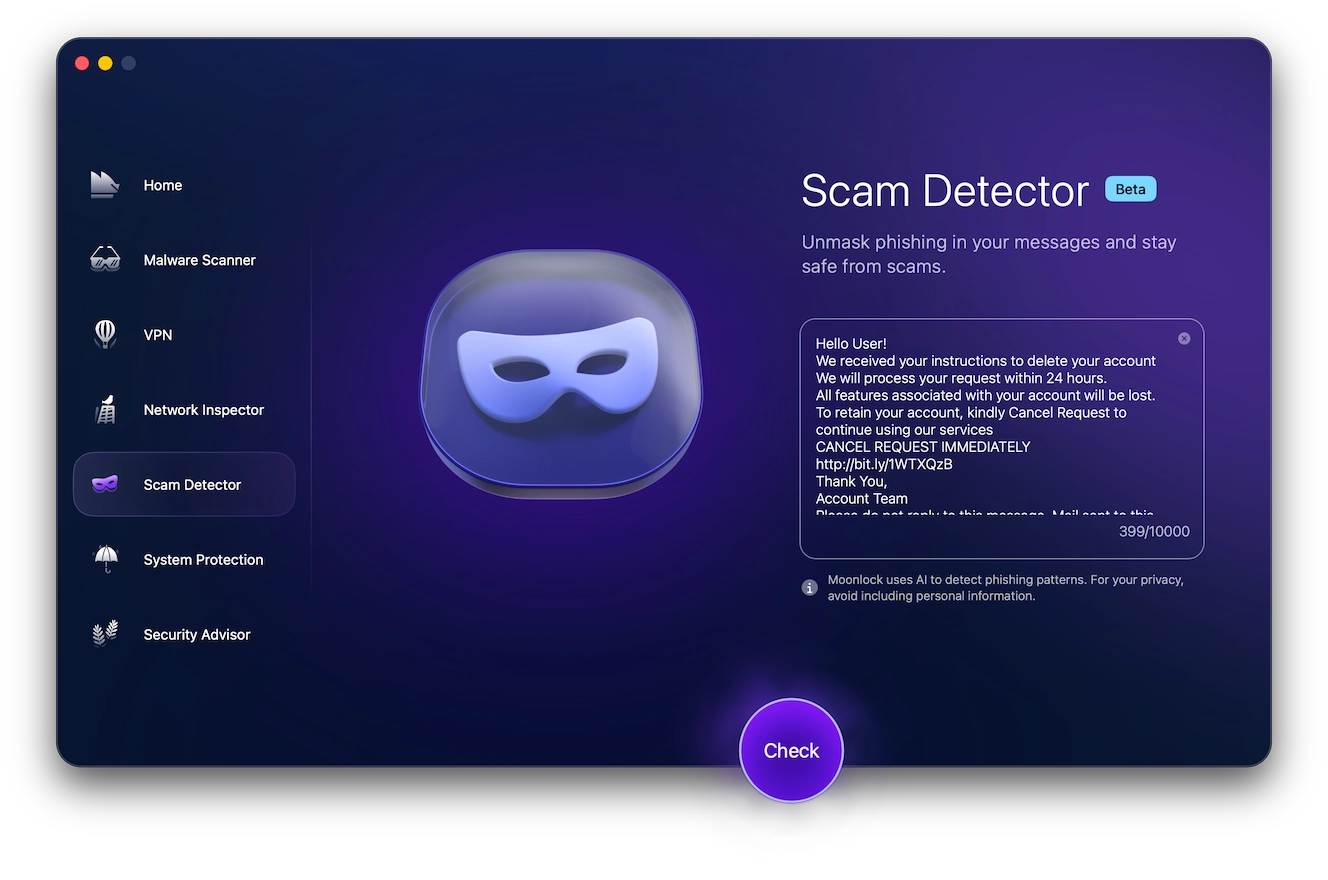
Be careful not to click on links that a match sends without scanning for malware first. Scammers can send sketchy links that are actually infected with malware. They could be trying to steal your financial information, like your credit card information, bank account, or Social Security number.
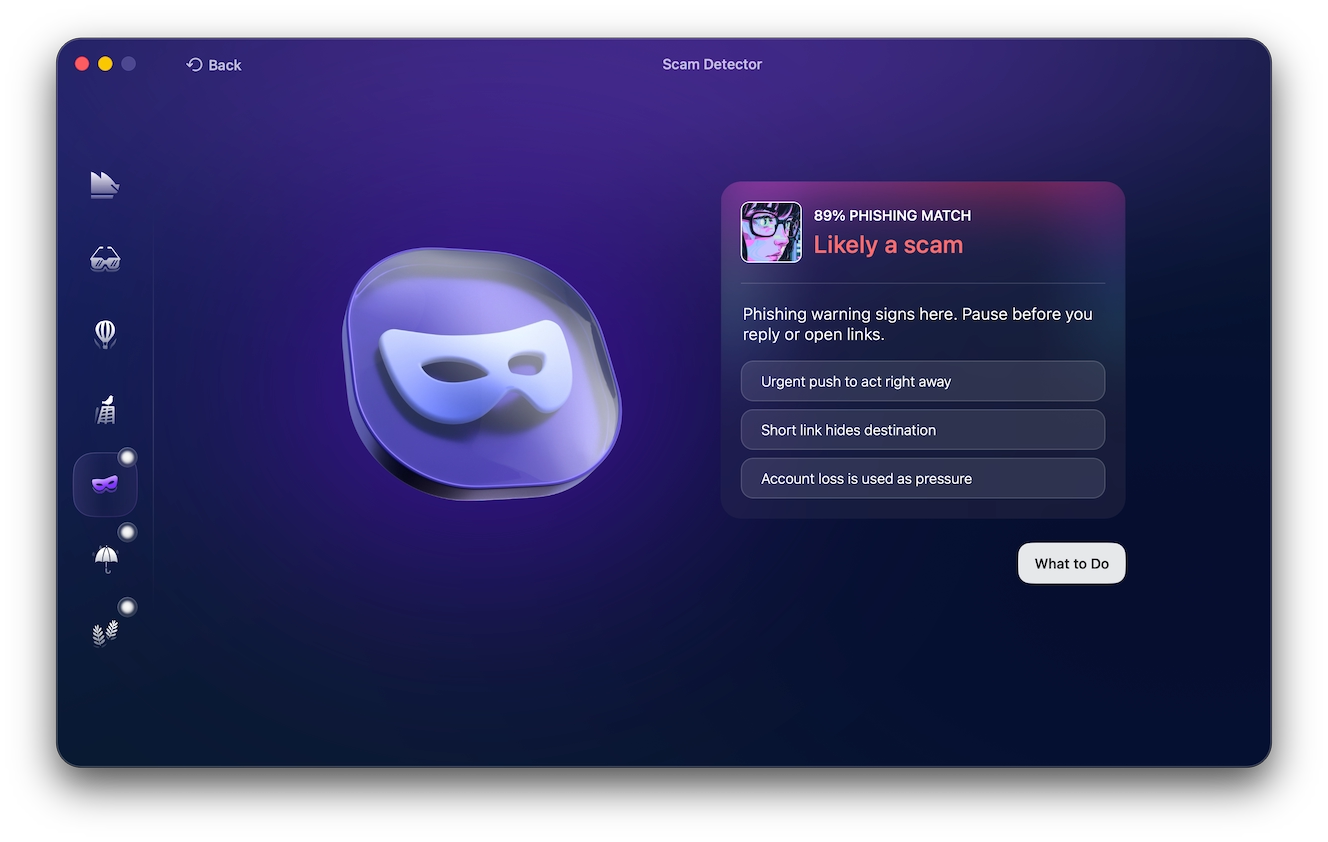
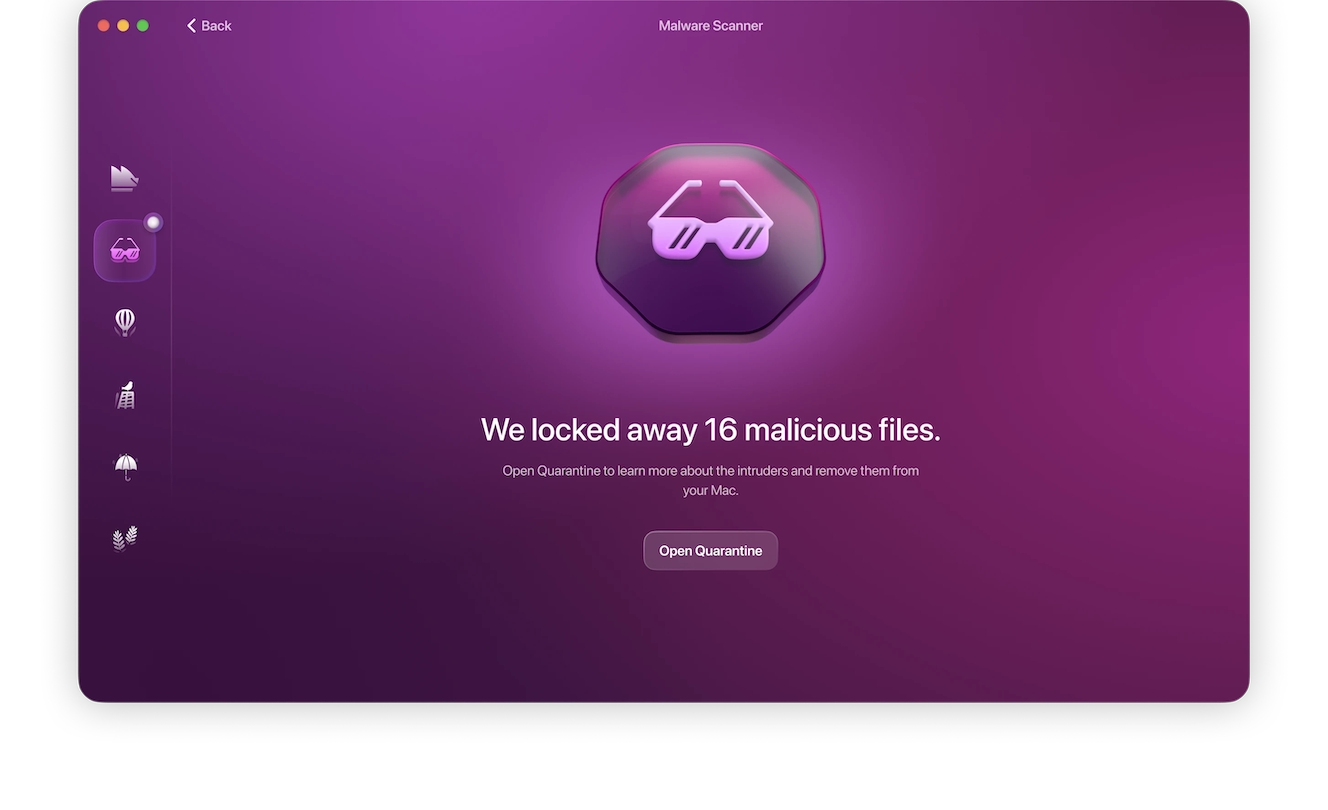
The Moonlock Scam Detector can scan suspicious messages on your Mac or the web for signs of a scam. Moonlock also comes equipped with real-time protection, malware scanning, phishing detection, and ransomware protection. Try the 7-day free Moonlock trial. Mac users who use the Hinge dating app can browse in peace without worrying about online scams.
Warning signs of a Hinge scammer (red flag checklist)

Some common warning signs can help you know how to avoid dating scams. Typical tactics that Hinge scammers engage in include establishing credibility, conveying urgency, and finally reaching out for cash or personal details. Here are a few red flags:
- Will not video call or meet in person: They may agree to video chat with you. However, there always seems to be some reason why they can’t do so.
- Love bombs you: They give you love, compliments, or promises of a future together too early on.
- Tries to move you off Hinge: They steer you to WhatsApp, Telegram, Snapchat, text, or email.
- Seeks funds or cryptocurrency: They seek funds for an emergency. The reason could also be an investment, loan, trip, or an opportunity to get involved in cryptocurrency.
- Does not have a searchable online presence: Their name, photos, or claimed occupation lead to little or no information when searched online.
- Has a “New Here” badge and other red flags: The “New Here” badge shouldn’t necessarily be interpreted as a scam. However, the profile should be looked at more critically, especially when paired with suspicious activity.
- Tells inconsistent stories: Their job, location, identity, or other personal details change.
- Requests intimate photos: They may request intimate photos using sexual conversation. These can be used as leverage to blackmail or carry out “sextortion.”
- Takes overly perfect photos: Their photos are carefully curated. They may seem impossibly perfect. Be particularly cautious of this if the perfect aesthetic doesn’t match the rest of their profile.
- Asks for favors or money: They may pressure you to do something or give them money quickly before you have time to consider it.
7 types of Hinge scams
Hinge scams can take several forms, but most rely on the same basic strategy. The scammer builds trust, creates an emotional connection, and then exploits it. Some scammers want money, while others are after personal information, intimate photos, or access to your accounts.
Knowing the most common types of scams can help you recognize suspicious behavior before it costs you money or compromises your privacy. Here are a few of the most well-known Hinge scams.
1. Hinge crypto/pig butchering scams
The typical thread in a Hinge crypto scam involves a match claiming they’re an expert cryptocurrency investor. Once they have your trust, they will propose an investment opportunity that promises easy or guaranteed returns.
In one reported case, a Hinge match enticed a victim to invest in cryptocurrency, and the victim sent $135,000 through several wire transfers. The FBI has also issued a warning about romance-based cryptocurrency investment scams in which perpetrators manipulate victims into putting more money into the investment schemes. Read our guide on AI crypto romance scams for more details.
Overall, any claim of a guaranteed return on an investment is a major scam alert.
2. Hinge military romance scams
Military romance scams involve a person posing as a member of the military. They claim they are on deployment or stationed overseas and cannot meet the victim. Once they have established a romantic relationship, they may request money for travel, medical bills, leave, or some other crisis.
Take extra precautions if the person claims that military service is the reason they cannot meet you or if they use it as an excuse for a quick and urgent monetary request. Hinge dating scams like this can escalate rapidly, turning an emotional connection into a demand for money. For another example of how scammers create elaborate stories to gain someone’s trust, see our guide to the Nigerian prince scam.
3. Sextortion and blackmail scams
Sextortion scams involve a match encouraging sexual conversations or requesting intimate photos. Once they have an image, the relationship changes. They may threaten to show the picture to your friends, family, or coworkers if you don’t pay them.
Intimate images can also be created or altered with AI for use in extortion tactics intended to pressure victims into sending payments. The FBI has warned that AI-generated images are increasingly being used in sextortion schemes.
4. Money request or fake emergency scams
Your match might suddenly come to you with a dire emergency and demand immediate assistance. It could be a medical issue, being stranded somewhere, travel costs, or an unexpected bill.
Once the first payment succeeds, they may create another crisis and request even more money. Common payment methods include wire transfers, payment apps, or gift cards. Cryptocurrency is another common request. Don’t fall for it.
5. Hinge phishing links and malicious website scams
Scammers may send you a link to a fake account verification page, investment site, social media page, or another website that appears legitimate. Phishing can be used to steal your login name and password or trick you into downloading a malicious file.
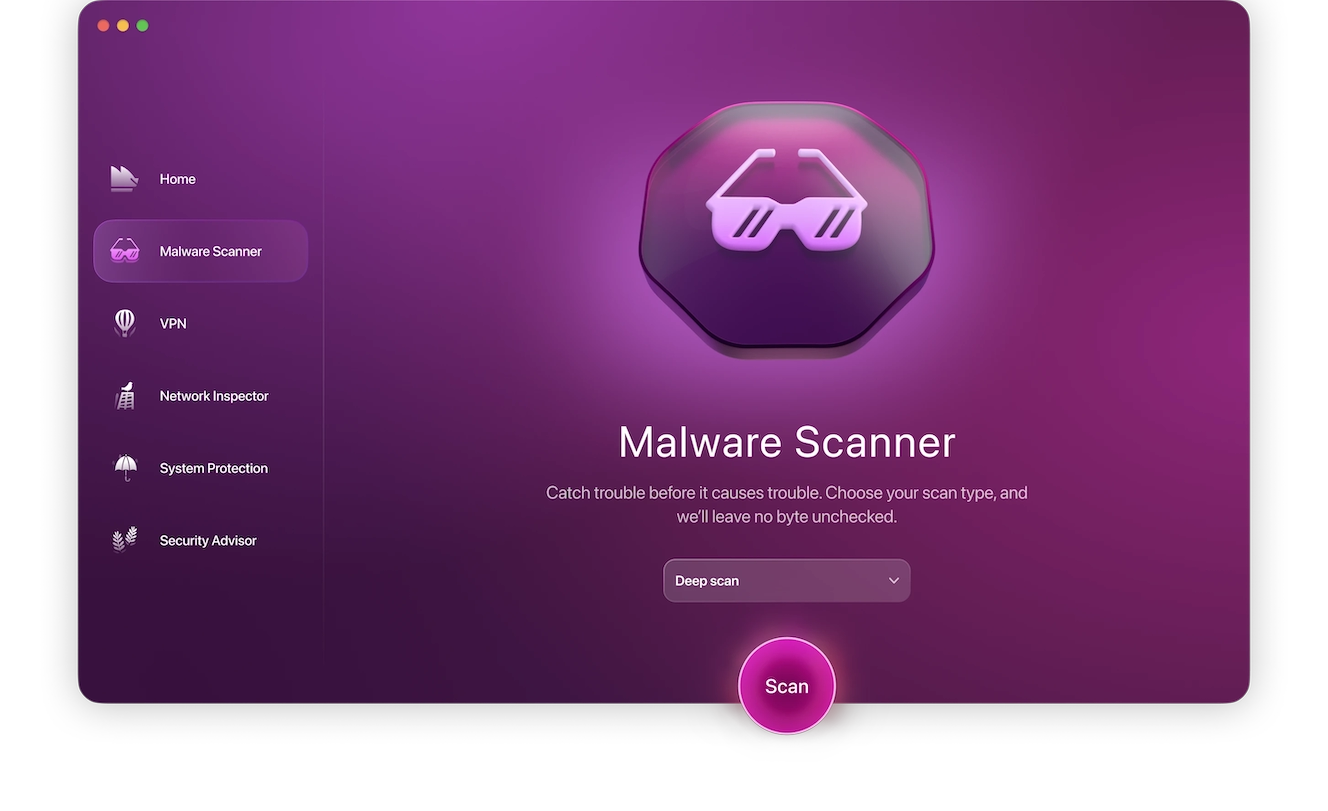
Watch for misspelled domains, unexpected login requests, unusual URLs, and links that ask you to download files. If you’re concerned after interacting with a suspicious link, Moonlock antivirus offers a 7-day free trial that can scan your Mac and tell you if anything got through.
6. Hinge scams on WhatsApp, Snapchat, and Telegram
Scammers often try to move conversations from Hinge to WhatsApp, Snapchat, or Telegram. These platforms give them another channel to communicate if their Hinge account is reported or removed. Moving off Hinge can also take the conversation away from Hinge’s built-in safety protections.
A Hinge WhatsApp scam may involve long conversations that eventually lead to financial requests or investment schemes. Hinge Snapchat scams can also involve sextortion because Snapchat makes it easy to exchange photos and videos. Learn more about WhatsApp scams and Telegram scams to stay safe on those platforms.
7. Sugar daddy or sugar momma scams on Hinge
Sugar daddy or sugar momma scams involve someone promising an allowance or financial arrangement in exchange for companionship or an intimate relationship. The scammer may appear generous by claiming they want to send you money.
A common trick is an overpayment scam. They send a fake check or fraudulent payment for more than the promised allowance and ask you to refund the difference. The original payment later reverses or bounces, leaving you responsible for the money you sent back. Learn more about sugar daddy scams. Or, for another dating-app scam example, see our guide to the Tinder scam.
Are there fake profiles and bots on Hinge?
Hinge has fake profiles just like any social media platform or dating app. Are there bots on Hinge too? Yes, unfortunately, there are.
Like platforms such as X (Twitter) and Instagram, users create fake profiles, also known as sock puppets. These can include bot accounts that use social engineering to lure potential victims. With the use of AI technology, it is becoming easier for scammers to create bots that send auto-replies to anyone who likes their profile.
Hinge fights this by implementing features such as Selfie Verification, Safe Message Filters, automated scam detection, human moderation, and duplicate-account detection.
You can often tell if a profile is a bot by checking how they respond to your messages. If it sounds scripted, it is an automated reply or message. If you’re unsure if the person you match with is a bot, ask to do a video call with them. A bot account will refuse to video chat or meet in public.
As a rule of thumb, anytime someone asks you for a financial favor or for too much personally identifiable information (PII), consider it a red flag. It’s a good idea to get out now, especially if they ask you early.
How to tell if a Hinge profile is fake
Fake profiles often look too good to be true. They may have strange bios with poor grammar or photos that appear too polished. Photos are sometimes AI-generated. Try to compare the facial features to other photos and look out for details such as unnaturally symmetric eyes or distorted hands and fingers.
One of the best ways to determine if a match on Hinge is a real person is to video call them or set up a meeting in person in public to ensure you’re not being catfished. This is a solid way to tell if a Hinge profile is fake.
What does “verified” mean on Hinge?
So, what does it mean to be verified on Hinge? To verify their profiles, users can also use a short video selfie with the Hinge Selfie Verification feature. This process includes a liveness check and a comparison of the video selfie with their profile photos before assigning a verified badge.
That said, verification does not mean someone is trustworthy. Nor is Hinge responsible for the accuracy of information on a user’s profile.
According to Hinge, the verified badge doesn’t ensure that a user is safe or that the identity is safe. Do people have the ability to fake Hinge verification? Hinge has some safeguards in place to ensure that its verification process will not be fooled. Nevertheless, the badge should be treated as one safeguard among many, rather than a foolproof indication that the person is not a scammer.
Actions to take after a Hinge match scams you
If you discover that you’ve crossed paths with a Hinge scammer, take quick action to minimize potential harm. Stop all communication with them, save screenshots and other proof to be reported back to Hinge on the profile. If any money has been sent or sensitive information exchanged, contact the appropriate company or financial institution immediately.
To report a profile on Hinge:
- Tap the 3-dot icon on the profile or chat.
- Tap Report.
- Choose one of the options to report this profile for.
According to Hinge, reports are anonymous. Once they have been reported, the reported profile will be removed from your experience on Hinge. If you cannot report someone through the app, you can submit a request to Hinge through its Safety and Reporting support option and provide relevant details and screenshots.
If you’ve already sent money, take the following steps depending on the payment method you used:
- Bank transfer or wire: Inform your bank ASAP and determine if you can reverse or recall the transaction.
- Payment app: Report the fraudulent transaction to the payment service and request that the payment be canceled.
- Gift card: Contact the gift card company, report the scam, and retain the gift card and receipt as evidence.
- Cryptocurrency: If it’s a type of cryptocurrency, reach out to the exchange or service where they bought it and alert them of the transaction. Relevant information includes the wallet address, transaction hash, amount, and transaction date.
What should I do if I sent money to a Hinge scammer?
Report the fraud to the payment provider and to the police. Do not hesitate to report that the money is gone. Change all passwords, never share your SMS codes with anyone, and be alert to any unusual activity in your financial accounts. Anyone can also report the scam to the FTC and, for cryptocurrency thefts, the FBI’s Internet Crime Complaint Center (IC3).
How to protect yourself from Hinge scams
To steer clear of Hinge scams, you simply need to identify any suspicious activity. This is especially important before wiring money, disclosing sensitive data, or clicking on a questionable link. When dealing with new matches, remember these tips:
- Avoid sending money: If someone asks you to send money for an emergency, investment, loan, or guaranteed return, it is a major red flag.
- Check ID: Make sure to video call them when possible. Practice extreme caution when meeting someone you met online before meeting them in a public place.
- Review their picture(s): Search for their pictures by conducting a reverse image search. Check to see if their profile appears elsewhere with the same photos.
- Keep personal data safe: Do not share passwords, credit card or bank details, your SSN, or SMS verification codes with a match.
- Exercise caution when dealing with links: Do not click on links received from an individual you barely know, particularly if the link asks you to provide your username or password or download an attachment.
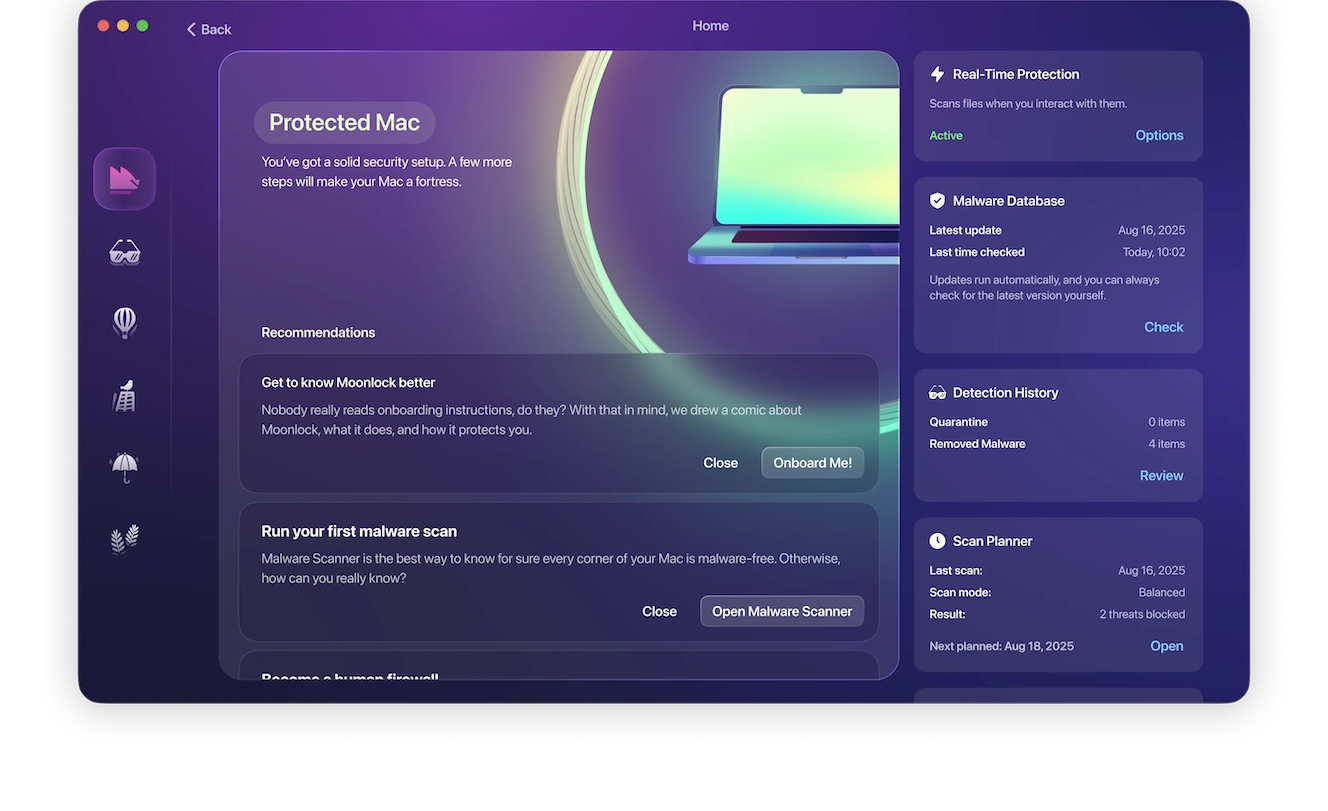
- Check your Mac for malware: If you clicked on a suspicious link or downloaded a suspicious file, use Moonlock antivirus to scan your Mac for malicious software and other threats you may come across online.
- Trust your gut: If the person is pressuring you to take immediate action, giving you trouble when you don’t send money, and they don’t want to verify their identity with you, stay away from them. Report them if necessary.
Also, keep in mind that moving off Hinge to another messaging app to communicate with someone you met on Hinge doesn’t always mean a scam is underway. However, staying on Hinge provides additional security measures to detect scammers and lets you report any suspicious activity.
No dating app can 100 percent guarantee that there are no scammers on there. Being cautious, securing your information, and avoiding financial demands that you didn’t expect are important steps to take to significantly decrease your risk of becoming a victim of a Hinge scam.
This is an independent publication, and it has not been authorized, sponsored, or otherwise approved by Hinge, Inc. Hinge is a trademark of Hinge, Inc.